
ORIGINS
The first truly ballistic missile, that entered space and returned a warhead to Earth, was Nazi Germany’s V2, developed by Werner Von Braun. His conscience-free approach to scientific development made him a top priority for the Americans as WW2 ended. He was quickly assimilated under Operation Paperclip, which eradicated his past war crimes, placing him at the very core of the United States missile and space programs. Without him there would have been no moon landing in 1969, and the US would have struggled to keep up with surprisingly rapid Soviet missile developments.
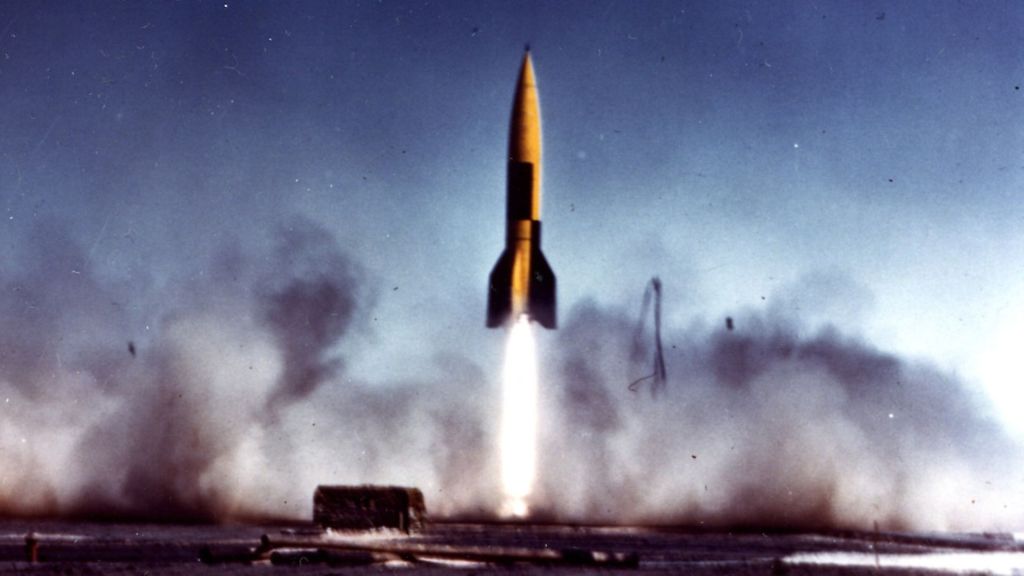
The early missiles were simply incapable of lifting the huge warheads of the early atomic and thermonuclear era. During the 1940s and 50s the bomber reigned supreme. Nuclear weapons were generally large, both physically and in megatons. The megatons were intended to decimate whatever they hit with plenty to spare. There would be no escape. Variants that covered 1mt to as much as 12mt were actually deployed as bombs by both sides.
NUCLEAR TESTING – MINE IS BIGGER THAN YOURS
The largest ever thermonuclear detonation was the Tsar Bomba, dropped over Novoya Zemlya in the Russian Arctic from a Tu-95 bomber on October 31st 1961. The blast was estimated at 54Mt (3,600 times larger than the Hiroshima bomb, and ten times all of the explosives used in the entirety of WW2). The bomb was a cut down version of a 100Mt device, designed by scientist and eventual Soviet dissident, Andrei Sakharov. 100Mt would not have given the bomber time to escape the blast and heat.
The Tsar Bomba mushroom cloud reached a height of 42 miles (67km), piercing the stratosphere and reaching the mesosphere. The cloud width reached 59 miles (95km), while the base of the stem of the cloud at ground level was 25 miles (40km) wide.


BOMBERS CAME AND WENT AS TECHNOLOGY OUTPACED THEM
In late 1959 the United States conducted a simulated nuclear attack on the United States, Operation Dropshot. Treating itself as though it was the USSR, with huge numbers of bombers and fighters, many actually carrying live nuclear weapons for added realism.
The exercise was a disaster. It demonstrated a near useless nuclear attack plan, multiple redundancies that failed, a very high rate of bomber loss, overkill on targets such as big cities, and flawed command and control procedures and principles. It was so bad it remained classified for decades. The speed at which bombers went out of service and were replaced with missiles was rapid. By 1969 the strategic nuclear bomber force had been slashed to around 30% and it continued to fall.
Dropshot was such a poor outcome it gave rise to something that lasted from 1961 until 2003; SIOP, or the Single Integrated Operational Plan. This was a carefully laid out series of operating plans that give the president nuclear strike options, based on fully targeted and pre-planned strategic objectives, most based on the scenario at the time. A president had (and still has) perhaps ten minutes to decide what to do. Less in many circumstances. It was replaced by Operations Plan 8044 (OPLAN), the current version of which is the 2012 issued OPLAN 8010-12. The nuclear ‘football’ that accompanies the president everywhere contains the OPLAN menu of strike options as well as the communication system.
The other outcome of Dropshot was a realisation that missiles with intercontinental range were the only way forward. They were eventually cheaper to produce, cheaper to operate and allowed for a huge multiplication in nuclear strike power. ‘Missile gaps’ replaced ‘bomber gaps’ in American Cold War hysteria, as they worried themselves into an early grave over which side had most.
STRATEGIC MISSILES COME OF AGE
As the Russians demonstrated with Sputnik their ability to get an object into space, America was terrified. It was a constant reminder to nervous Americans who could pick up its chirping radio signal as it flew overhead, that Russia too, could get a nuclear warhead into space and all the way to anywhere in the US. And, at the time, undetected.
The reality in the late 1950’s and first half of the 1960’s was that America had vastly more weapons and means of delivery – most of which was built in response to inflated intelligence reports and Russian deception. President Kennedy largely won his election by emphasizing, what was years later proven to be, a non-existent bomber and missile gap. The US had vastly outpaced Soviet production of bombs and bombers.
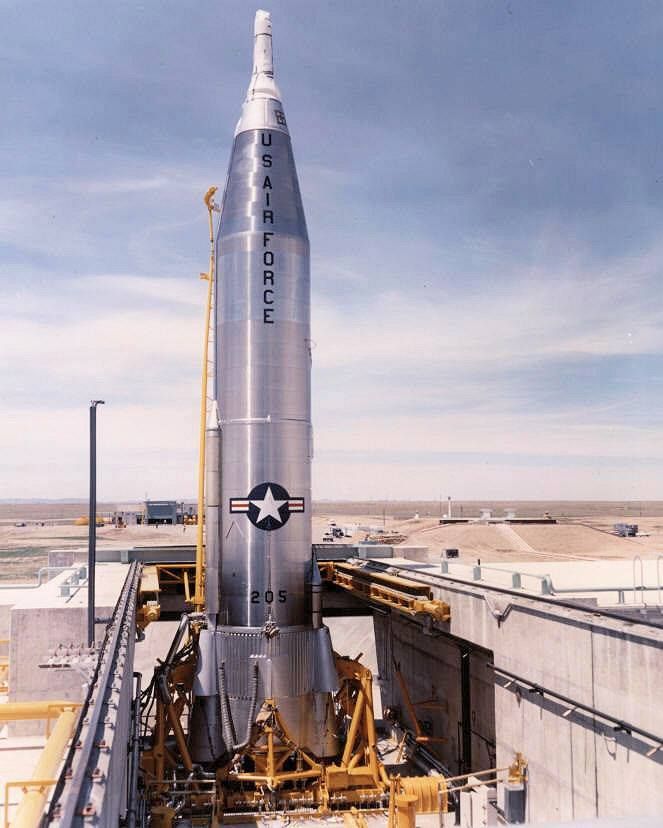
The first truly intercontinental missiles were huge beasts like the Atlas. Liquid fuelled and stored horizontally, needing half and hour to prepare for firing on a good day, time was not so important. It would take hours for Russian bombers to reach their targets. They were equipped with the W-49 warhead with a yield of 1.44Mt (96 times the Hiroshima device).
This triggered an explosion of missile development in the United States that broke records for the rate of development and change. Barely a month passed without some new technology breakthrough or innovation that multiplied American capabilities.
Russia was more plodding. Its missiles were capable but not in the league of the Americans. The Soviets adopted something of a brute force and ignorance approach. The result was the massive SS-6, a true ICBM that frightened the US. However in reality barely half a dozen were ever deployed.

The SS-4 MRBM was deployed to Cuba in 1962 and triggered the Cuban Missile Crisis, arguably the closest we came to nuclear war. With a range of 2,000km (1,200 miles) it was a grave threat. The Russians backed down, but in reality a compromise was reached. Early American IRBM Jupiter, 15 of which were based in Turkey, were withdrawn six months later as part of the deal, along with Thor IRBMs based in the UK. Russia later deployed the SS-5, an extended range version of the SS-4 in Europe, and a true IRBM.
All of these missiles carried large 1Mt+ warheads as a Single Re-entry Vehicle (SRV), launched and flown on an entirely ballistic trajectory at their target, usually a city as they were too inaccurate to hit anything precisely. Russian missiles were notoriously poor in accuracy terms.
This brings us to Circular Errors of Probability
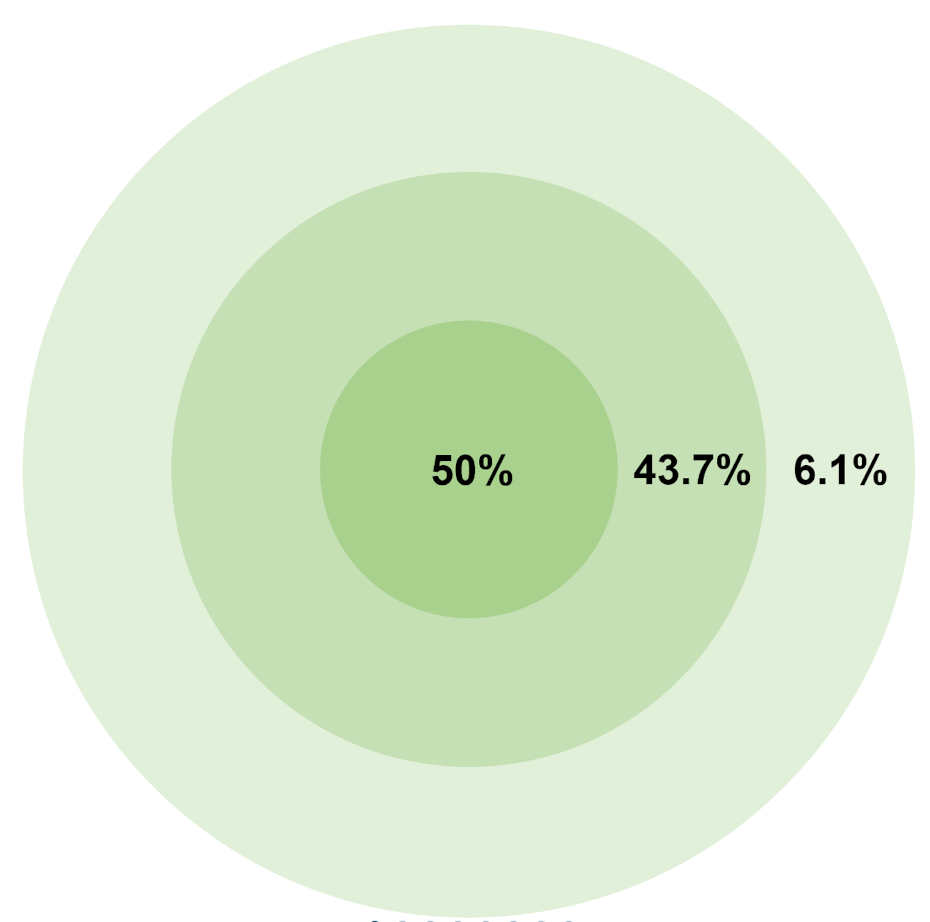
Draw a circle. In the centre is the target. Let’s say the circle is 1km radius. The CEP of a warhead is the chances, expressed as a percentage, of the likelihood of the warhead falling inside the circle and hitting the target. A CEP of 80% at 1km means that 8 out of 10 warheads will fall inside the desired target zone. Two will still detonate but not close enough.
For example a current Trident-2 D5 warhead has a remarkable CEP of 100m – bearing in mind it’s fired from a submarine, which has to know exactly where it is using inertial navigation, GPS if its available. The missile bus uses stellar inertial navigation to locate its position in space before telling the warheads where they are so they can reach their targets. The missile could be configured with either 10 x 100kt W-76 warheads or 8 x W-88 450kt warheads and is so accurate it’s considered a potential First Strike weapon even in 2024.
The latest B61-12 tactical nuclear bombs delivered by US and NATO aircraft has a CEP of around 30m – meaning at least 50% of all bombs will be inside the 30m circle, pretty much a direct hit. It also means that even those that fall out of the 30m circle will not be that far out so as to make a difference.
The huge yields of early missile warheads were entirely to make up for their lack of accuracy. Over time the circle would get smaller, and so would the warheads, most dropping down into the mid-hundreds of kilotons range. As accuracy increased – warheads could be lower yield but markedly more precise. That meant smaller warheads and reduced payload weight per warhead.
It wasn’t long before that meant you could carry more smaller warheads on the same missile, and this was especially true of American submarine launched SLBM’s. Their compactness and lethality were on a different order to the Russian equivalent.
Each nuclear missile type has a ‘throw weight’. That is the weight of the bus it can lift into space – which determines how many warheads it can carry. Russian ICBM’s and SLBM’s, even their IRBM’s, tended to have far higher throw weights than US missiles, leading them eventually to have far more warheads. The Russian approach was to build bigger missiles to throw more warheads of a bigger type, because in the 1960’s and 70’s they were significantly less accurate than the Americans. By the 1980’s they were starting to build even bigger, heavier throw weight missiles, with slightly smaller warheads, that were just as accurate as American ones, leading to a a very powerful First Strike capability.
MUTUALLY ASSURED DESTRUCTION
The more Russia added to its ICBM force, the more America added to its SLBM force, which gave it the guarantee of retaliation and therefore mutually assured destruction or the appropriately acronymed MAD.
Most Russian submarines carried 12-16 SLBM’s whereas the Americans never had fewer than 16 and the Ohio’s had 24. Only the gargantuan Typhoon class with 20 SLBM’s came close. The last of those was decommissioned on cost grounds in 2023. This all went on despite the second Strategic Arms Limitation Treaty system – which the US Senate never ratified after the USSR invaded Afghanistan at Christmas 1980. However the US and USSR still operated as though the treaty was in force. The limits of the treaty gave a degree of restraint to the nuclear arms race, but it was tenuous. Neither side wanted the expense, but trust was at a minimum in the early 80s particularly.
The US took so long to even consider nuclear modernization it’s been caught flat footed. Even the British are further ahead than the US, and that’s a first.


THE ARMS RACE MENTALITY
The mentality of an arms race is odd. I build a submarine that can carry 24 missiles. You decided you must have something similar to ‘counter it’. The two types of submarine were never going to counter each other, they weren’t even going to encounter each other. But if I had one you had to have one too. You could have had two smaller ones but, you had to make one that was bigger, because you had to prove the point that you could. The same thing happened at every level, bombers, submarines, ICBM’s everything. It was a simple but ludicrous mentality. Sadly it looks very much like it might be coming back into fashion.
TECHNOLOGY THAT BENEFITED US ALL – EVENTUALLY
Multiple Independently targeted Re-entry Vehicles or MIRV’s required a new technology and back in the 1960’s, the silicon microchip was largely developed for military application – it was the key component in the fielding of the smaller, single warhead Minuteman-I/II, and Polaris/Poseidon missiles, and critical in the development of the three-warhead MIRV of the Minuteman-III.
In the early 1980’s President Jimmy Carter was responsible for a massive update to the communications systems of the ICBM force, which in order to receive launch orders used the public telephone network. Surprise tests found it seriously wanting, to the point of useless. This lead to the introduction of early wired broadband communications lines to each ten missile control centre and on to each missile silo, that Minuteman still uses. Digging these up and replacing them with fiberoptic cable is one of the biggest expenses facing the new Sentinel ICBM program.
MAD OR NOT THEY’RE HERE TO STAY
The first MRV – a missile with more than one warhead but they all headed for the same target on a ballistic trajectory, naturally splaying out in flight, was the Polaris A-3 SLBM, widely deployed by the US Navy. It was also purchased by the UK for its own Polaris SSBN’s. Polaris A-3 was derived from the A-1 SRV missile. USS Ethan Allen, SSBN-608 fired an A-1 from underwater to its full range of 1,500 miles and its 600kt warhead detonated near Christmas Island in the Pacific on 6th May 1962. This was partly a response to the previous October Tsar Bomba detonation, proving that a second strike submarine retaliation force worked and was believable.
Polaris later morphed into the Poseidon C-3, which could carry as many as ten MIRV’ed 50kt warheads. That eventually developed into the Trident-1 C-4 that was back fitted into Poseidon carrying submarines and initially equipped the first Ohio Class SSBN’s.
The Russians, after several novel but ineffective SSBN programs, copied the American 16 missile format with the Yankee Class, which carried the SS-N-6 Sawfly (R-27 Zyb) missile. This had several modifications, some carrying an SRV 1Mt warhead, others three MRV’s with 200kt warheads. The follow on Classes, Delta-I, II, III & IV had 12, 16, 16, & 16 missiles respectively. They started with the long ranged SS-N-8 and the IV with the SS-N-18. Five of the 7 Delta-IV remain active with newer Sineva class missiles, but they rarely put to sea and can launch from the dockside – something that they have actually tested.

By the late 1980’s the Trident-2 D5 was being deployed and it’s still in use today, being refurbished and re-manufactured. It’s expected to stay in service until at least 2045. It is a fearsome weapon, by far the most dangerous in the US arsenal. It will equip the new USS District of Columbia SSBN fleet and the UK Dreadnought SSBN, although the UK is developing its own new warhead type. Currently they use the Mk4A Holbrook 100kt warhead, but never disclose how many per missile. The current 16 missile submarines are said to only carry 12 and the Dreadnought will only carry 12 maximum. The US Columbia’s will carry up to 16 rather than 24.
The UK is working on the A21/Mk7 Astraea warhead, in conjunction with the US W93/Mk7, said to have a modifiable yield of 90-450kt. Its lighter and gives the missile greater range (and therefore the submarine more space to hide in).
Russia continues to deploy the Borei Class SSBN, a very modern and capable type with as many as twelve 16 missile submarines planned.
FIRST STRIKE OR REDUNDANT CAPABILITY?
US ICBM’s went through a fast development phase, with the late 1960’s seeing a total that barely changed for 25 years, 1,054 ICBM’s. 54 were Titan-2 single warhead 9Mt missiles. 450 were Minuteman-II with a single warhead of 1.2Mt, the other 450 – which are still in service to this day – were Minuteman-III with three MIRV’ed 335kt warheads. However those have been replaced due to START treaties with a single warhead of 335kt or 300kt depending on the missile fit.
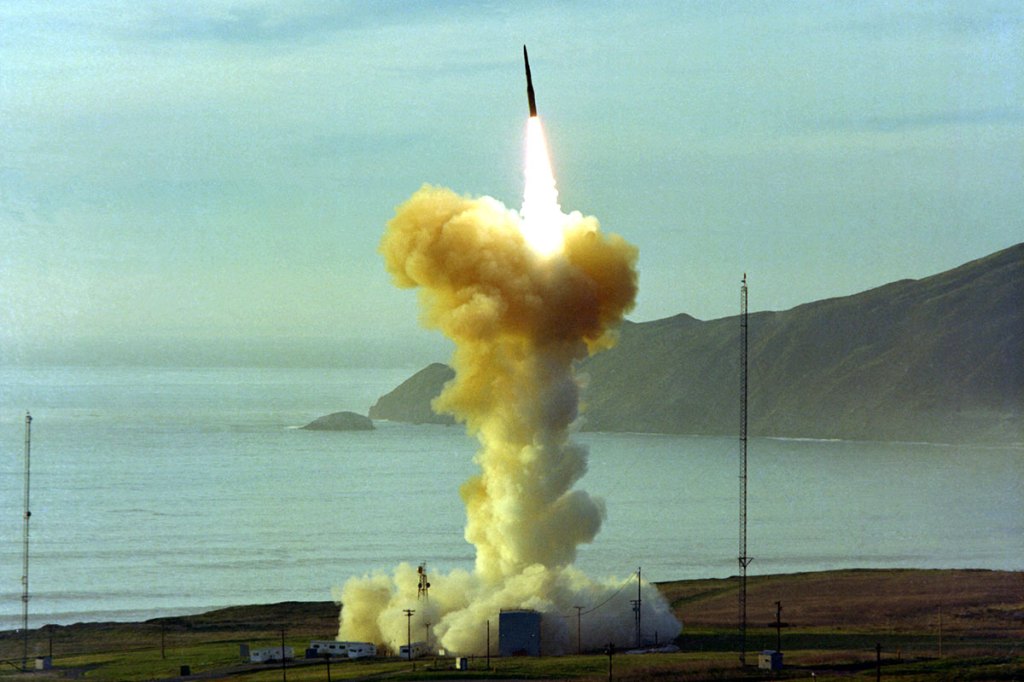
Could they be a viable First Strike weapon against Russia? I don’t think they ever were and they certainly aren’t now. Russia turned its ICBM force into a first strike system without question. It remains one even now. This reality has lead to the retention of the Launch On Warning posture that terrifies so many analysts. Both sides will fire their missiles if they are convinced they’re under attack. The US early warning system isn’t infallible but it’s a multitude of times more reliable than Russia’s. Obama said he would end the policy as did Trump, but neither did when they understood the realities. That is because Russia still has a first strike capacity, and thinks that Trident-2 is as much of one – which it could be. So rather than lose them to an attack, both sides will fire their ICBM’s first if the think they’re under attack, and ask questions later, if there is anyone left to ask or be bothered.
During the Cold War at least three Minuteman’s carried no nuclear warheads, but were equipped with an emergency communications satellite to ensure command of remaining missiles and SSBN’s.
The Peacekeeper ICBM that the US developed during the 1980’s was fielded from 1986 to 2005, taken out because of START-2. It was designed to carry eleven (but was treaty limited to 10) W87 300kt warheads. 200 were planned for deployment replacing the Minuteman-II and Titan-II. All sorts of extraordinary concepts to make it invulnerable to a Soviet first strike were contemplated. A rail mounted version, a road mounted version, but most expensive of all a circular race track ‘clam shell’ version of a dozen silos per missile, so that the Russians would never know which one it was actually in. None of them came to pass and the existing silos were considered the only viable option. 50 were eventually deployed.
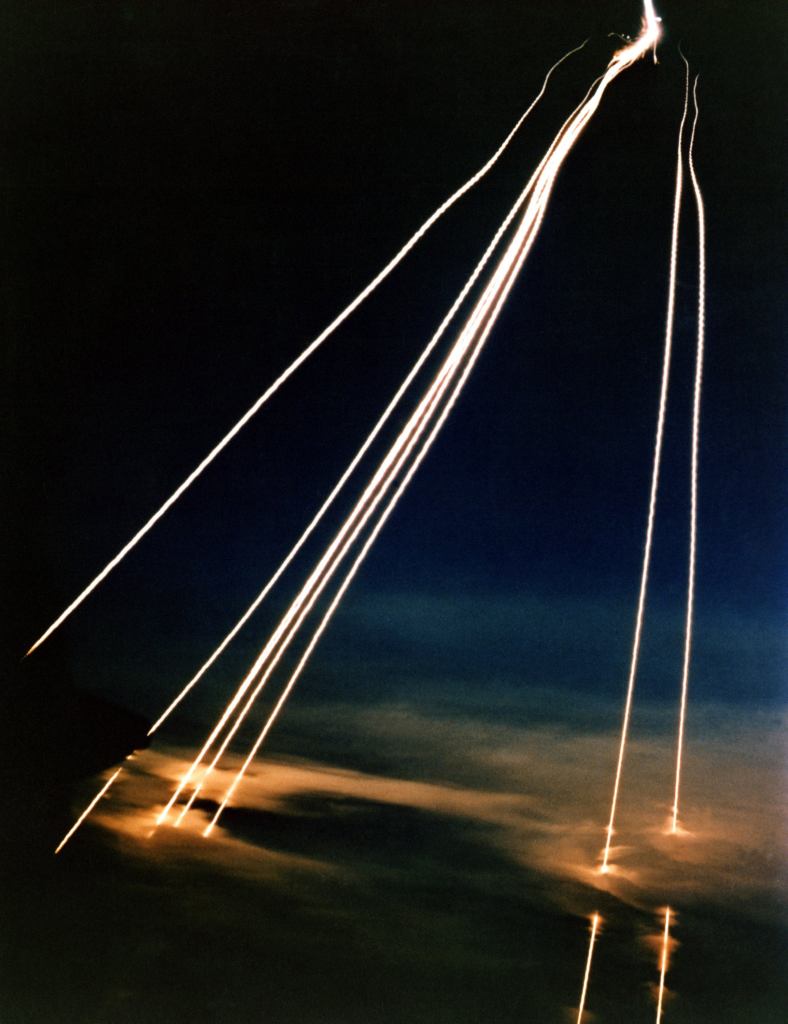
Peacekeeper and Trident-2 were intended to carry MARV’s. These were MIRV’s but with a whole new dimension. They weren’t just independently targeted. They could maneuver in flight, had their own target recognition package and could change targets if required, utilizing a terminal stage radar system. Pershing-2 MRBM’s actually were deployed with them. However treaty restrictions (the 1973 ABM Treaty, abrogated by George W Bush in 2002), and concerns the warheads were even more destabilizing than MIRV’s, stopped them being deployed. There is some belief that Russia did and still does deploy such warheads. AMARVS – an Advanced version, were considered but not developed.
It may not seem like it now, but overall, once the Americans deployed effective missiles, and the the SALT (Strategic Arms Limitation Treaties) came into effect, it was remarkably restrained with its ICBM force. The SSBN force was considered the ultimate deterrent and making that convincing was the primary strategy.
The Russians on the other hand showed little restraint at all. They went all-in on the first strike option with a secondary goal of creating a second strike SSBN force.
Russia fielded a raft of fast changing missile types during the 1970s-80s. The huge SS-9 which had at least three types of warhead configuration, (including a Fractional Orbital Bombardment System or FOBS of which more later), designed as a city killer. The SS-11 was a lighter missile with fewer warheads because of SALT. These were replaced by the SS-17 and SS-18. The later is the direct ancestor of the SARMAT Russia now deploys – in fact it’s a back-engineered version of the missile that was built in Ukraine originally. The SS-18 especially with its ten MIRVS was a serious worry for the Americans, as just 106 of them could theoretically destroy the entire US land based ICBM force of 1,054. That later dropped to 1,052 when one Titan-2 had a spanner fall from the top of the silo, exploded it by piercing the fuel tank and sent the warhead hurtling 29 miles away, taking days to find. Another detonated in its silo – the door of which was never found. The Titan-II force was the first to be taken out of service when the arms treaties reduction kicked in.
TNF -THEATER NUCLEAR FORCES
The madness of the Cold War saw this now returning theory, accepted even by the people who lived in the theater. That theater was Europe. American strategists termed Europe as a theater of operations, and a set of nuclear weapons was allocated for use there. Russia sees Europe somewhat differently because it’s actually part of the continent. Yet, and this may seem hard to compute, it accepted that weapons with IRBM, MRBM and SRBM ranges were Theater weapons, but an American ICBM or SLBM used in that Theatre of operations or against the USSR, was a whole step higher – in effect global thermonuclear war. But it was OK if it could be contained to Europe. West Germany of course always, rightly, saw itself as the potential tactical nuclear battlefield of Europe and lived with that prospect for decades until 1990. Arguments over fighting a winnable nuclear war in Europe raged for years and have again resurfaced.
This problem of which weapon was ‘Theater’ or strategic complicated all of the weapons limitation and reductions treaties, which often ground on for years with the Soviets endlessly regurgitating the same points with different wording to try and get their way.
The Russian SS-20 IRBM was designed to replace the ancient SS-4/5 and partly to get around the SALT treaties which limited ICBM range missiles and SLBM’s. The SS-20 probably had more impact on the Cold War of the 1980’s than anything else.
Designed to cover China without having to use up Russian ICBM’s it would need against the US, and Europe, the missile was a huge leap forward.
France at the time had 18 land based IRBM’s on the Plateau d’Albion and an operational SSBN always at sea with 16 SLBM’s, as well as Mirage-IV supersonic bombers that could deliver a nuclear air launched ballistic missile. The UK had a limited number of bombs and the Polaris SSBN with 16 missiles. These were never counted in limitation or reduction treaties, and were part of the rationale behind the SS-20 as an IRBM targeting Europe.
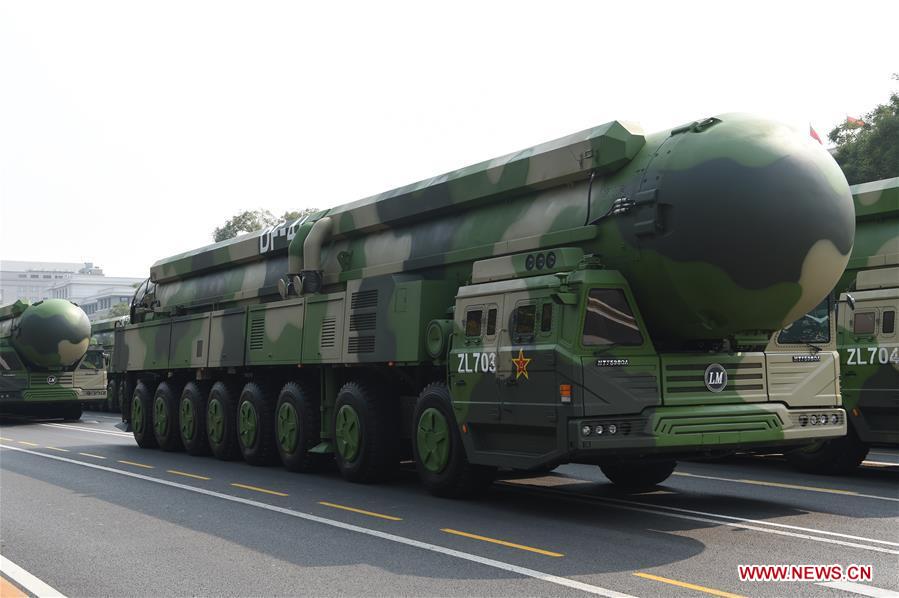
As the SS-20 with its then novel mobile launcher started to deploy, its three MIRV’ed 150kt warheads were seen as a direct threat to NATO and a major escalation. German Chancellor Schmidt made a surprisingly strident speech warning of the threat and nuclear blackmail in 1977.
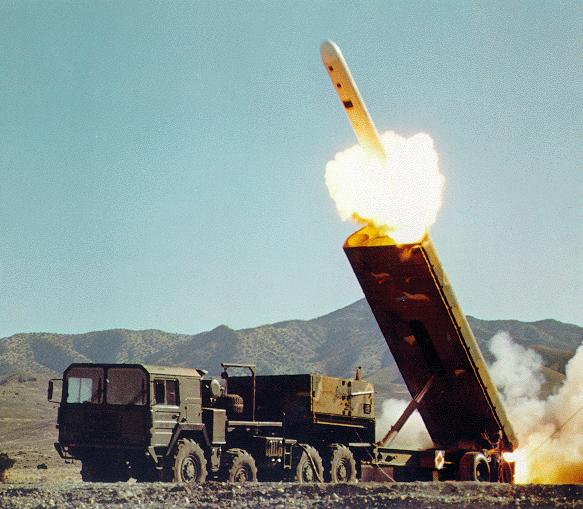
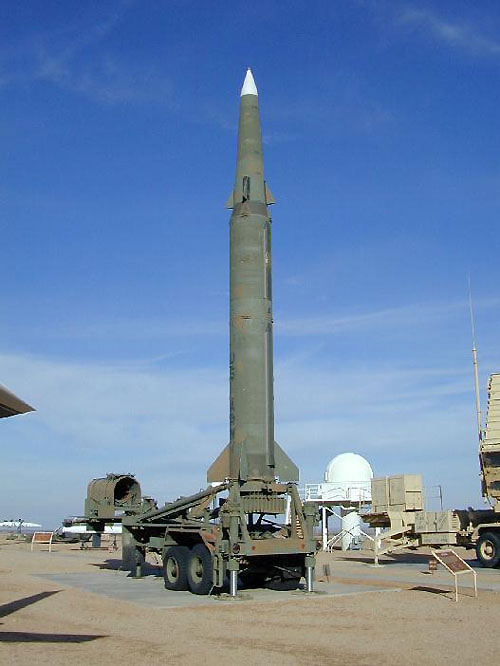
This resulted in the NATO adoption of the GLCM (ground launched cruise missile) in its 4-pod armoured mobile launcher, and the replacement of the SRBM Pershing-1 missile largely fielded in Germany, with the much longer ranged and more accurate MRBM Pershing-2 – with its optional yield warhead ranging from 5kt to 60kt. A combined total of 572 (464 cruise missiles, 108 Pershing-2) missiles were built. They wouldn’t be fully deployed until 1987. By then Russia had 441 SS-20’s with 1,323 warheads and was building a new missile every week. Post Cold War, the factory director when asked why they built so many said, ‘because nobody told us to stop’. That was the Soviet system for you.
On top of that the US had QRA (Quick Reaction Alert) squadrons based in the UK, of F-111’s fitted with as many as 10 SRAM’s (usually 8 plus two drop tanks for range). These were 200 mile ranged aero-ballistic missiles with a 200kt warhead, designed to devastate the rear areas of Soviet armor in transit – largely in Poland and Western Russia. 2-4 were mounted on the wings with 6 on an internal rotary belly launcher.


The SS-20 and NATO’s reaction to it caused the Russians to use their first modern Reflexive Response campaign to undermine western governments resolve, promoting the Campaign for Nuclear Disarmament (CND) with its famous peace symbol. It was vastly more effective than the 1950’s campaign, yet western governments never wavered.

The arguments over the missiles were so profound that they even entered popular culture. The very popular German song from April 1984, ’99 Red Balloons (floating in the summer sky)’ by Nena, is a direct reference to the use of nuclear weapons, war, and mushroom clouds hanging over Germany, it was a huge hit Europe-wide.
The INF (Intermediate Nuclear Forces Reduction Treaty) that was eventually negotiated between the Americans and the USSR in 1987/88. Was staggering in its magnitude. It was the first time entire classes of weapons had been eliminated, rather than limited. There were no European signatories to the treaty. All of the weapons were in the end, only American or Russian.
COLD WAR OVER – THE WEST WON AND IT WOULD NEVER HAPPEN AGAIN – RIGHT?
For the first time the SS-20’s, F-111’s, GLCM, Pershing-2 were all withdrawn and scrapped. An entire category of weapons was junked and destroyed. By May 1991, they had eliminated 2,692 missiles. The F-111’s weren’t covered and nor were the Russian Backfire bombers, but both were slashed in numbers. The F-111 completely withdrawn. The treaty remained in force until Trump, under provocation from Putin, scrapped it in 2019.
The INF was the start. As the USSR folded START-1 came into effect with both sides scrapping huge numbers of ICBM’s and SLBM’s. Literally thousands of weapons were destroyed. The United States and Japan paid for the destruction of Russian warheads and missiles. In 2010-15 10% of the US electricity supply was provided through nuclear power made with Russian warheads that had been reprocessed. Over 40,000 nuclear warheads were removed from service.
PUTIN
When Putin came to power at the turn of the century, for the first eight years he largely consolidated his power, through the use of military force and economic reform, slowly gaining traction towards the security state he always wanted. By 2008 however he was fed up with the way the United States treated him and Russia, and he felt they were never grateful enough, he especially though George W Bush in his second term particularly, irritating and disrespectful. Especially when it came to Putin’s support in Afghanistan, which had undeniably been vital, providing air corridors and persuading the central Asians to allow American bases and transit rights.
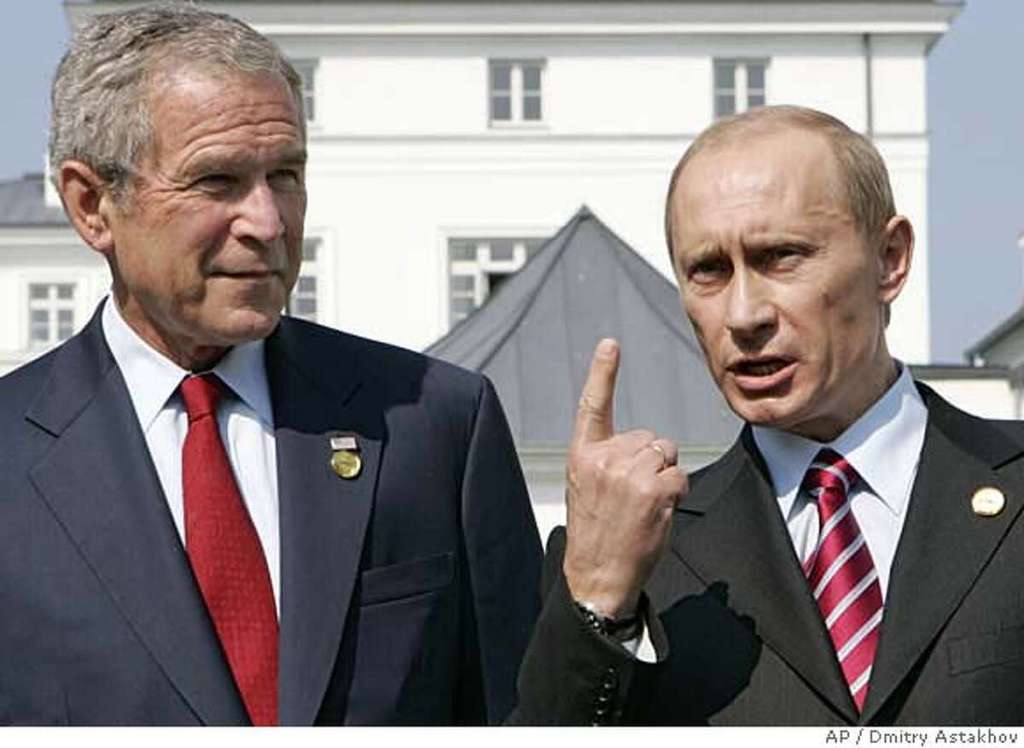
Europe was largely dismissive of Putin’s security concerns and the first attempt to get Ukraine and Georgia into NATO that year clarified his rapid change of position. There would be no more accommodation, it was time to oppose and reassert Russia’s place in the world.
Even as Prime Minister he worked on reforming the military and rebuilding the armed forces. It was to be the start of a long road that eventually led to the war on Ukraine.
The writing should have been clear on the wall even in 2002, when the START-2 treaty was ended by Russia after the US ended the 1973 ABM treaty. Even though New START came into force and still is – though it ends in 15 months time, it was never fully followed by the Russians in my opinion.
MISSILE DEFENCE – A MODERN REALITY BASED ON A ‘FANTASY’
Back on 23 March 1983 President Ronald Reagan shocked the planet with a prime time TV speech outlining the construction of an anti-ballistic missile shield that would render any attack almost impossible. It was so outlandish and seemingly fantastical it was referred to from then on as ‘Star Wars’. The Strategic Defence Initiative (SDI) was said to be anything from complete nonsense to a waste of money. Everyone knew it would take decades to make it work and the whole idea of lasers in space, rail guns and masses of anti-ballistic missiles shooting down masses of ballistic missiles was regarded as impossible.
Forty years later almost to the month, Israel (one of the biggest beneficiaries of research grants for SDI), used a system not unlike his description of what might be possible to defend itself from am onslaught of ballistic missiles fired from Iran. Lasers and advanced missiles are being manufactured that defeat missiles and drones. The Aegis Ashore anti-missile system in Rumania and Poland, its allegory on US ships, Patriot, THAAD, area all testament to that goal, set out in 1983. Reagan should be given credit for his foresight.
Yet that wasn’t the only purpose of SDI. It had a shorter term goal and it worked. It was designed to frighten the USSR to death and it did. They knew they simply didn’t have the technology or the money to compete. It was a key element in breaking the Soviet economy and ending the Cold War. The only response Russia had was to build even more missiles and submarines – and they just couldn’t afford it in conjunction with the huge American conventional forces build up and countering that. Gorbachev and Glasnost were the realization that the Soviet system was failing.

However the legacy of SDI is with us today. It’s played a major part in alienating Russia by placing missile defenses in countries it doesn’t think should have them – because it has the potential to stop Russia doing what it wants. It has defended Israel in a spectacular fashion that left even the proponents of the system stunned with its effectiveness and the naysayers converted to its viability. And Ukraine proves repeatedly that there is a place for a major air defence program and anti missile combination, it’s worth the cost and entirely viable.
However its also lead to Russia and China leading the way in getting around them, with the US and European countries racing to catch up – Hypersonics and novel weapons systems driven by AI were the new ‘in thing’.
One of the most alarming is a Sarmat ICBM equipped with a FOBS bus. A fractional orbital bombardment system, it can fly around the planet – ideally north to south and over the South Pole north into the US from its southern border where it’s unable to see incoming warheads. neither deliberate weapon designed to destabilize and divert resources to detecting it.
PUTIN’S ROAD TO WAR
Crimea and the lack of sanctions in 2014 showed Putin the West was never truly serious about Ukraine. Diplomatically he had pretty much burnt his bridges, but he didn’t care because his popularity at home for regaining what many Russians saw as their god given land, was through the roof – some 86% approved.
Putin also had another increasingly successful campaign running in Syria – a long term Russian client state. After the 2011 uprising of the Arab Spring, Putin doubled down on keeping the Assad family in control of Syria. Russia has a naval base on the coast at Latakia and an air base nearby. This part of the country is mostly Alawites – Assad’s ethnic group and very loyal. Russia used the air base to bomb and ravage Syrian rebels and cities and supplied huge numbers of tanks and other weapons to Assad. Many of the tactics used in Syria have been used on Ukraine on a larger scale – the attacks on the power grids, schools and hospitals, even road junctions to destroy water supplies and sewerage. Russia in effect won the war for Assad, but it’s coming undone even as I type this, without Russian forces to stop newly emboldened and Turkish equipped rebels.
As Russia became more assertive and Putin reveled in the weakness of the first Trump administration, little seems to be able to stop him. He sat on vast pool of oil and gas, the country was making billions of dollars for doing almost nothing.
The New START treaty was in force and both sides carefully monitored each other’s nuclear weapons programs through strict and often in-person verification. Yet for all of that Putin was often focusing on new and more novel nuclear weapons to demonstrate Russia was technically ahead, and not afraid to show them off.
Rumours of a new Russian long range cruise missile, and secret plans for new IRBM’s persuaded Trump that Russia was cheating in respect of the 1987 INF treaty. He ended in it 2019, accusing Russia of just that. Many were concerned that that now meant all of the stops were released and even if the Russians had just been working on weapons, that’s all they’d done, now there was nothing to stop them building and deploying them.
Even when the war finally came, Russia agreed to continue the START treaty for an extension of five years – it runs out on February 5 2026. There are absolutely no negotiations taking place to replace it. For the first time in 50 years there will be no nuclear weapons limitation or reduction agreements in force. Only the Nuclear Non-Proliferation Treaty and the Comprehensive Test Ban Treaty will still be active. And even those are under threat, with Trump suggesting new nuclear testing at one point and Russia saying it would too, if the US did.
THE NEW WEAPONS
THE UNITED STATES
The US is developing the Sentinel ICBM – the missile is cheap enough, it’s the reconstruction of the silos and C3 infrastructure that’s way over budget. At present it is expected to carry just one warhead as per START, but options to increase that are being discussed.
The B21 Spirit bomber will have a nuclear capable role, future hypersonic, cruise missiles and the tactical B-61-12 bomb. The remaining B-52’s, just about to get new engines and a refit for long range cruise missiles, will soldier on until they’re 100 years old, which is truly amazing. The Columbia SSBN – a so called ‘No.1 National Priority’ is critical. Only one Ohio class SSBN is available for a short life extension to cover any delays, USS Alaska – that decision must be made no later than early 2026. The first, USS District of Columbia, has to be delivered by October 2027 to go on its first patrol in October 2030, following testing, training and snagging of a first in class submarine. It will carry refurbished Trident-2 D5’s. Currently there is no Trident-2 replacement being planned but it must come.
Other key development are the re-equiping of one Trident-2 D5 missile on each SSBN with a tactical nuclear warhead around the 5kt range. This is in my opinion dangerously destabilizing. How do you, on the receiving end in the middle of a war, react when you see a sea launched ballistic missile coming at you? How do you know its not ten 100kt rather than one 5kt? Especially with Russia’s dilapidated early warning system.
A similar plan to equip each of the Virginia Class SSN’s with one 5kt nuclear armed land attack cruise missile is also likely to go ahead, despite the navy saying its a waste of space that should be used for a missile they might actually need in a fight. On SSN’s there’s no option to swap the warheads, they’re in vertical tubes and ready to fire. However its felt that it offers an option where none might exist in a conflict say, with China.

The other major US problem is it hasn’t got any new warheads and has had to authorize a program estimated to cost $1 trillion over its life, to refurbish the ex-Pantex plant for SANDIA, remanufacture the nuclear pits – the explosive part of the warhead, and build the new ones for the low yield Trident and cruise missiles and future missiles. The last 30 years have seen the whole system atrophied away through lack of attention to Putin and China’s behavior. Money just wasn’t forthcoming and the Energy Department who oversee warhead manufacturing, storage and maintenance were never given the money to keep it going.
RUSSIA
Russia has been busy. Its SSBN’s have a growing class of Borei’s. It’s a powerful, quiet, modern submarine with 16 powerful, long ranged modern missiles. Undoubtedly it could carry more warheads if the decision was made.
The Tu-160 Bomber is back in low level production and the existing ones are being refurbished – as long as Ukrainian drones don’t get them – again. A vast range of nuclear capable Kalibr, Kh-102 and Kinzhal missiles are available as nuclear options for air and sea launch. The Kinzhal is claimed as a hypersonic but it’s more of the top end of an Iskander missile, and it has been shot down on several occasions by Patriot missiles.
Russia has a huge range of tactical nuclear weapons said to number as many as 2,000.
Russia has been modernizing its intercontinental ballistic missile (ICBM) force, including the development of the RS-28 Sarmat (SS-29), a heavy ICBM designed to replace the older R-36M (SS-18 Satan) missiles. The Sarmat can carry multiple warheads and is intended to enhance Russia’s ability to penetrate missile defenses.
The Russians also developed what they claimed was the RS-26 Rubezh ICBM – however it was never really an ICBM, it was designated as one to get around the TNF treaty, because it was in fact an extreme range IRBM. Only six of these were believed to have been built to date, but the missile, with what Russia claims are hypersonic maneuverable glide vehicles was recently used on Ukraine. In this configuration they seem to be calling it the Oreshnik, which Putin claims is entering serial production. Hypersonics are designed specifically to avoid being shot down by anti-missile systems.
What we don’t know is if the hypersonic glide vehicle is actually the Avantguard Russia has been developing.
Probably the strangest and in some ways the most worrying and equally bizarre developments are the Burevestnik and the Poseidon.
Burevestnik is an old idea modernized. It is actually a nuclear powered cruise missile – its propulsion is actually nuclear generated. It potentially could give it unlimited range. Its not a flight of fancy, there are sound principles behind its design but it remains a complex and difficult weapons to perfect and I doubt its viability.

Poseidon has actually been tested extensively and may even be operational on the massive Belgorod SSGN that has a single launch tube for it. Originally called the Status-6 Oceanic Multi-Purpose System, Poseidon is a nuclear electric powered torpedo 20m long and 2m wide. It’s supposed to have a six month loitering range and be AI operated. It can somehow be ordered to attack port cities with a warhead the Russians claim is as high as 40Mt, which if detonated in water in a built up area would produce massive amounts of radiation and make a vast area uninhabitable for decades if not centuries. Russia plans on 30 of these weapons and the first batch were confirmed as built in late 2023.
And the there’s China….but that’s for another day.
CONCLUSION
We’re teetering on the brink of another nuclear arms race. All blocks are off in February 2026.
In 1999 I wrote a report explaining how I estimated that by 2021 Russia would be back and up to its old ways. That the cycle was no different to that of 1918-39. Unbelievable defeat and loss of prestige and reputation, that wasn’t its fault in its own view, a decade of massive change that fails to deliver and the arrival of a new leader who would put things right and restore the past glories of empire.
I was told I was overreacting and out of touch with reality. Nobody wanted to listen and I was ignored. Yet here we are. The good thing is, it made me look really clever in 2021 as the attack loomed over Ukraine, and super-prescient. To me it was simply seeing history repeat itself. Frankly I wish more than anything I had been totally wrong.
I was still in the womb when the Tsar Bomba was detonated. I was 5 months old when Frigate Bird was fired and exploded. By 1992 when I was 30 I thought we’d be leaving all this behind, that we’d survived it, we would march on to a new order of cooperation and a solid future. Our only problem would be a global effort to fix the climate.
Is there anything we can get right? I really didn’t think as I head towards 63 years of age we’d be looking at doing what we did 50 years ago all over again. And this time we have the climate and much more to deal with besides.
I don’t know where this ends. I think it’s getting clearer, but at the same time it’s going to be very uncomfortable for a very large number of people. We will have to tread firmly but wisely to avoid the worst of it. I wonder if we can?
The Analyst
MilitaryAnalyst.bsky.social.
This took several days to write, much of it from memory, with as much fact checking as I needed along the way. It is not an exhaustive account, that would take far longer. There are things I could have included that would make your hair stand on end, and many more subtleties and contextual items there was no space for here. As an overview I hope it was useful.
If you need to copy it or use it please credit TheMilitaryAnalyst.com
Thank you for taking the time to read it. 7,044 Words.

 The Military Analyst
WOW. Thank you for taking the time to pen this and your other articles and Twitter updates. I’ve been reading them for the last couple of years. I admire your writing style that brings it to life to the average reader (like me!).
Thank you for continuing to enlighten us and sharing your analysis.
LikeLike
That makes for sobering reading. I was in early primary school during the Cuban missile crisis, but it’s my first recollection of really, really scary TV news.
Bertrand Russell predicted the “inevitability” of a war between Japan and the US in 1920 in his excellent book “The Problem with China” (Notably written a year prior to the formation of the CCP in Shanghai). He also predicted the inevitability of US victory in the forthcoming war.
It’s very difficult to see the seeds of something bad, then watch it grow beyond the point at which it can change direction.
In my opinion, any reduction of sanctions against ruSSia should come with significant nuclear weapons reduction – with monitoring. Western powers need to come to terms with the likelihood that the CCP views the ruSSia/Ukraine war through its own aspirational lens for South China Sea dominance, and any acquiescence to this ruSSian land grab will embolden it to this end.
Ukraine is struggling – quite valiantly – but struggling in the face of relentless assaults and inadequate support.
But ruSSia is struggling enormously. The rolling average trend has it burning through around 2.25 standard deviations more than its mean rolling average burn rate since feb ’22 for troops; UAVs; Cruise missiles; and vehicles. It’s still burning ~1.5 std devs more than mean for APVs. Everything else is either constrained (artillery, tanks, etc), used outside the key risk zone (planes), or withdrawn (BSF).
Assuming the current trends hold, ruSSia will lose >50,000 troops (200s/300s) in December, after losing 45,630 in Nov and 41,890 in Oct. Putin is taking some ground, but he won’t be able to hold it for too long.
Its economy is a shambles, and hold together by nervous energy until the reserves run dry. The ruble is dead.
Long term, ruSSia is in steep decline. <600,000 new borns last year. Ave life exp of ~70 years…70*0.6m = 42 million – i.e. a birth rate to suport ~40 million people, not 140M
LikeLiked by 1 person