

It’s Important not to ignore some of the key developments going on in the rest of the world. AUKUS has started to become more than just the submarine deal that will deliver nuclear powered capabilities to Australia, as well as aid the US in upping its production of submarines. It also benefits the UK considerably, in making sure that the next generation of Royal Navy submarines are cheaper per unit and thus more viable, by sharing volume efficiencies with Australia through use of the same design, and American components for key systems.

Yet AUKUS was also slated to be more than just a tripartite submarine deal. It was intended to provide a joint framework for working on new technologies those submarines and countries as a whole might field.
The AUKUS hypersonic agreement, formally known as the Hypersonic Flight Test and Experimentation (HyFliTE) Project Arrangement, is a collaborative effort between Australia, the United Kingdom and the United States under the AUKUS trilateral security pact. This agreement aims to enhance the development and testing of hypersonic technologies by sharing testing facilities and technical information among the three nations.
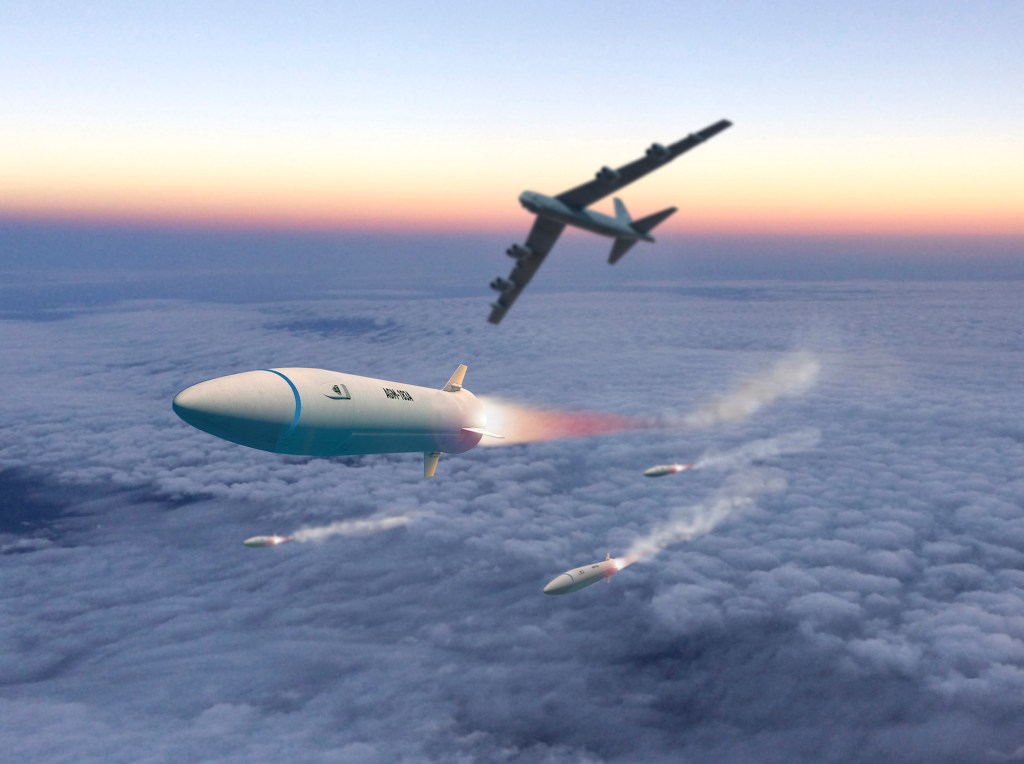
Key Aspects of the Agreement
Objective: The primary goal of the HyFliTE Project Arrangement is to accelerate the development, testing, and evaluation of hypersonic vehicles and technologies. This includes offensive and defensive hypersonic capabilities, such as long-range strike missiles that can be launched from land, sea, or air. A priority will be for the sea based and air lunched versions because of the overall nature of the Pacific theater.
Collaboration: The agreement facilitates a new level of collaboration among the AUKUS partners by allowing them to share each other’s testing facilities and pool their technical expertise. This cooperation is expected to foster deeper industrial collaboration and strengthen supply chains across the three countries. Its not uncommon for multiparty defense programs to get caught up financial problems in one of the participating countries. This aims to overcome that problem.
Funding and Timeline: The project is supported by a $252 million funding pool and plans to conduct up to six trilateral test flight campaigns by 2028. These tests aim to provide robust experimentation to accelerate the development of critical hypersonic concepts and technologies. The urgency is understood and appreciated. The US is already far ahead of the UK and Australia, but both have ideas, scientific experience and expertise that can add to that already available in the US.
Strategic Importance: The development of hypersonic technology is seen as crucial for enhancing the collective security of Australia, the UK, and the US. It aims to provide these nations with advanced capabilities to counter evolving international threats and maintain a technological edge over potential adversaries.
There is no question Russia has a hypersonic missile capability although it’s not as advanced as they make it seem to be. China on the other hand is very advanced in the field and operates a number of high threat systems, land air and sea based.
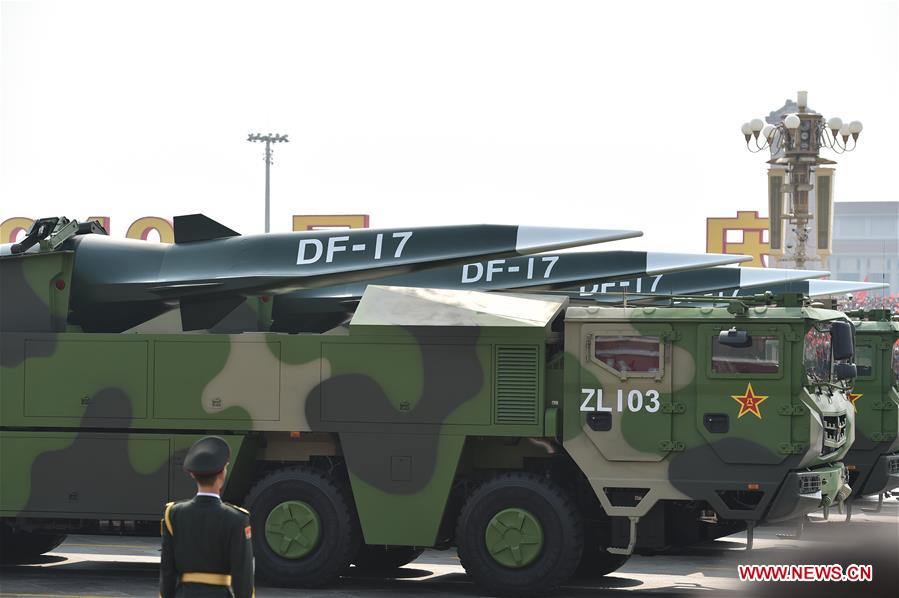
The Pacific theater and the three-island chain concept of oceanic ‘lines of defence’ that China and the United States consider potential combat zones are all inside the capabilities and range of Chinese weapons such as the Dong Feng-17.
These missiles glide vehicles are so fast that the kinetic impact alone is said to be sufficient to disable an aircraft carrier.
Hypersonic missiles (not the simple aero-ballistic type that is Kinzhal), are fired, in the case of the DF-17 and other land based variants, on a standard missile booster. This accelerates the glide vehicle to hypersonic speeds (greater than Mach-5). This allows the glide vehicle to reach a speed its SCRAM-Jet engine will actually function, allowing it to cross distances at very high speed (Mach 20+) before re-entering the atmosphere. However at this point it does begin to slow dramatically and is unpowered, but can steer and maneuver as well as potentially track its target. It won’t arrive at Mach 20 at the target, more like Mach-2-5. Even so it’s a speed that missile defences will find it hard to cope with, and kinetic damage alone would be catastrophic to a ship.
The US ARRW is air launched, like the Kinzhal, but uses a SCRAM-Jet engine to reach hypersonic speeds from an altitude before heading for its target. The Kinzhal is basically the top two stages of an Iskander missile air launched.
The thing with hypersonic weapons is they push materials science to its limits, the heat protection, managing fuel and air flow at such high speeds are immensely difficult and require exotic alloys to permit them to function. Everyone knows how they work in theory, but actually making it happen and viable is no small feat.
AUKUS moving into a field of greater technological cooperation is a good thing for all three partner nations, and makes possible developments that would potentially have been out of reach without it. The HyFliTE program is just the beginning of what AUKUS hopes to achieve.
The Analyst
militaryanalyst.bsky.social

 The Military Analyst
👍
LikeLiked by 1 person
Thank you and looking forward to your thoughts on China.
LikeLiked by 1 person
Well it’s about time and the incoming maladministration in the US is going to change the game significantly.
LikeLike