
India announced a huge increase in its defence expenditure in the past weeks – an additional 9.5% bringing the total to $78.8 billion.
That to us in the west with our high costs and pay, sounds barely anything. In fact it’s barely $2 billion more than the UK spends.
The difference is that India can buy roughly four times what western countries pay in terms of domestic buying power.
The downside is that the pensions and salaries of Indian service personnel along with maintenance cost it 72% of its defence budget, some $56.5 billion. That leaves it just $22 billion for new equipment.
As part of the overall Indian GDP the expenditure is unsustainably low, given the competitive nature of China and Pakistan, at just 1.9%. It would need to run towards 5% to match China’s expenditure in terms of buying power. However even if it did, it’s questionable if the Indian defence industrial base could cope with increased demand. at short notice.
India has two principal adversaries, Pakistan and its Chinese ally. China posses the largest threat in terms of open and most likely conflict, even though Indo-Pakistani rivalries are intense. The complex border areas of the Himalayan mountains in the far north east have seen everything from (and I jest not), sword fights and fists, clubs and pikes being used – in a bizarre attempt to stop it escalating into a fire-fight both sides would feel they have to respond to. There have been deaths, especially at Arunachal.

The Chinese continuously push the Indians by building roads and supply routes, establishing ‘new’ villages which are often unoccupied but designed to make the point ‘this is Chinese’, in an area where the border has never been properly mapped or defined. India, slow, bureaucratic and often lethargic to the point of ludicrous, fails more often than not to win out in these scenarios, because it just doesn’t back up its military with the necessary infrastructure.

China encroaches on Bhutan’s territory and even Nepal’s, which has drawn Indian ire and offers to support the Bhutanese government particularly. This led to the Dohklam standoff in 2017.
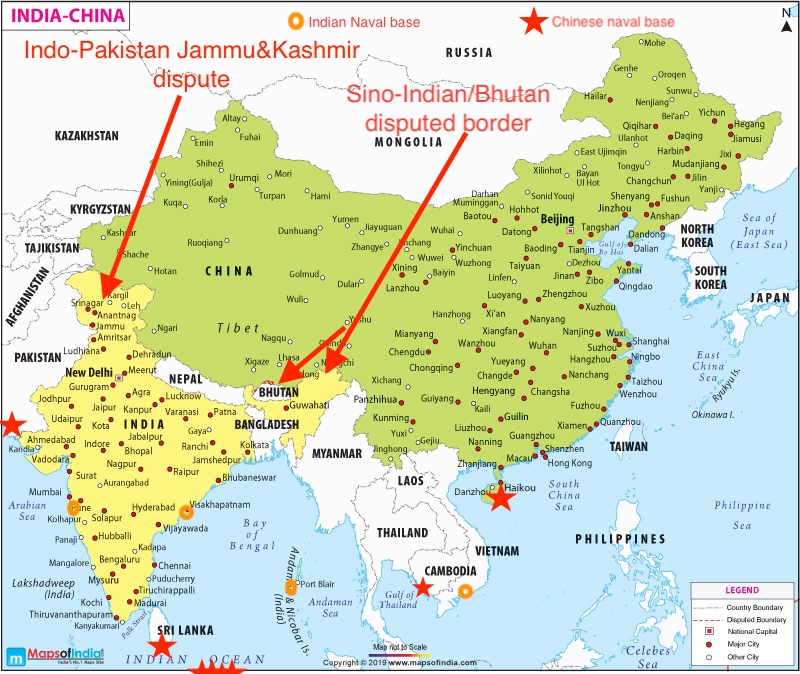
We have to remember that India, Pakistan and China are all nuclear powers. Add to this the severe impact climate change is having on the ice and snow in the Himalayas, which feed vital rivers in all three countries, and the source of multiple potential conflicts rises dramatically.
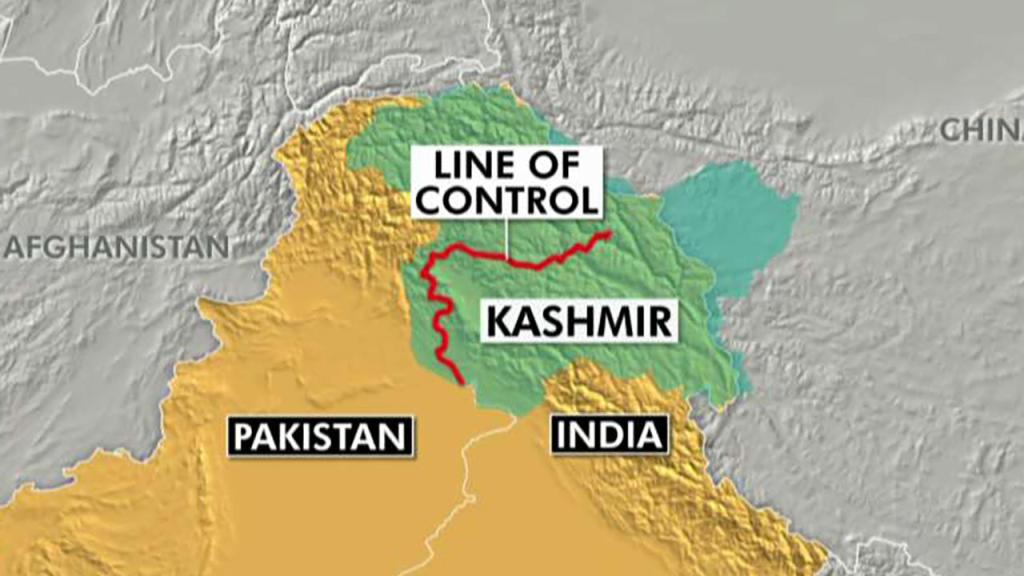
Another area that could be potentially explosive is the point where all three countries meet, the disputed Jammu & Kashmir, where part falls into China (but isn’t actually disputed by Pakistan or India), and the majority of the region which is, and where the high mountains and deep valleys are split between the two by ‘The Line of Control’. Fighting flares up often, usually when one side wants to make the other side realize it thinks they may have gone to0 far in respect of some other dispute.
China has gone out of its way to obtain naval bases – largely hidden as commercial ports, in Sri Lanka, and Gwadar and Karachi in Pakistan. It’s involved in fifteen other ports and developments in the Indian Ocean alone, plus key places like Darwin in Australia, where American forces are based. India has built new air and naval facilities on the Andaman Islands in the perfect position to throttle Chinese shipping running through the strategically vital Malaccan straits. Some 41% of all shipping and 80% of Chinese commercial shipping transits these waters.
In addition India has constructed a huge underground submarine base on its east coast to house its SSBN and SSN fleet, which they are committed to expanding.
For India the SSBN fleet – only the sixth nation to even posses such a type, is doubly important. If it came off worse in a nuclear exchange with Pakistan, it has them as a second strike option. It’s also another variable China would have to contend with if things escalated so far.
The Indian navy is increasingly important as China challenges the world with its now massive fleet – the world’s largest – and starts to use it to project power around the world. Yet its share of funds is low relative to the vast amounts spent on the army.

India’s army is powerful on paper and well trained for the most part. However it lacks even a basic understanding of drone operations and its equipment – much of it the type Russia has used up and seen pulverized in Ukraine. T-72 series tanks are built in India under license for example. The army is well aware that what’s been witnessed in Ukraine is highly revealing off its own equipment issues.
India also suffers from buying specific types of aircraft, helicopters and vehicles, as well as ships (though mostly in the past now), that leave it with a shocking mix of European, Russian, American and other randomly sourced weapons types that are expensive to maintain and have zero benefits for inter-operability. This absorbs a lot of money, results in narrowly trained personnel who can’t be as useful as they are on their own weapon types, as well as ammunition and parts issues – a similar situation to that Ukraine out of necessity, has found itself in.
India unquestionably would win a conflict with Pakistan and both sides know it. This is why the nuclear weapons threat is particularly dangerous. Pakistan would have to resort to use far sooner than India ever would have to. In many ways the nuclear threat has probably been one of the reasons neither side has allowed things to get out of hand. Yet it can never be ruled out, and Pakistan is said to have a far lower threshold of permissible use than India, based on the expectations that India would have destroyed most of Pakistan’s communications. Suffice to say that any nuclear conflict between the two is likely to see as many as 300 weapons used fairly rapidly with millions of casualties and a serious global impact, stretching across India, and most of East Asia getting the worst of the fallout consequences.
FORCES
Indian Army
The Indian Army has approximately 1,237,117 active personnel, making it one of the largest standing armies in the world. It maintains a reserve force of about 960,000. The Indian Army is supported by paramilitary forces such as the Assam Rifles and the Defence Security Corps.
Indian geography encompasses Himalayan mountains, deserts, tropical and sub tropical rain forest and savanna, leading to a diverse military need and skill set.
Organizational Structure
1. Commands:
• The Indian Army is divided into seven commands:
• Six operational commands (Northern, Western, Eastern, Southern, Central, and South-Western Command).
• One Training Command.
• Each command is headed by a Lieutenant General.
2. Corps and Divisions:
• A command typically consists of two or more corps.
• There are 14 corps in total, each comprising multiple divisions.
• The army includes 40 divisions, further divided into brigades and battalions.
3. Specialized Units:
• Units include infantry, armored corps, artillery regiments, engineers, and signals.
• Specialized forces include the Para (Special Forces), National Security Guard (NSG), and High Altitude Warfare School-trained units.
4. Training Institutions:
• Officer training is conducted at institutions like the Indian Military Academy (Dehradun) and Officers Training Academy (Chennai).
• Other specialized training centers include the Counter Insurgency and Jungle Warfare School in Mizoram and the High Altitude Warfare School in Jammu & Kashmir.
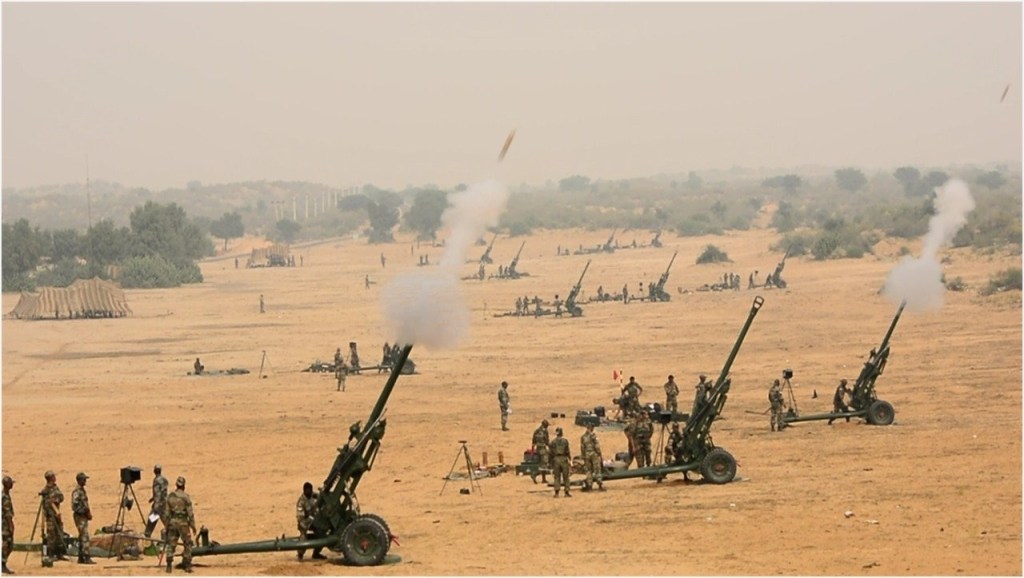
INDIAN ARMY EQUIPMENT
The Indian Army possesses a diverse and extensive inventory of tanks, Infantry Fighting Vehicles (IFVs), Armored Personnel Carriers (APCs), and artillery systems. Below is a detailed breakdown based on the available data:
Tanks
1. Main Battle Tanks (MBTs):
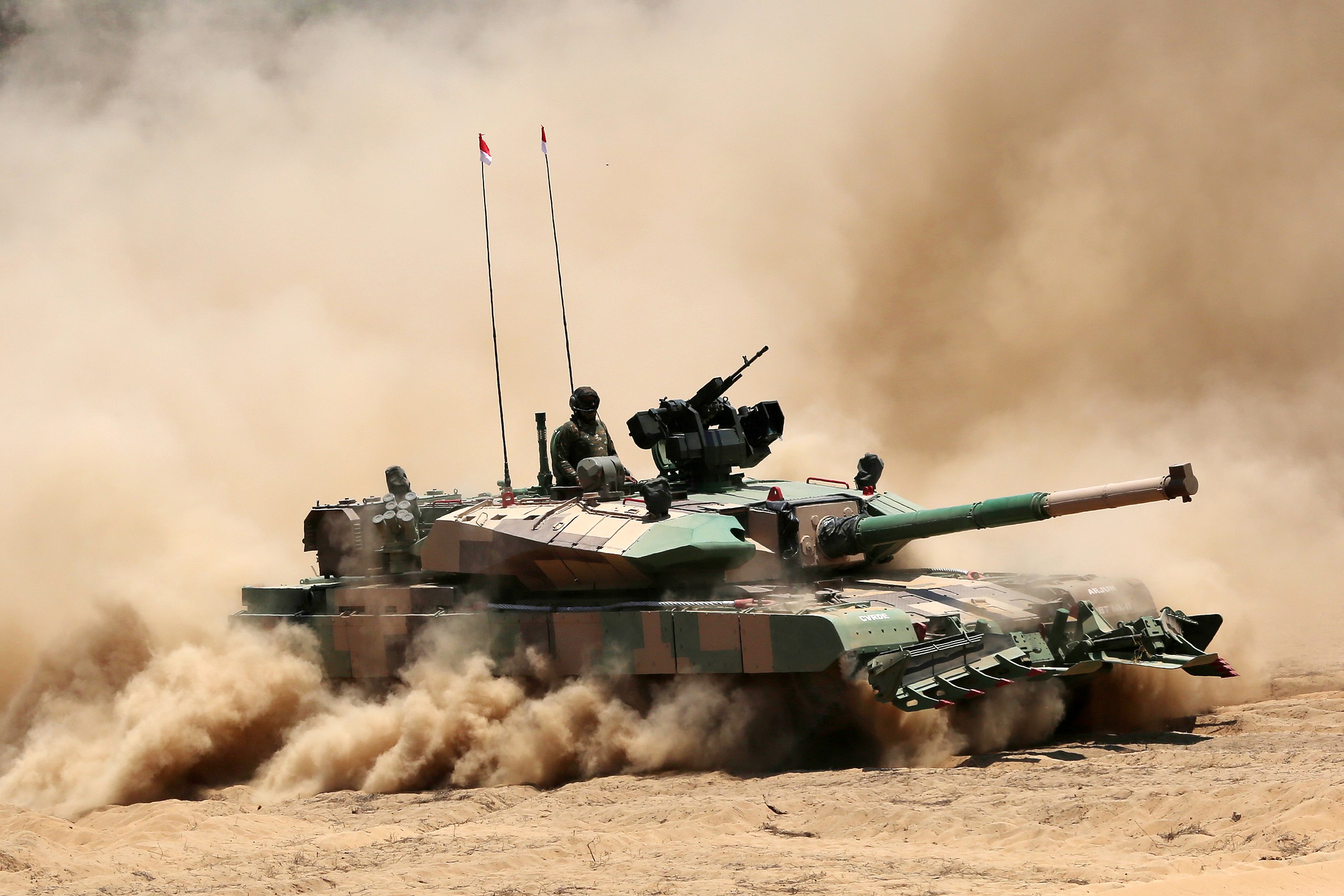
• T-90 Bhishma: 800 in service, with plans to produce 1,000 more under license.
• T-72 Ajeya: Approximately 2,000 upgraded tanks in service.
• Arjun MBT: 242 Arjun Mk1 tanks ordered; additional Mk2 variants are under development.
2. Light Tanks:
• AMX-13: Still operational in limited numbers.
Infantry Fighting Vehicles (IFVs) and Armored Personnel Carriers (APCs)
3. BMP Series:
• BMP-2 and BMP-2K Sarath IFVs are the primary tracked infantry vehicles, with over 2,500 units operational.
2. BMD:
• Airborne armored vehicles used by paratroopers.
Artillery Systems
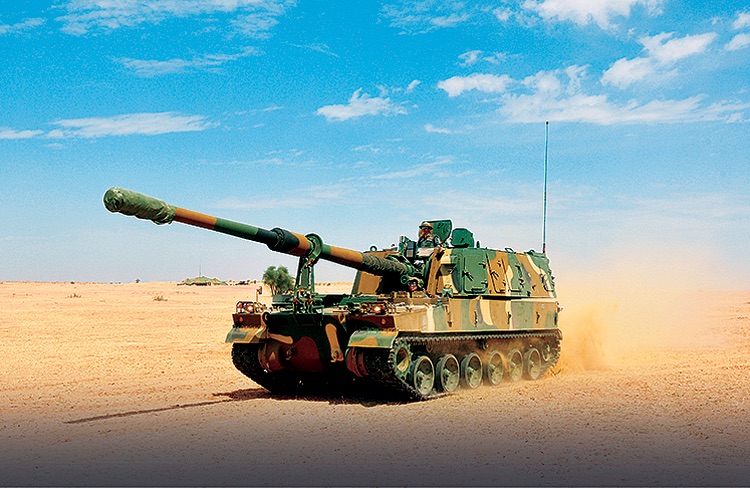
5. Self-Propelled Howitzers:
• K9 Vajra-T: 100 units delivered by 2021; additional orders for 200 units placed in 2024.
2. Towed Howitzers:
• BAE Systems M777 Ultra-Light Howitzer: 145 units in service.
• OFB Dhanush: 24 units delivered; more on order (up to 414 planned).
• Haubits FH77 B02 (Bofors): 200 units remaining in service, slated for replacement by 2025.
3. Field Guns:
• 105 mm Indian Field Gun Mk1/2/3: Around 2,400 units in service.
• 130 mm M-46 Field Gun: Approximately 1,000 units, with some upgraded to the Sharang standard (155 mm).
4. Rocket Artillery:
• Pinaka MBRL: Over 72 launchers of Mk1 variant; plans for a total of 22 regiments by 2028.
• BM-21 Grad: Around 150 launchers, being replaced by Pinaka systems.
• Smerch MBRL: 42 launchers in service with a maximum range of up to 90 km.
5. Static Artillery:
• Vijayanta and T-55 MBTs are repurposed as static defenses with their turrets deployed along the Line of Control (LoC).
As you can see from the above, the Indian Army is well equipped but some of that equipment and its designs are old, far from being standardized and there’s a genuine concern over the survivability of much of it given the changes to warfare we’ve seen in Ukraine. However both Pakistan and India have very traditional weapons and attitudes to their use, yet inevitably, one or both will feel the need to reevaluate.
INDIAN AIR FORCE
Commands:
• The IAF is divided into five operational commands and two functional commands, each headed by an Air Officer Commanding-in-Chief (AOC-in-C) with the rank of Air Marshal:
• Operational Commands:
• Central Air Command (CAC) – Prayagraj, Uttar Pradesh.
• Eastern Air Command (EAC) – Shillong, Meghalaya.
• Southern Air Command (SAC) – Thiruvananthapuram, Kerala.
• South Western Air Command (SWAC) – Gandhinagar, Gujarat.
• Western Air Command (WAC) – New Delhi.
• Functional Commands:
• Training Command (TC) – Bangalore, Karnataka.
• Maintenance Command (MC) – Nagpur, Maharashtra.
Field Units
3. Wings:
• A Wing is an intermediate formation between a Command and a Squadron.
• It typically consists of 2–3 squadrons and helicopter units, along with forward base support units.
• Wings are commanded by Group Captains.
2. Squadrons:
• Squadrons are the primary operational units of the IAF, each typically consisting of 18 aircraft.
• They are categorized based on their roles, such as fighter squadrons, transport squadrons, and helicopter units.
• Each squadron is commanded by a Wing Commander.
3. Stations:
• Stations are airbases where squadrons are based. These are commanded by Air Commodores.

Indian Air Force Combat Aircraft
1. Sukhoi Su-30MKI:
• Quantity: ~260.
• Role: Multirole fighter with air superiority and ground-attack capabilities.
2. Dassault Rafale:
• Quantity: 36.
• Role: Multirole fighter with advanced avionics and stealth capabilities.
3. HAL Tejas:
• Quantity: ~40 (Mk1 variant); additional units of Mk1A on order.
• Role: Light combat aircraft for air defense and strike missions, produced and developed domestically.
4. Mirage 2000:
• Quantity: ~49 upgraded to Mirage 2000-5 Mk2 standard.
• Role: Multirole fighter for precision strikes.
5. Mikoyan MiG-29:
• Quantity: ~69 upgraded to MiG-29UPG standard.
• Role: Air superiority fighter.
6. SEPECAT Jaguar:
• Quantity: ~115.
• Role: Ground attack and deep strike; scheduled for retirement soon.
7. MiG-21:
• Quantity: ~40 (phased out by 2025).
• Role: Interceptor; nearing retirement

India’s Air Force is no match for China despite its numbers. Most of the Russian supplied aircraft were downgraded export versions, many produced under license. India does make its own modifications to the Russian types, but they’re generally dated and outclassed by China, though still capable against the Pakistanis. Aircraft like the Anglo-French SEPECAT Jaguar went out of service in European forces decades ago, and they are due for replacement.
The list of transport aircraft is huge, covering everything from 11 C-17’s to C-130J Super Hercules and Il-76 and An-32 transports. There are some 400 helicopters, ranging from Ah-64 Apache (22) to Mi-17V5 combat support (230).
India also owns 3 Embraer based NETRA CRJ-145 AEW&C aircraft, as well as a Russian export version of the Beriev A-50EI Phalcon AWACS. It also has 100 British Hawk Mk132 trainer jets, which can be used in combat if needed.
INDIAN NAVY
India’s navy is in my opinion, underestimated and in the future will be its primary protection, as China continuously encroaches on Indian interests around the Indian Ocean. Indian influence is considerable. Its neutrality appeals to other nations and it doesn’t come bearing what looks like gifts, only with onerous strings attached like the Chinese. As a result it has spread its influence to port rights and basing into the Red Sea, the coast of Africa, Persian Gulf and into the many small island states in the Indian Ocean.
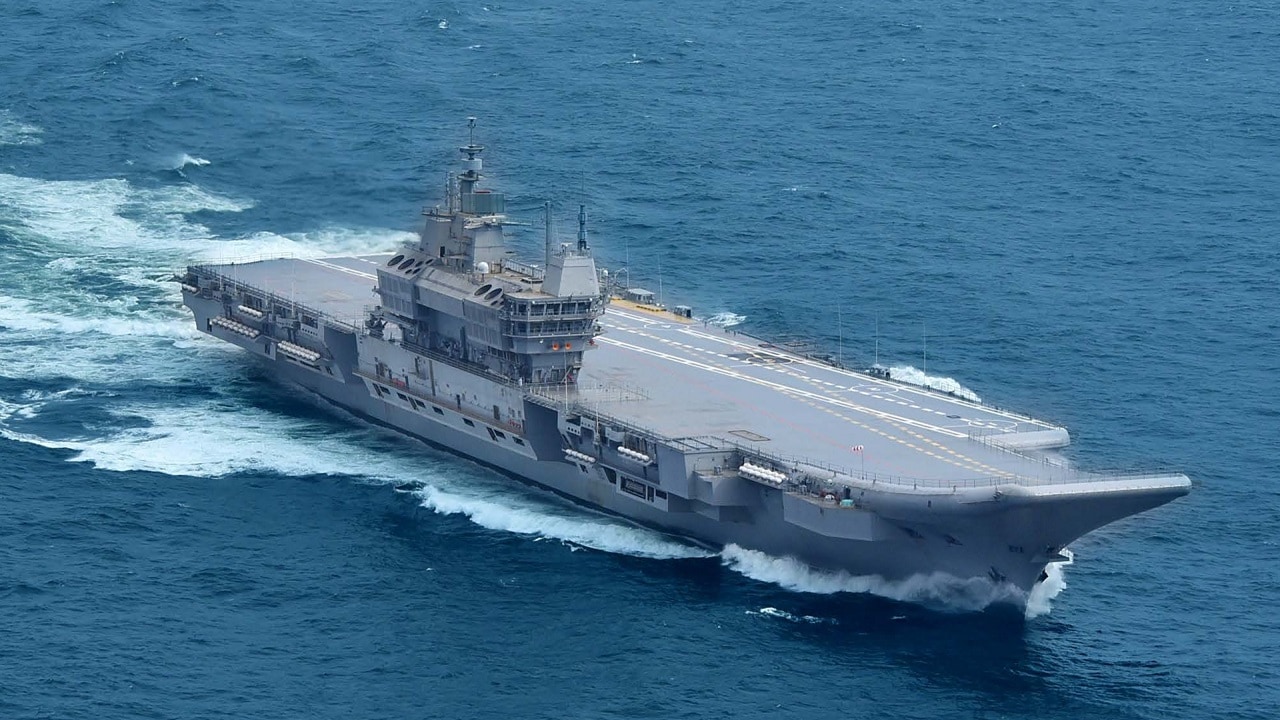
India has made significant strides in building its own carrier, the Vikrant, with its ski slope launch for Mig-29K’s of which it carries 26. A second carrier is under development. Both will eventually be equipped with French naval variant Rafael fighters. India plans to post one on each coast and one to stand in when the other pair are in maintenance. India was able to build a lead ship in class for just $3 billion. It took 13 years but that’s not unusual for such a complex first time project like this.
The carrier is unique in having 32 VLS tubes for anti-aircraft missiles and anti ship missiles.It also has 4 76mm OTO Malera guns and 4 x CIWS. It also has up to 12 helicopters, mostly Russian export Kamov KA-32 ASW and domestically produced units.
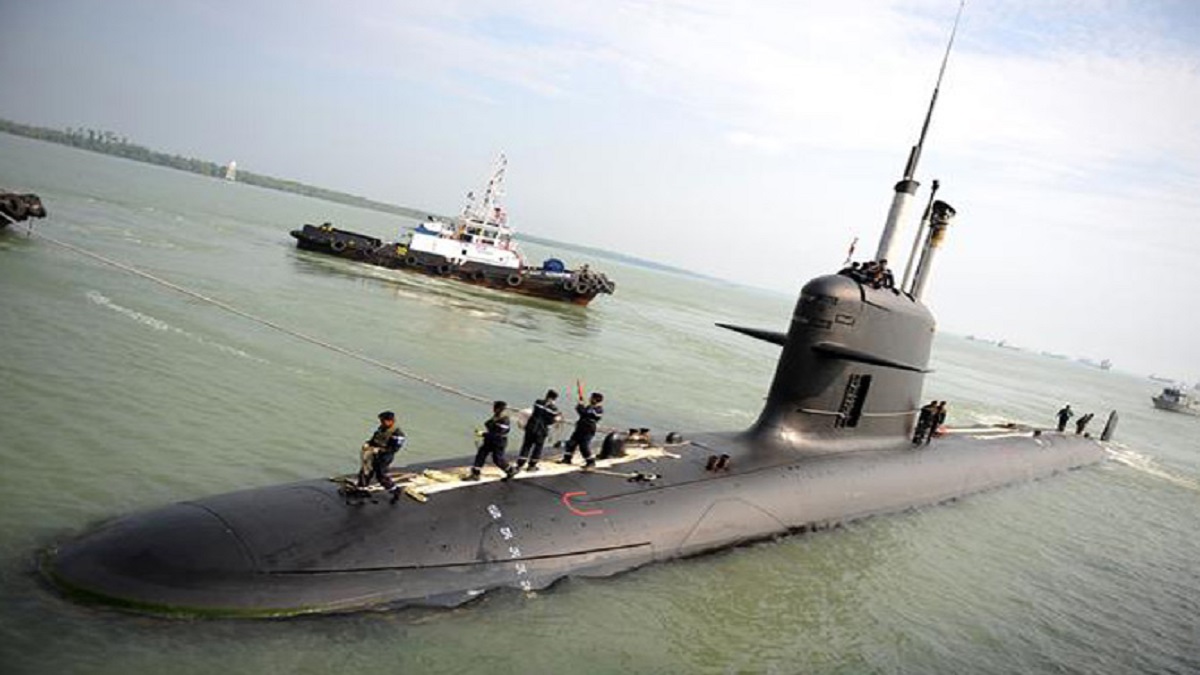
In addition the construction of SSBN’s, so far 2 have been built with four more planned, the Arihant Class carrying 4 SLBM’s and a host of other attack missiles, has been a significant development. When you examine the fuss and detail over the AUKUS project for Australia, India has managed to do most of this alone. It learned a lot of lessons form its use on lease, of a Russian Victor-III SSN, but it clearly looked at western submarines as a superior source of inspiration in many ways. Importantly India isn’t trying to play the arms race game, it’s merely making sure it gets its capabilities across and can do what France and the UK do, deter its nuclear armed neighbors. The deployment of 6 SSN’s will also be significant.
Fleet Composition
Aircraft Carriers
1. INS Vikramaditya:
• A modified Kiev-class carrier acquired from Russia.
• Serves as the flagship of the Indian Navy.
2. INS Vikrant:
• India’s first indigenously built aircraft carrier, commissioned in 2022.
• Equipped with modern combat systems and capable of operating MiG-29K fighters and helicopters.
Submarines
3. Nuclear-Powered Submarines:
• Arihant-class SSBNs:
• Includes INS Arihant and INS Arighat.
• Designed for ballistic missile capabilities as part of India’s nuclear triad.
• Planned SSNs:
• Six new nuclear-powered attack submarines (SSNs) are prioritized for future induction.
2. Conventional Submarines (SSKs):
• Kalvari-class (French built Scorpène):
• Includes six submarines such as INS Kalvari and INS Vaghsheer.
• Built under Project 75 in collaboration with France.
• Sindhughosh-class:
• Kilo-class submarines acquired from Russia.
• Shishumar-class:
• Type 209/1500 submarines built in collaboration with Germany.
Destroyers
• The Indian Navy operates advanced destroyers equipped with state-of-the-art weaponry and sensors:
1. Kolkata-class (P-15A): Three ships in service.
2. Visakhapatnam-class (P-15B): Four ships planned; INS Surat is the latest addition.
Frigates
5. Shivalik-class (P-17): Stealth frigates designed indigenously.
2. Nilgiri-class (P-17A): Advanced stealth frigates under construction; INS Nilgiri is the lead ship.
3. Talwar-class: Russian-origin frigates equipped with BrahMos missiles.
Corvettes
1. Kamorta-class (P-28): Anti-submarine warfare corvettes.
2. Various Fast Attack Craft and Offshore Patrol Vessels for coastal defense.
Amphibious Ships
• The fleet includes Landing Ship Tanks (LSTs) for amphibious operations and humanitarian missions.
Support Vessels
• Fleet tankers, survey ships, and other auxiliary vessels provide logistical support.
Personnel
• The Indian Navy has approximately 67,252 active personnel and 75,000 reserve personnel.
Future Plans
1. The Navy aims to expand to a fleet of 155–160 warships by 2030 and up to 200 ships by 2035.
2. Indigenous shipbuilding is a key focus, with over 50 vessels currently under construction, including destroyers, frigates, corvettes, and submarines.
This robust force composition ensures the Indian Navy’s capability to secure India’s maritime interests and maintain a strong presence in the Indo-Pacific region.

A PRIME EXAMPLE – ADAPTING FOREIGN TECH FROM EVERYWHERE
The Shivalik Class ‘stealth’ frigate shows a mix of western and Russian design features. Note the Russian style anti-torpedo mortars and funnel/radar mast design, while using western naval guns and European modular design, yet equipped with Indian torpedoes and missiles, German propulsion, and a mix of Russian and French radars.
India has made and continues to make huge leaps in capabilities. Its naval development on such a tight budget has been extraordinary in a very short time, it has my complete admiration.
However both its army and Air Force rely too heavily on what must now be considered dubious Russian equipment. India is capable of producing equipment better than Russia’s. If it can do for its army what it did for its navy, it would be a major positive change. India is a long way from producing a domestic fifth or even sixth gen aircraft, frankly it’s a long way from producing a 4.5. That’s all very well when you’re facing Pakistan, but that’s not going to be viable up against China if war breaks out on the eastern frontier. India must see that Russian aircraft are not the way forward. They will never be a match for Chinese types – types Pakistan is re-quipping with.
Unlike western nations who can see the problems but don’t act on them, India does. Over time it’s going to become a major military power and counterweight to China. Both of their interests are competitive and potential flash points as China expands its influence into the Indian Ocean. Influence India doesn’t appreciate or want and sees as a threat to its own security. The question for India is what happens when China is done with Taiwan, and American influence is blunted in the western Pacific? Only India will be left to stand up for India. They understand this.
Yet India is often blinded by its age old rivalries with Pakistan. Its all too inclined to prepare for war with a country that could not possibly defeat it on its best day, and whose willingness to indulge in nuclear weapons use is far to low a bar to be comfortable with. Both India and Pakistan would be better off if they could just settle their age old disputes. The real enemy is China. Another Indo-Pakistan conflict would be a disaster like no other for both of them. There have been four wars, 1947-48, 1965, 1971, 1999. Another two dangerous conflicts raged 1984-2003 over Siachen and a wider military standoff in 2001-2.
There was a major war with China in 1962 over the Aksai-Chin on the western border, but China ended it unilaterally and withdrew. There were two clashes in 1967 in Sikkim, an ambush in 1975 at Tulung La in Arunachal Pradesh, the Doklam Standoff that lasted 73 days over Chinese road construction near Bhutan in 2017, and the 2020 Galwan Valley Clash in Ladakh that turned seriously violent and resulted in deaths.
There have been minor scuffles and arguments since – but every one of them has been China pushing its luck since 2020.
INDIA’S NUCLEAR WEAPONS TRIAD
India has a variety of Agni Series-I,II, III & IV missiles ranging from 700-4000km all nuclear capable. It also has the Agni-V, a full ICBM with a range of over 5,000km. in addition it has the Prithivi Series SRBM’s with 150-300km range. All missiles are fully mobile and operate from TEL’s.
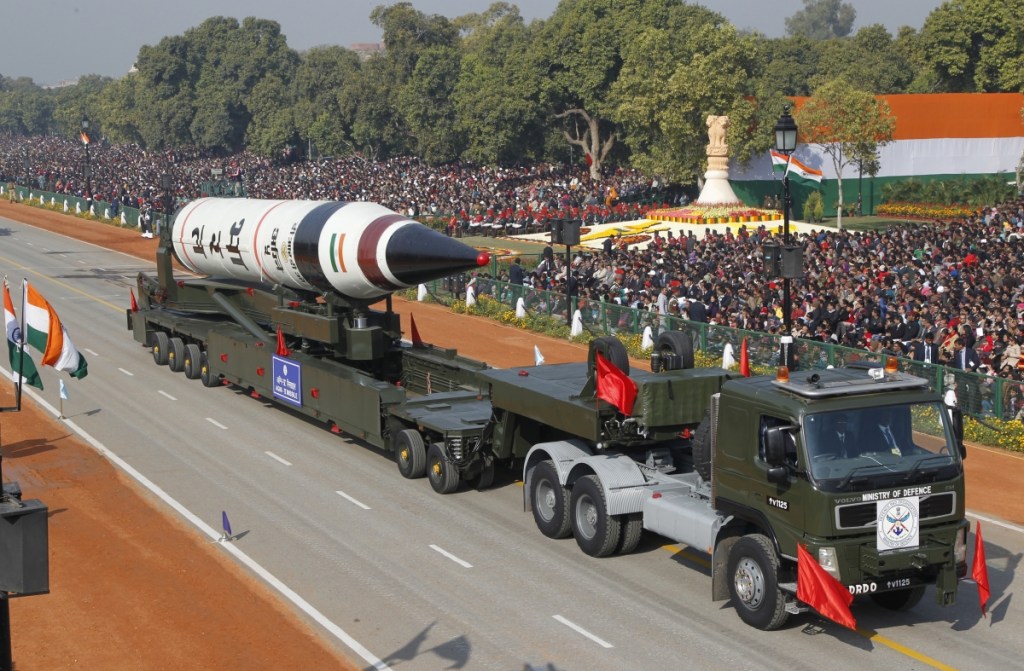
Air dropped munitions can be carried by the Mirage-2000 series that have been modified for nuclear strike roles, the outgoing SEPECAT Jaguar, and possibly the Su-30, though the Mirage is understood to be the preferred option.
The Arihant SSBN carries up to four K-15 Sagarika with 750km range, but the new missile set to replace that being tested is the K-4 SLBM with a range of 3,500km.
India uses the principle of CMD – Credible Minimum Deterrence, and has a no-first use policy. The country possesses around 172 nuclear weapons as of 2025.
The Analyst
==============================================================
Note on Pakistani nuclear weapons:
Pakistan is believed to have a similar number, but because of its infrastructure and ability to produce fissile materials, this is likely to rise quickly to 200+. There are grave concerns over the safety and security of Pakistan’s weapons. It’s known for instance that warheads unarmed, are driven about the country in white vans (of which there are tens of thousands in use), so that they are permanently hidden from Indian attacks. Pakistan is known to have difficulty storing the weapons properly – the US has fretted over the security situation for years. Russia and the US are known to have had joint plans for extracting the Pakistani arsenal if the country became unstable, though those are no longer viable due to its size and dispersion.

 The Military Analyst