
If the United States withdraws from Europe militarily (it can’t actually leave the organisation of NATO without a specific law enabling it, and funds to permit withdrawal must be voted for by Congress), where does that leave Europe in terms of nuclear weapons for strategic and tactical use, as a credible deterrent?
The United States has provided Europe with a so called ‘Nuclear Umbrella’ for the past 76 years. It was particularly prominent in the 1980’s with the deployment of entirely American owned Ground Launched Cruise Missiles and Pershing-2 missiles, coupled to F-111 launched SRAM’s and the tactical bombs deployed by NATO air forces but under US control. However throughout the era of ‘Tripwire’ 1949-67, it was the principal combat posture for all of NATO and very much dependent on American nuclear weapons. The Federal Republic of Germany only came into existence in 1949 and has known nothing but American nuclear protection. Understand therefore, why this is such a big wrench for them.

This once vast force has now been reduced to around 130 bombs deployed through the NATO nuclear weapons sharing program. However they are still American controlled, even if several countries provide the aircraft for delivering them. We have to face that these will likely be withdrawn, so what do we do about it?
Whatever organisation replaces/takes over or works in parallel with NATO, it’s going to need a nuclear deterrent when your opponent is the most aggressive imperialist state on the planet, and armed to the teeth with nuclear weapons – 2,000+ of them tactical level. Even if they don’t all work you have to assume 50% will at a minimum.
Only France inside the EU is a nuclear power but it’s not a relationship it shares with NATO. French nuclear forces are subject only to Presidential control. French nuclear policy is based on the ‘Ambiguity Principle’. They may or may not use their weapons first, and they embrace the possibility of a ‘Final Warning’ strike to persuade an aggressor that enough is enough.
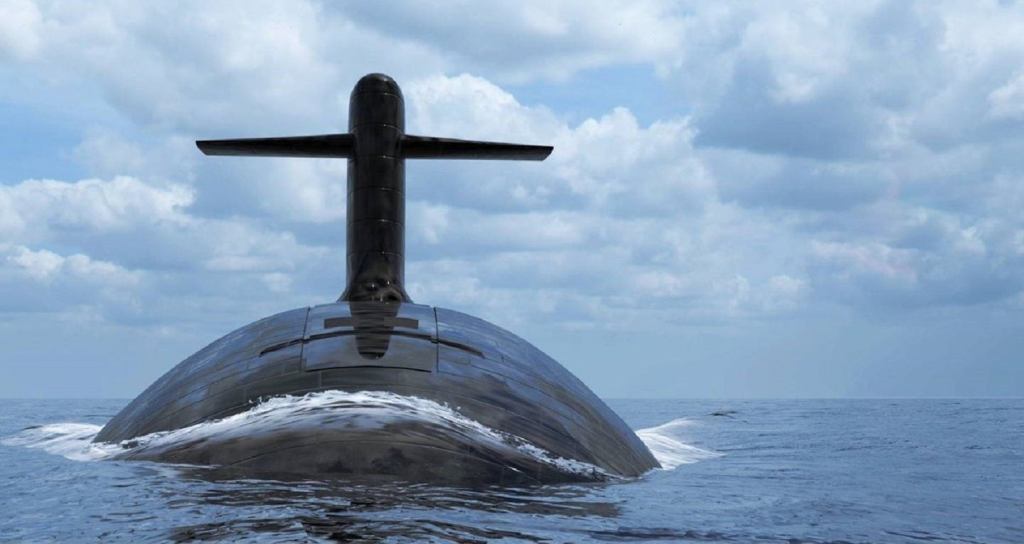
France is estimated to possess 290 nuclear weapons, of which about 280 are deployed (down from 540 during the Cold War). The remaining weapons are thought to be in maintenance or storage. The vast majority, or approximately 240, are deployed by the French Navy, which maintains a continuous at-sea presence via its nuclear-powered SSBN’s. This posture ensures a secure second-strike capability in the event of a nuclear attack. Like the British, there is always one at sea, although this wasn’t first achieved until 1996, Britain achieved this in 1970.
France maintains 40 land-based aircraft and 10 carrier-based aircraft to deliver its air-launched cruise missiles, called the ASMP. The Rafale fighter-bomber has a range of 2,000 kilometers.
All of this France may be willing, with the US out of the picture, to contribute towards Europe-wide deterrence, because the General De Gaulle view that ‘no US president would ever sacrifice New York for Paris’ would no longer apply. However the vast majority of these warheads are strategic weapons of last resort.
There is of course another nuclear power in NATO, the UK, which while outside of the EU could still be a member of a unified European Defence Organisation.

The UK was reducing its nuclear weapons stockpile but in 2021 it was decided, given Russian aggression that it should remain at around 260. These are all mounted on Trident-2 SLBM’s fitted in the Vanguard class SSBN’s which can carry up to sixteen missiles each with around around 4 warheads per missile. However they are believed to carry only 12 missiles (sometimes as few as 8) with the other four tubes being allocated for other unspecified equipment and purposes. The new Dreadnought SSBN will in fact only be equipped with 12 missiles.
Technically the UK allocates its SSBN to SACEUR – the US commander of NATO forces. However it can be withdrawn at any time, and with a US draw down in Europe where SACEUR is no longer a viable command position, that seems increasingly likely.
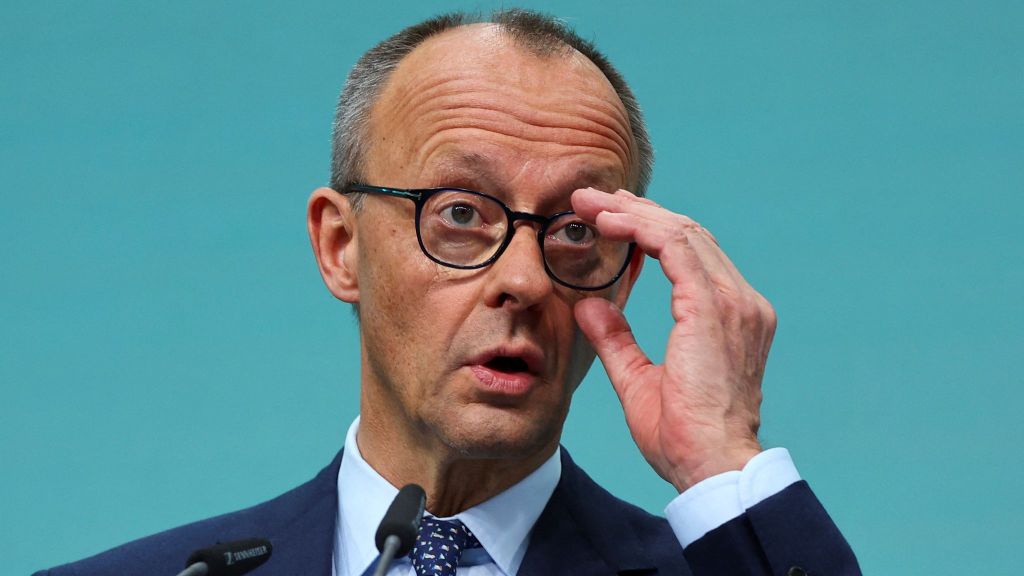
Just to complicate matters Friederich Merz, the new German Chancellor has said that if America withdraws its nuclear umbrella from Europe, then he asks that Britain consider extending its own to cover at least Germany if not the rest of European NATO. He actually went further saying that the EU needs its own nuclear deterrent or at the very least to shelter under Britain and the French systems. The question both of those powers will have is, ‘and who’s going to help cover the cost of that then’? France and the UK are both cash strapped, facing calls for immediate defence expenditure rises while facing declining tax revenues to maintain social services their populations are unwilling to see slashed to pay for it.
It is also true that the UK is reliant on the Americans for the supply of Trident-2 missiles and their refurbishment (although it now supplies its own warheads after a short period where that wasn’t happening). It’s too late to re-design the Dreadnought SSBN around a French missile – if an agreement could be reached, and replacements for the Dreadnought are not due until the 2050’s, if SSBN’s are even viable by then given the increasing use of sophisticated underwater drones.
The integration of the British nuclear deterrent into a European defence would be either the subject of a principled decision that its simply ‘the right thing to do’ – which it is, but its unlikely to be so easy.
While it would demonstrate to the Americans we are doing more and that they are not essential to our defence any more, the EU still has an axe to grind over Brexit. Talks would unquestionably revolve around what the EU terms ‘parallelism’. This is where they won’t discuss one subject without discussing another that’s of interest and advance on one, may not be possible without equal advance on the other.
Brexit has many areas of unfinished business almost ten years on from the vote. The EU wants access to British fisheries in return for access to the EU electricity market (which Britain really needs as its overly dependent on non-EU Norway to cover peak requirements, which is causing upset in Norway as it causes electricity prices to rise there too). Overall the EU won’t budge on much without a fisheries deal. It may have to change its positions if it expects the UK to offer up a fundamental nuclear umbrella arrangement as America withdraws. It seems almost pathetic that arguments over who catches cod in UK waters may make or break a defence pact! However that’s the EU for you, and I only wish I were joking. The British will be very sensitive to the fact if the EU wants something from it, then that means it gets something in return – a revised trade deal is high on that agenda, fish and all.
Chancellor Merz is not the weak willed mealy mouthed cowering type like Schulz was. He also has an ally in EU President Ursula von der Leyen – a member of his own party and former defense minister (at which she was rubbish, but that’s only slightly relevant now). He is prepared to lead from the front on Ukraine, European defence and much besides. He’ll have a happy ally in President Macron and EU foreign relations chief Katja Kallas.
The one person who won’t be so keen to see NATO junked is its Secretary General (and former Dutch Prime Minister) Mark Rutte. He will fight for NATO relevance – and he should. It is still the principle security arrangement and best for Europe as a whole. However, a negotiated American draw down, a rearrangement of command structure, would be good for the Europeans. If America withdrew from the command structure but remained in the organisation politically, that too could work as it did for France for 30 years. It would also enable Canada to remain as a contributory member for itself and for Europe – especially as the High Arctic becomes increasingly contested, a matter which is of interest to Sweden, Finland, Norway, Denmark/Greenland, Iceland, the UK & Canada, all NATO members.
Both the UK & France could produce more nuclear weapons for a tactical backup under European control. It doesn’t require thousands, but a couple of hundred under European command, in a revised NATO is still entirely viable. It just requires the willpower to make it happen.
The EU is quite capable of creating problems, but this time its own leadership and the most important members of its ruling governments are seemingly closer to a point of principle on European Defence than they have ever been. If America is wanting to take a back seat but still share its intelligence as before under various arrangements, and Europe with America, a reasonable and amicable exit might be possible.
Britain will have a way to work better with Europe as a whole because Europe needs British military involvement – but including the UK deterrent in such a way would be a landmark moment – and so would the other benefits it might bring.
I remain optimistic that if we all work together we can make it work, it’s in everyone’s interest to do so. We can solve the nuclear deterrence issue, we can rebuild our armed forces and make it clear to the Russians we’re not to be bullied around. 200 strategic nuclear weapons landing in Russia if it came to it is all it needs to reduce the country to rubble and destroy its economy for years – Russia knows it. Why would you risk that? So it’s perfectly credible.
It’s our conventional forces we need to ensure are even more credible. That way no attack will ever come.
UKRAINE – NUCLEAR WEAPONS FOR LONG TERM SECURITY?
I’ve mentioned before Ukraine’s long involvement in the Soviet era in the industrial construction of the USSR’s silos and missiles.
Almost a third of the USSR’s strategic and theater ICBM/IRBM force were in Ukraine. The country has the knowledge and the materials to produce nuclear weapons and viable delivery systems. The only step process it lacks is a reprocessing plant for spent Uranium and Plutonium – which France and the UK both have. That would enable weapons grade plutonium to be manufactured. The rest is well within Ukraine’s capabilities, although it never built warheads in-country.
The Pivdenmash Factory in Dnipro built missiles and the guidance systems were developed at Kharkiv in conjunction with the University until 1991.
The question is should it ever take this route to protect itself from further Russian imperialist adventurism?

Firstly Ukraine with nuclear weapons would seriously upset the Russians (you can see that as either a good thing or a bad thing). They would unquestionably see that as a threat to their security and behave accordingly. However they would also feel constrained by it – and that is what they hate most, having the certainty that an option isn’t available to them when they think it should be.
Could Ukraine build enough quickly enough to act as a viable deterrent?
Probably yes. How many is enough? 200 to make it impossible for Russia to find and isolate them all if it came to a conventional first strike and for Russia to know it couldn’t possibly get them all. A mix of IRBM and tactical weapons would be needed. You would have to be prepared to threaten Moscow.
Is the cost worth it? That depends on your rationale. Land based nuclear weapons systems aren’t that expensive, it’s when you start air launching them and putting them at sea they get pricey.
The key reason is that if Ukraine is not inside NATO or an EU defence structure with an article five type of responsibility for collective defence, and it doesn’t have concrete security guarantees to aid it quickly and effectively, then it has to be able to have its own insurance.
Preventing the Ukrainians taking this path is as much about what we in the west are prepared to do about its – and our own – conventional security. You can’t expect Ukraine to sit back and ignore its own defence simply because we won’t give it what it needs, yet we pontificate about nuclear proliferation. We can’t have our cake and eat it too, not in this scenario.
Ukraine doesn’t want nuclear weapons. They’re a pain to secure, operate and manage, let alone to develop and maintain. Yet what real choice does it have if Russia remains hostile and The Collective West declines to fulfill its security needs? In many ways it’s our choice to open the path to nuclear weapons by our inaction, that many Ukrainians already feel would be essential, if they don’t get to join NATO or have viable support in place in the event of new Russian attack.
Once again, it’s more than ever up to US, here in Europe. We either secure Ukraine, or we shut up moaning about it when it tries to secure itself.
The Analyst
militaryanalyst.bsky.social

 The Military Analyst
Talking about the high arctic: This is, or should be, a concern for the USA too.
If the USA leaves NATO they would expose their northern underbelly with Russian or even Chinese submarines or long range airplanes or UAV being able to cross these waters unimpeded sneaking up all the way down to Washington DC.
I have always believe that this was the meaning of the NA in NATO; protecting America’s northern borders.
It is incredible that President Musk and his court jester Donny don’t know that. I think that they just don’t know where Europe is, or what it is. Just like when Don Jr. visited Greenland. I bet he thought it was a tropical island choke-fufl of verdant greenery, parrots and topless chicks and with a very different type of snow than the one that forms glaciers.
LikeLike
When and if the current war comes to an end, having their own independent nuclear deterrent is the only way Ukraine can be sure it won’t be invaded again. Given the weak western support and treachery from across the Atlantic I would be surprised if they are not already building them. Obviously they would keep it top secret until they have a couple of hundred reliable systems
LikeLike