
We’ve quite naturally been looking at the situation in Ukraine because so much has happened with the American betrayal of its and our, ally. With a third of readers in Australia, and debate still ongoing about AUKUS I thought I’d take another look at how it’s progressing.
In the Pacific, Japan sits quietly saying nothing but reacted by dumping a vast amount of US Government bonds as it sees the US diving into recession. It struggled to avoid one itself and it doesn’t need another. Japan knows how dependent on the US it is, most of its Air Force is American – another reason they’re so keen to be part of the British originated sixth generation fighter program. Japan is buying 584 land attack Tomahawk cruise missiles – which it now seems the Americans can deactivate when it suits them, along with Japan’s F-35’s. Everyone with American systems now has to be wondering how safe they are because America is no longer a reliable ally.
The Australians have also kept out of saying anything. They have thrown themselves in to the arms of the Americans contributing $1 billion to US submarine building yards, negotiating to buy three Virginia Class submarines. Beyond that it plans with the UK, to build its own SSN’s to a British design, for now we’ll call it the SSN-AX.
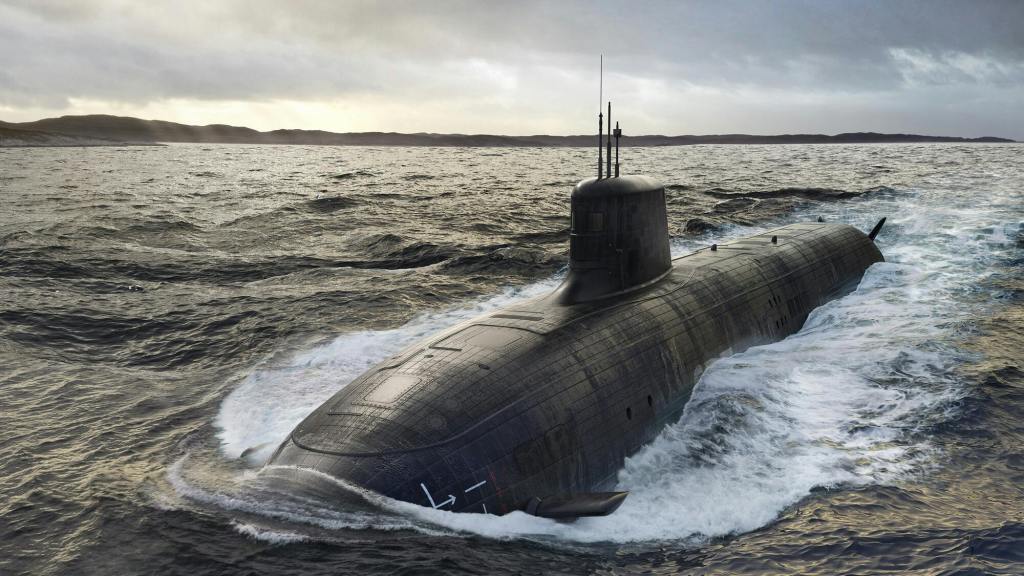
The whole point of Britain and the Australians working together with the Americans is that they would be using American fire control and command system technology, allowing integration with all three navies systems to aid as a force multiplier.
Part of the reason the Australians gave up on the French deal was the integrated fire control issue. Now they face being allied to the Americans as do the British, when the Americans seem to be isolating or even changing sides. Do both the UK and the Australians need to rethink the whole program?

Australia’s problems are largely of its own making. A ridiculous and frankly semi-corrupt procurement procedure for the French submarines ended up in the bin, but had taken years to reach a decision over, then when they did it was already realised it was probably the wrong one, never mind the expense which seemed high for what they were getting. Meanwhile the aging Collins class limp ever on. The off-the-shelf Virginia Class are years away, if they ever get built because the Americans are so far behind building their own. The SSN-AX is unlikely to enter service before 2040-41 all being well.
The UK needs the SSN-AX just as much as Australia does. But is it too late to change specification and extract the program from its American element, build a new control system or, painful irony for Australia, join with the French on theirs? The whole complex integrated submarine deal must surely be in question for the UK and Australia – both need to get away from American technology, because America can no longer be trusted.
The whole technology transfer issue has still not been resolved either and neither country has been fully cleared to receive the US tech – a process nowhere near completing under the new administration, and with their attitude towards such things, who knows if its even going to happen now?
For the Americans there’s been no signal that AUKUS is in danger, largely because it plays into their agenda on longer term confrontation with China. But if the Americans change their mind on that and see it no longer as in their interests to maintain it? Where does that leave Australia and the UK?
Would they be better off simply working together on the SSN-AX? Risking a window of vulnerability? Australia is quite tied up with the US, as the British are, but if you don’t start somewhere breaking away from the Americans you never will. And once it sinks in with them, the technological draw bridge I promise you, will slam shut and not reopen for decades.
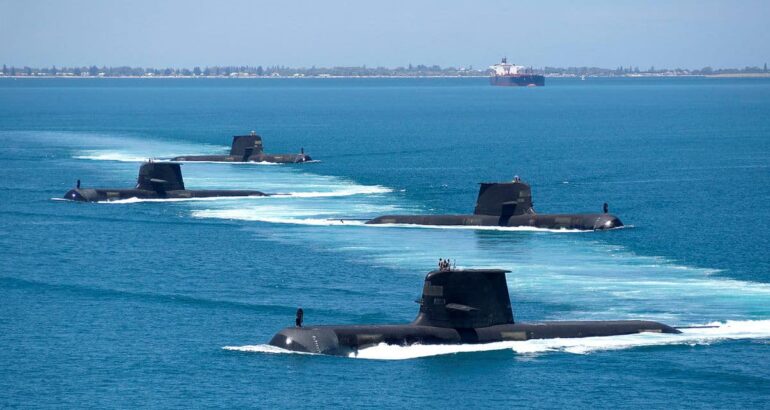
Australia last week issued a strategy document requiring AUD$30 billion ($19 billion US) to prepare the domestic industrial base for the AUKUS project. This is a vast project for a country with a relatively small population to undertake – at third the size of the UK. This is just preparing the Industrial base you’ll note, not actually building the submarines. The SSN-AX I predict will be at least US$5-6 billion each by 2041, likely more.
The Australian government will aim to create 20,000 jobs over 30 years through what the document characterizes as a “whole-of-nation undertaking.”
“The scale, complexity and technology requirements of the program also mean the Australian Submarine Industrial Base will need to work with trusted United Kingdom and United States partners to deliver products and services across the life of the [nuclear-powered submarine] program,”
Clearly nobody is trying to think that the long term may mean that trust in the United States is no longer there. If that’s the case then where does that leave everyone involved?
In many ways it’s already too late to get out of it. HII – one of the builders of the Virginia Class is already contracted to work with Australian industry to qualify companies that can be used to support those submarines – if they get built – and I honestly think that right now that’s still an ‘if’.
HII has been contracted with Australia’s H&B Defence and the UK’s Babcock, in an effort to create the vital supply chain for the Virginia support and eventually the build for the SSN-AX, which will first be built in the UK and then subsequent Australian boats in Australia, while the UK builds its own.
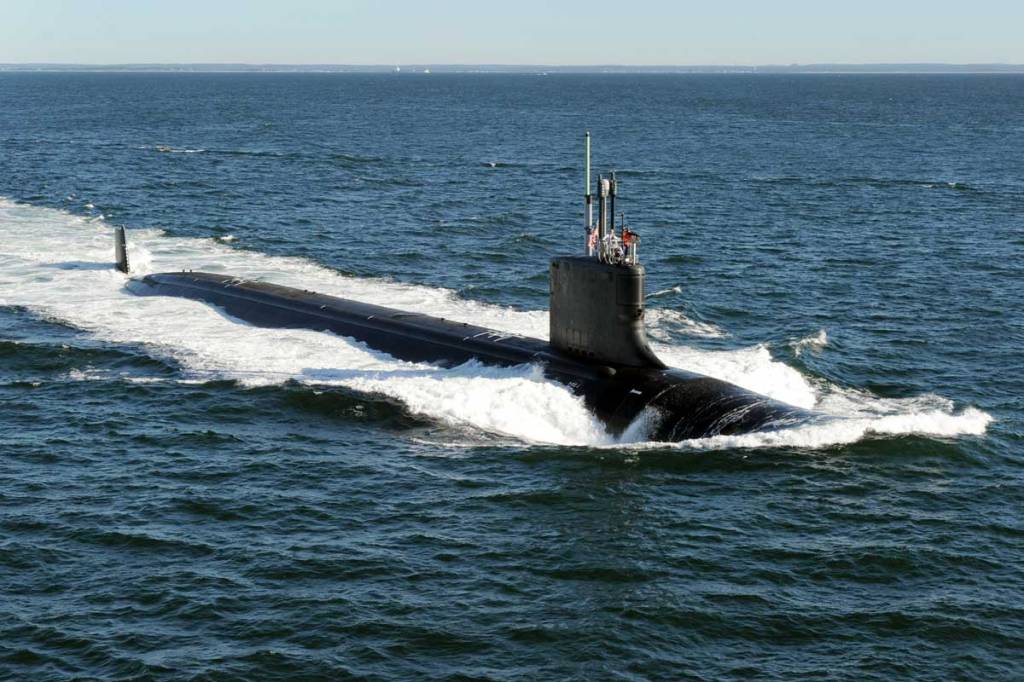
Yet everyone has to be asking – even HII – is the administration, in its current mood and disregard for allies, really a reliable partner? Will everything go to plan, but more to the point is it really in the UK and Australia’s interests to let it happen? It will mean decades of integration with the US navy. Probably as far out as 2070. Is that what we want now? Is it what they want?
Admittedly this administration won’t last for ever, but can we base our trust so completely on the US ever again, regardless, and should we, even if we could?
Australia and the UK can do this. The UK is quite capable of building a submarine without American tech, and with things changing so much in Europe, France and Britain need a better military technology relationship, submarines are one are they could share so much in developing, if they could get past their traditional national interests. It’s not like it isn’t already happening. For instance the UK – now no longer a country with a blast furnace steel mill, which means it can’t manufacture virgin high quality steel, depends on the French for supplying the outer pressure hull steel for its submarines. Not a subject anyone likes to talk about too often. If we can do this we can do much more.
Australia seems committed to AUKUS, but I wonder if it would better off in the long term with just an AUK – and not the giant Northern Penguin memorialised on the shores of Iceland where the last one went extinct, which if 47 changes his mind could well be what happens to this entire program.

Yet there are those in Australia who claim the expense of the Virginia class alone; $3b US each, and a good 20% of the Australian equipment budget each year, is too high.
Should they be spending the money on automated drones and modern technology such as hypersonics? The recent demonstration of Chinese naval power off Australia, where they conducted live fire drills quite provocatively but legally, off the SE coast, tells you they’re not messing around and they’re not afraid to make Australia very aware of it.

Could such threats be dealt with more cheaply and effectively by other means?
On a scale of industrial undertakings an equivalent effort would be if the UK decided to build and fully equip from its own resources without imports, four huge Gerald Ford scale nuclear carriers with the aircraft to equip them. It’s a gargantuan project for Australia. That doesn’t mean it can’t achieve it, but should it and is this the best way to direct its efforts and resources?
Having paid $500m US as part one of its deposit Australia needs to make up its mind. And so do the British.
The bottom line is do you trust America? It’s not too late to back out if you don’t. Your options though are limited and it might mean eating some humble pie, but better that than the next forty years tied to a country you can never be sure you can trust again.
I think it’s already too late for Australia – another embarrassing mess up with the project could backfire badly and they’d end up on the drawing board again. Perhaps they should have taken the Japanese AIP design they were offered after all, right back at the start. The first would be in service in the next year or so by now. Hindsight gives you 20-20 vision!
The Analyst
MilitaryAnalyst.bsky.social

 The Military Analyst
Its clear the US cannot be trusted so it would be a waste to build anything depending on US technology. There is no point in spending billions on a sub only to find a president with dementia turned it off remotely just when you needed it. Its time to bite the bullet and use our own Technology or share with reliable partners like Australia and Japan
LikeLiked by 2 people
Australia and Japan seem reliable now.
America seemed reliable 6 months ago 🤷🏼
LikeLike
47 can not be trusted at all. Maybe a new alliance like NATO but including the Pacific Islands and all other like minded countries that does not include the USA. I am sure parts of Africa and South America could be relied on and maybe parts of Asia like Japan and Singapore maybe the Philippines not forgetting South Korea and Taiwan. There are many countries under threat from different sources. A new world order is coming and soon.
LikeLiked by 1 person
Australia is highly vulnerable to the alliance mindset of the US, but operates a sizable trade deficit with the US. The caprice of 47 seems mostly directed against trading partners having a trade surplus with the US. In 47’s world view, that means the US “loses” when it should be “winning”, because 47 sees everything as a zero sum game.
With military technology dependence on predominantly US systems, Australia is extremely vulnerable. Advanced defence technology is incredibly expensive to develop, and without a large user base to support the combined R&D budget that advanced tech requires, smaller nations tend to buy from larger nations, building local maintenance and training systems. The proprietary tech – paid for by the pool, is owned and controlled by the largest. The strategy has a flaw that was previously overlooked on the basis it would never materialise.
Ukraine has developed sovereign capability out of necessity – mostly drones, but they’ve been highly effective. Europe has been too slow developing its defence capacity, but when a US president routinely spouts Russian propaganda as “fact”, the time is overdue for sovereign, independent defence capacity in the few free nations that remain.
LikeLiked by 1 person