
What can Ukraine use to defend itself from IRBM type missiles?
First of all we have to look at what the Russians are using.
It appears to be a derivative of the RS-26 Rubezh missile the Russians are calling Orezhnik.
This appears to be the upper two propulsion stages and the warhead bus. In range terms it falls into the category of an Intermediate Range Ballistic Missile, road mobile and self-contained with solid fuel propulsion.
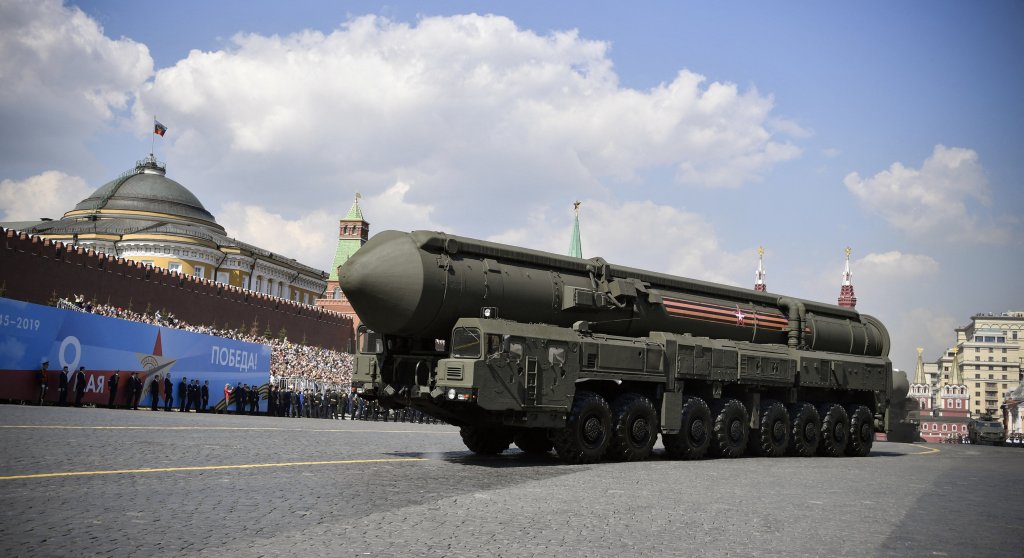
Putin has ordered full scale production of the missile to begin. If it reaches the production levels of the SS-20 back in the 1980’s then they could eventually turn one out every two weeks. However I don’t think they have the capacity to do that without sacrificing something else and the missile is going nowhere without its transporter erector launch vehicle. They usually produced about one of those for every three missiles. I doubt they have the industrial capacity to manage that today, let alone the money. This is more akin to the way Germany produced V2’s in 1944; build the missile then get them to whatever launcher or launch site is available and fire it.
If you have ever been to La Coupole in the Pas de Calais, now an air and space museum, it’s basically a giant cartridge system – immense in size with a bomb proof dome built into a hill. V2’s would arrive by train, be fueled, armed, elevated and cycled through a rotating cartridge system and out the door on the opposite side to be fired at the UK. Except the RAF bombed the entrances and it never did its job. It’s that type of principle I suspect the Russians will use for this missile.
The missile will be fired on a ballistic trajectory carrying the warhead bus into space. This is the point where it’s most vulnerable to attack. If you can destroy the bus before it distributes its warheads then good, but once the warheads are deployed – especially if they’re independently targeted, then it is mostly too late even for the best systems. In the diagram below Stage 5/6 is the ideal point of interception.
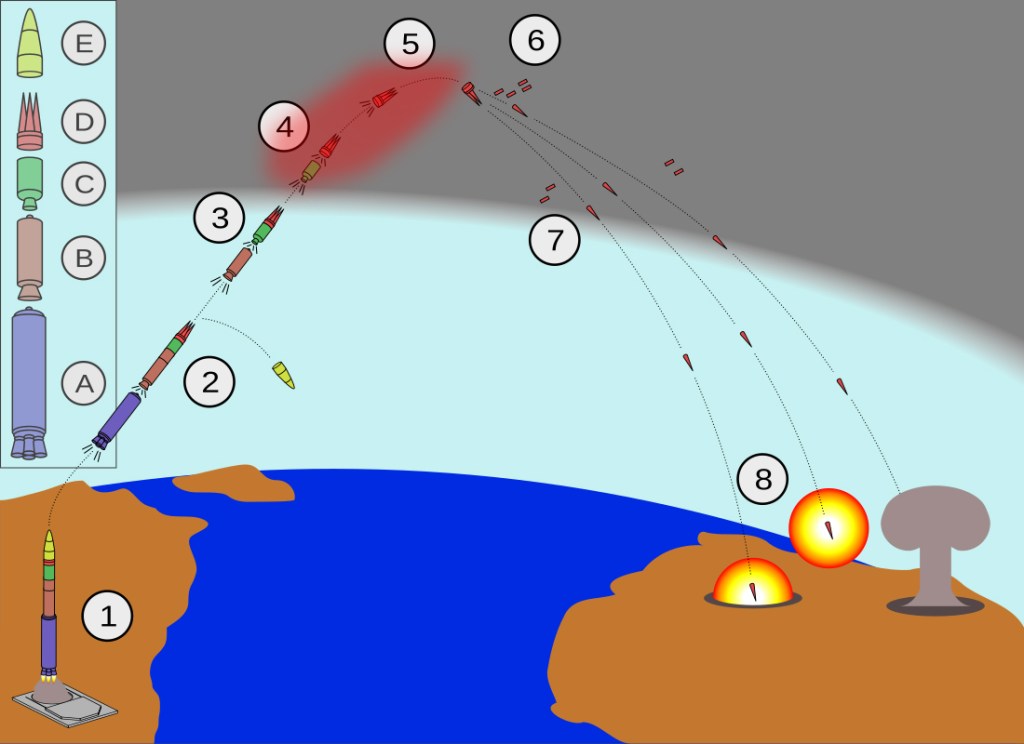
The bus doesn’t just have warheads, it will also consist of a number of what are referred to as ‘penetration aids’. Decoys designed to fool missile tracking and target calculating radars, as well as provide alternative anti-missile targets. These were developed in the 1970’s after the Russians and Americans deployed an anti-ballistic missile system each. The Russians built the ABM-23 Galosh system around Moscow that was of dubious benefit and used tactical nuclear warheads to destroy incoming re-entry vehicles.
America built one system, Spartan, that was deactivated just 24 hours later, in N. Dakota in 1973. The PARCS (Perimeter Acquisition Radar Characterisation System), designed to work out where warheads were going to hit however, (termed a discrimination radar) served for many years after.
The Americans will see a missile like this fire. They could warn Ukraine. The infra red tracking satellites will pick it up. Under current security arrangements Russia does warn 24 hours before of such a launch to avoid miscalculations, but those arrangements expire in February 2026.
The missile if fired at 90% of its max range might give 10 to 15 minutes warning to impact. On the ground that will be little more than 4 to the public.
Once launched and detected from space it will be down to ground based radars to determine where it’s going, which they will do with increasing levels of accuracy as time passes.
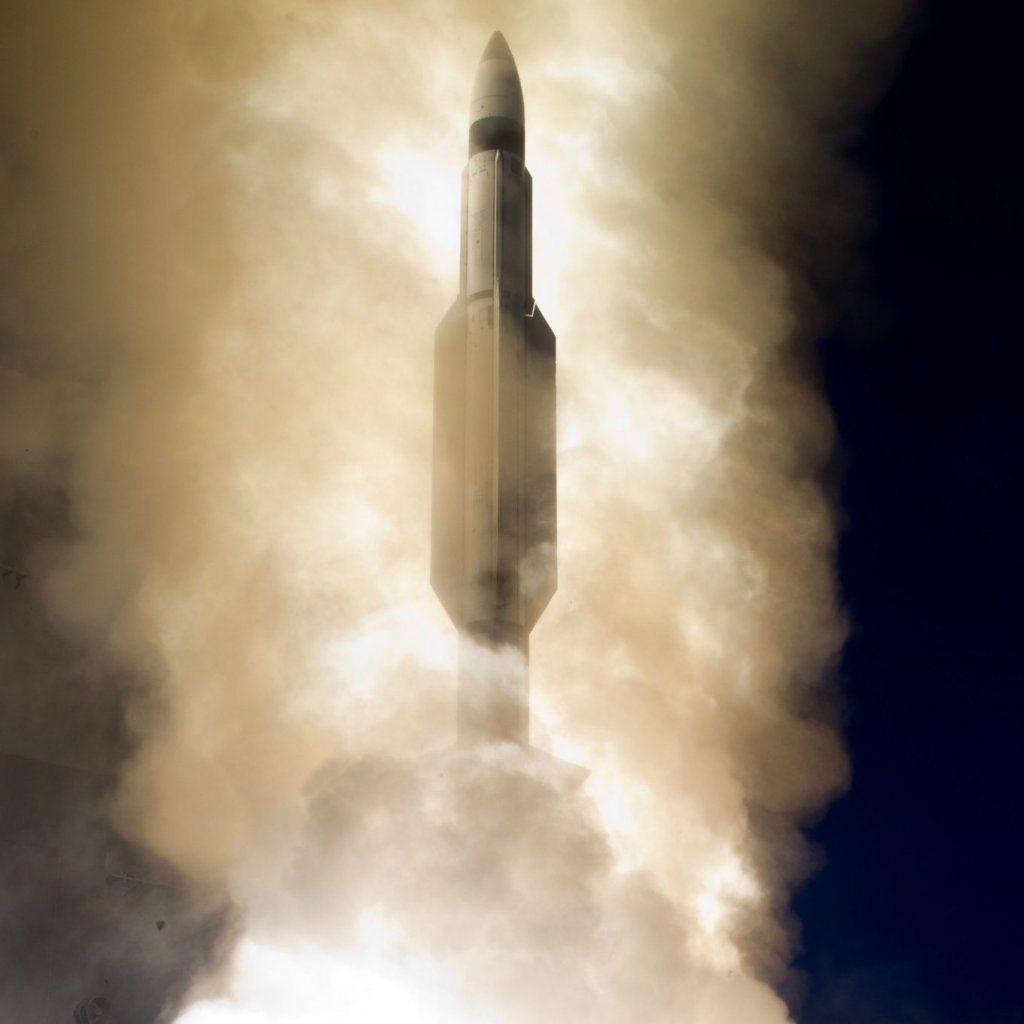
There are only two systems in Europe that could do anything about it, the Aegis Ashore Phased Array Radars in Romania and Poland. They can launch Standard SM-3 missiles with enough height and range to intercept the MIRV Bus either in the atmosphere if using a depressed trajectory (that cuts warning and travel time for the missile but reduces range), or if it goes exo-atmospheric. The system looks like a warship bridge because it’s based on the US Navy AN-SPY-6 Ballistic Missile Defense systems on US destroyers and cruisers. Indeed both systems are operated by USN personnel under the auspices of SACEUR – and that’s another problem.
Technically the system is allocated to NATO, but NATO is command by an American SACEUR who if told by his political bosses in Washington not to interfere could order the system to stand down, even if the rest of European NATO members sought interception on behalf of Ukraine.
The base best positioned is likely Romania. It will have seconds to determine what action it can take and fire.
The political issue is should an American system operating for NATO, fire on a Russian missile attacking Ukraine? Is that crossing into participating in combat? Would the Russians see that as a too far beyond the line provocation? Would we?
WHAT OTHER OPTIONS DOES UKRAINE HAVE?
THAAD. Terminal High Altitude Area Defence.
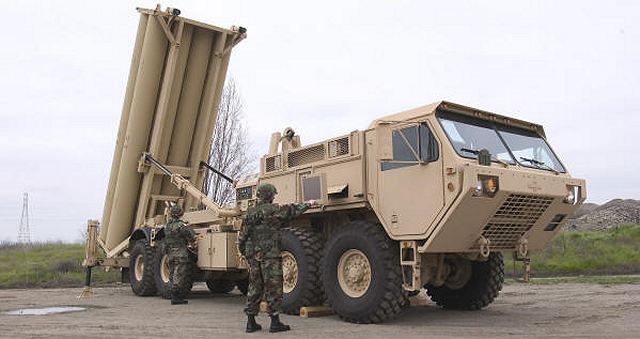
This is a very expensive mobile system with an accompanying phased array radar with a range of some 400 miles. The Chinese were incensed when the US placed a couple of these rare systems in S.Korea because it allowed American radars to see into parts of China’s airspace. They were really only focused on defending from increasing aggression and threats from the Kim in the North.
Designed to intercept and destroy short, medium, and intermediate-range ballistic missiles during their terminal phase of descent or re-entry, it operates using a combination of radar technology and interceptors that rely on kinetic energy, to neutralize threats through direct impact, rather than explosive warheads
The AN-TPY-2 radar is a crucial element in this system. Along with incredibly powerful computers that can track and predict warheads even at hypersonic speeds. It’s a truly remarkable system.
To understand how remarkable this is the incoming warhead is probably at Mach 24 or so. The missile travelling at some Mach-12+ -a combined impact speed of Mach-26 (nearly 24,000mph/38,000kmh). Imagine hitting a target just 1.4m long at that speed.
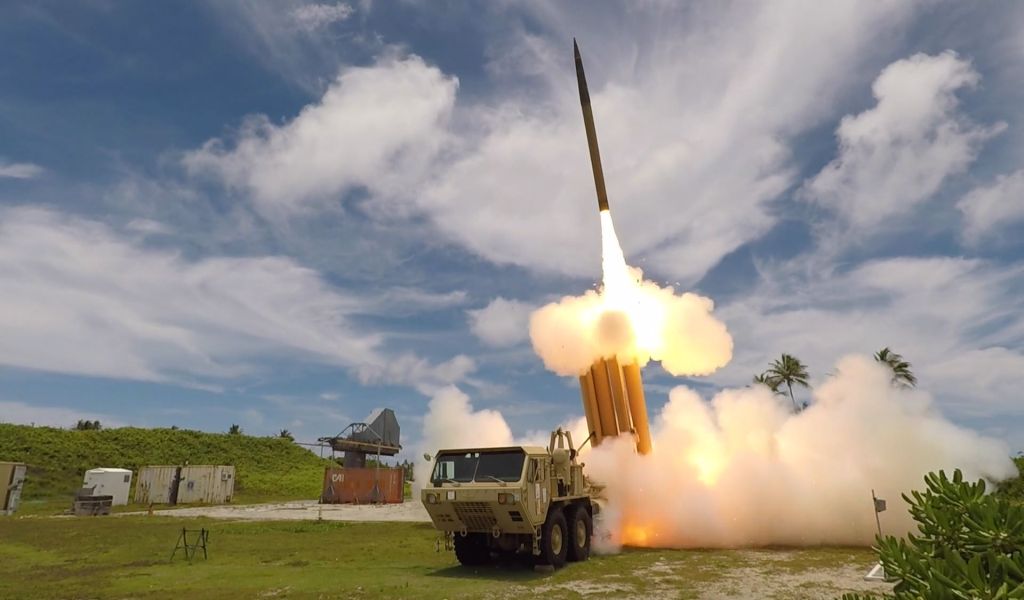
However they are few and far between, the technology is hyper-secret and the possibility of Ukraine getting even one is remote. They have never been exported even to Israel, but they have been deployed on loan to several countries.
So that leaves Patriot. It’s effective against SRBM’s like Iskander, but it just doesn’t have the power, speed or height to hit an IRBM warhead, let alone the radars and processing capabilities, to hit with any high degree of certainty.
So that leaves Ukraine with basically, nothing.
RUSSIAN STRATEGY
The Russians have clearly been itching to find a way of using this new IRBM and they have upped the stakes by doing so. The day after the first was used no more Ukrainian attacks using ATACMS or StormShadow took place. It’s too late now. Russia has revealed its cards and there’s no going back. Nor is there that option for the West and Ukraine.
They Russians targeted a steel finishing works in Dnipro, using nothing but kinetic warheads. These can be immensely destructive based on their speed alone. Eventually they may add an advanced explosive to increase the power.
Yet even if they do this it amounts to a very expensive way of delivering very limited results.
This smacks of German strategy with the V1 & V2 programs in 1943-45. They were actually called ‘vengeance weapons’ the V is the first letter for the German word for that phrase. The missiles achieved very little. They killed around 5,500 people over almost two years but they couldn’t deliberately hit the broadside of a barn. The Russians might well do more overall damage, but it’s an expensive, materials consuming way of doing so, taking up far more time and energy than it will ever deliver towards any type of victory. But it does have the novel aspect of using a nuclear capable system – and it can threaten all of Europe.
The V weapons, or Miracle Weapons as they were also termed, used up vast resources and delivered nothing. They were Hitler’s hubris personified. Putin in so many ways is mirroring that dead dictators decisions and likely, his eventual fate.
Ukraine will simply have to bear the brunt of it. We must help them do so to the best of our abilities.
The Analyst
Slava Ukraine!
MilitaryAnalyst.bsky.social

 The Military Analyst
An assumption that the first use of Storm Shadow has not been repeated due to initial targets being hit. Also they will now be recalculating where to respond to the IRCBM?
LikeLike
If THAAD could do it, so could Aster block 2: https://turdef.com/article/italy-orders-new-samp-t-ng-air-defence-systems
LikeLike
Only if the range is under 1500km. The missiles are likely fired from a greater distance with the bus too high and the warheads unlikely to be intercepted at that point. If it was fired under that perhaps. Then there’s the cost of the missiles and supply.
LikeLike