

The Ukrainians are using sophisticated tactics to undermine Russian attacks, which usually follow the same format give or take the restrictions on armour supply.
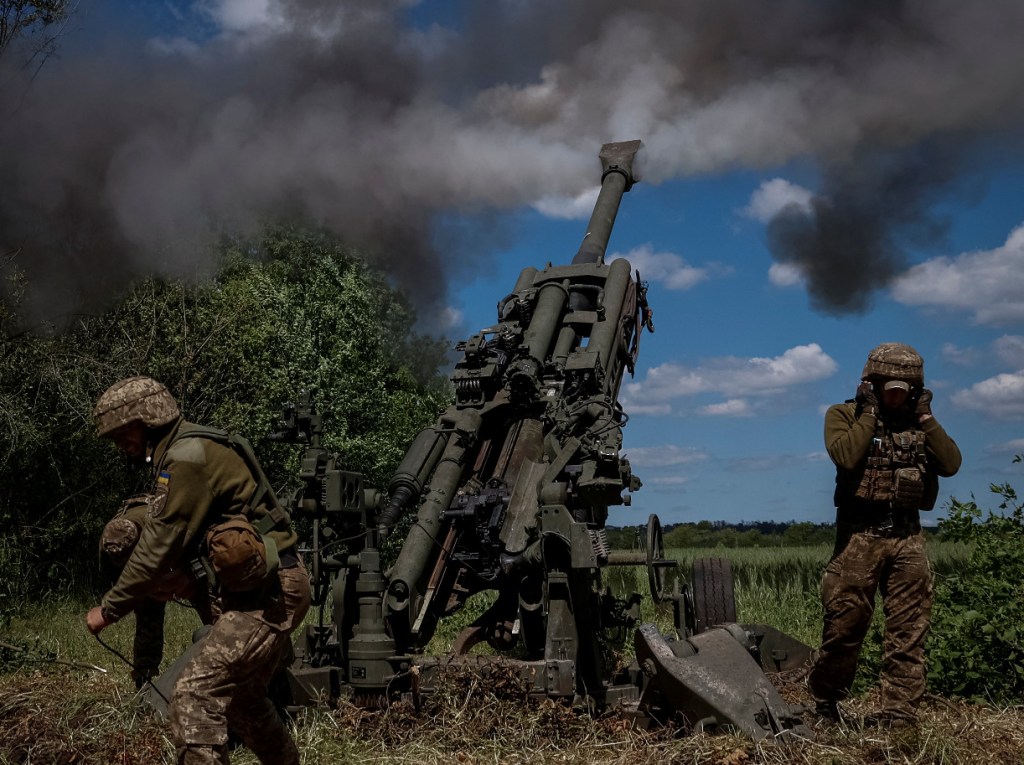
A typical Russian attack will start with some kind of artillery preparation if that’s available. However if possible, and depending on the type of terrain, Ukrainian drone forces will use them to deter artillery, by chasing it down to force it into hiding or destroy it.
The most successful Russian attacks are those that originate from recently conquered towns, where they accumulate their forces before attacking, ideally a short distance from the frontline. This shortens the ability of Ukrainian forces to attack before the Russians reach the contact line.
However in the south particularly, where there are vast areas of fields and very few settlements, this Russian method doesn’t work so well and leads to very high casualties and armour loss. With nowhere to congregate they have to travel in the open from their launch point, exposing themselves to observation drones. As they reach the rear of the contact line Ukrainian artillery starts to pick off the forward most vehicle, slowing or stopping the column. They continue to strike the vehicles with artillery while any that try to get around the blockage, are attacked by suicide drones and immobilised by strikes on tracks or engines.
The Russians have developed a tactic of making the most of the Ukrainian fire traps, by ordering troops to get out of the vehicles at the first sign of a stoppage – even if they’re not yet at the contact line. These troops then spread out and aim to get into the tree lines where they shelter – although many are harassed and killed by drones.
The Russians will do this over and over again, using the process to get as many men as they can into the tree lines. This accumulation eventually becomes strong enough to attempt an infantry assault on the next target, backed up by yet another armour attack. They use similar techniques to get into villages and towns.

This process eventually becomes overwhelming for the defence and forces a retreat. However it’s immensely costly for the attackers in men and machines, while leaving the defenders relatively unscathed but eventually overwhelmed.
The Russian tactic is based on manpower – they expect the first and even fourth attacks to fail in forcing a Ukrainian retreat, but by the fifth or so attacks the number of men is high enough to force an assault.
However this process has deep flaws that aggregate the way the Russians operate. Units are split up and scattered over multiple tree lines or buildings. Their overall commanders seem to have little control over them at a strategic level and coordination is limited or even non-existent. Russian forces attacking each other isn’t uncommon.
The orders they’re given are basically ‘that’s what you have to take, get there and take it, no matter the cost and don’t go after anything else’. Troops know what they’re supposed to aim for and they know they can’t go back. How they get there is down to them based on where they end up.
As each new wave of troops gets delivered orders may change.
This process leaves many units with high casualty levels. They are still expected to push forward, regardless of losses. It also ends up with seriously demotivated troops who just don’t move and frequently get cut off from others. There are clear indications that many of these never hear from their command again, lose any logistical support and if in the wrong place end up picked off by Ukrainian drones, snipers or artillery. Some just starve to death.
Ukrainian defences however are not always so easily pushed back. Given terrain that improves their chances, prepared defences and sufficient manpower, the Ukrainians can set up a devastating kill zone on a wide front that exhausts Russian reserves and they simply give up because it becomes too costly.
Yet as soon as the Russians realise they are up against an immovable position, they continue to find a way around it and will if necessary, move in a different direction to get around it strategically.
Ukrainian forces also use counter attacks and preemptive attacks to spike Russian preparations, often to huge effect.
Ukrainian planning is also far more flexible and inclined to moderate its logistical and operational requirements as scenarios present themselves. This makes them far more responsive to most situations, however some old guard commanders have not been as successful or adaptable.
Russian operational planning seems to be the ‘box of supplies’ method. That’s what we give you to get the job done. If it isn’t enough then it just doesn’t happen.
Russia also suffers from fear syndrome. This became very clear on two occasions in recent weeks, one of them in Northern Kursk. Russian commanders in the field lied about their success when they’d failed, thinking they could put it right. When they’d couldn’t put it right and had no more left in the box to try again, higher command realised what was going on and arrested as many as six generals and senior officers.
The reason they lied was because they were under such severe pressure, deadlines for success, laid down by Putin himself, the risk of failure – knowing what would happen to them if they failed. This kind of system doesn’t work well for motivating people. So they lied and failed anyway.
There’s a strange cooperative aspect of both side’s tactics. The Ukrainians have their system of defence and the Russians have their system of attack. The defence only works because of the way the attacker attacks. The attacker knows what point he can or can’t overcome the defence, but the basis of the defence doesn’t change, because neither does the attack. Is it a system stuck in repetition?
In some ways the outcome of the defence is predetermined by the scale of the attack. If one is greater than the other it wins. You have to ask if a change in either sides tactics could upturn the way the war operates?
The Germans in WW-1 and the British, eventually found a way to break the way the front operated. The Germans used the Stosstruppen to infiltrate the front and break the lines, the British invented the tank.
Russia doesn’t have the type of men or the discipline to create Stosstruppen type operations. Ukraine does. Neither side is going to come up with a new invention.
Are they stuck in a pattern? If so how do they get out of it? Is there some way to change it in Ukrainian favour? I feel it’s already too late. There is a sense of end game looming in 2025. One way or another this war is ending. It must end with Ukraine surviving, free and supported by Europe. What happens to Russia? As long as its nuclear weapons don’t end up in the wrong hands, I really don’t care but it will pay a price for its behavior.
The Analyst
Slava Ukraine!
militaryanayst.bsky.social


Good new site and presentation. Appreciate the opportunity to offer a comment too.
Onward, Frank.
LikeLiked by 1 person
One of the ways that Russians have found that can break well-fortified positions (aside from going around and encircling them), was by tunnelling inside – either by using sewers or digging new tunnels.
If the front lines start to get stuck in places, there are more likely to be more of these attempts.
Another one, although indirectly mentioned, was the artillery preparation stage – especially for smaller positions, it can be possible to just bomb them with enough artillery, missiles and drones until there is nothing standing and basically no cover left. That is another way, however expensive, to continue advancing.
Both methods can be countered but will require quite some effort from the Ukraine side.
LikeLike
One of the ways that Russians have found that can break well-fortified positions (aside from going around and encircling them), was by tunnelling inside – either by using sewers or digging new tunnels.
If the front lines start to get stuck in places, there are more likely to be more of these attempts.
Another one, although indirectly mentioned, was the artillery preparation stage – especially for smaller positions, it can be possible to just bomb them with enough artillery, missiles and drones until there is nothing standing and basically no cover left. That is another way, however expensive, to continue advancing.
Both methods can be countered but will require quite some effort from the Ukraine side.
LikeLike
One of the ways that Russians have found that can break well-fortified positions (aside from going around and encircling them), was by tunnelling inside – either by using sewers or digging new tunnels.
If the front lines start to get stuck in places, there are more likely to be more of these attempts.
Another one, although indirectly mentioned, was the artillery preparation stage – especially for smaller positions, it can be possible to just bomb them with enough artillery, missiles and drones until there is nothing standing and basically no cover left. That is another way, however expensive, to continue advancing.
Both methods can be countered but will require quite some effort from the Ukraine side.
LikeLike
Thank you.
LikeLiked by 1 person