
In this last segment I want to look at three issues that will determine if China can even mount an invasion of Taiwan.
- Internal politics, purges, and corruption on one hand, are balanced by a disastrous economic situation internally, and massive environmental problems brought on by rapid industrial and developmental change. An oppressed and initiative suppressed population, who see hopelessness in their futures and a system rigged against them with laws that don’t seem to matter, unless the authorities want them to.
- Western ignorance of what happens in China makes us think they’re almost invincible. They’re not. Projects like the Three Gorges Dam have resulted in massive and devastating environmental consequences affecting a huge region of industrialized China. Coal burning power stations – until recently being built at the rate of one a week, are producing vast amounts of Co2, even China knows are unsustainable.
- The military is vast as are the security services and the surveillance state is beyond what many of us can imagine. But is it capable of invading a country the size of England across 100-137 mile (160-220km) wide channel with any chance of success, before the inevitable hammer of American, Japanese and S.Korean naval and air forces intervene, as they surely must?
- Politics, power, economics and corruption
China is economically in the worst position it’s been in since 1980. The property market, at one point driving 25% of its GDP has fallen into collapse. Giant property companies like Evergrand have tens of thousands of unfinished properties all over the country that are basically ruins and will never be completed. The problem? Most of them were sold before they were finished. Chinese families in their millions are paying mortgages on rotten property, or property they will never live in, and they’re saddled with the debt, as well as paying for the property they were living in and remain in because they cannot move. The banks don’t care.
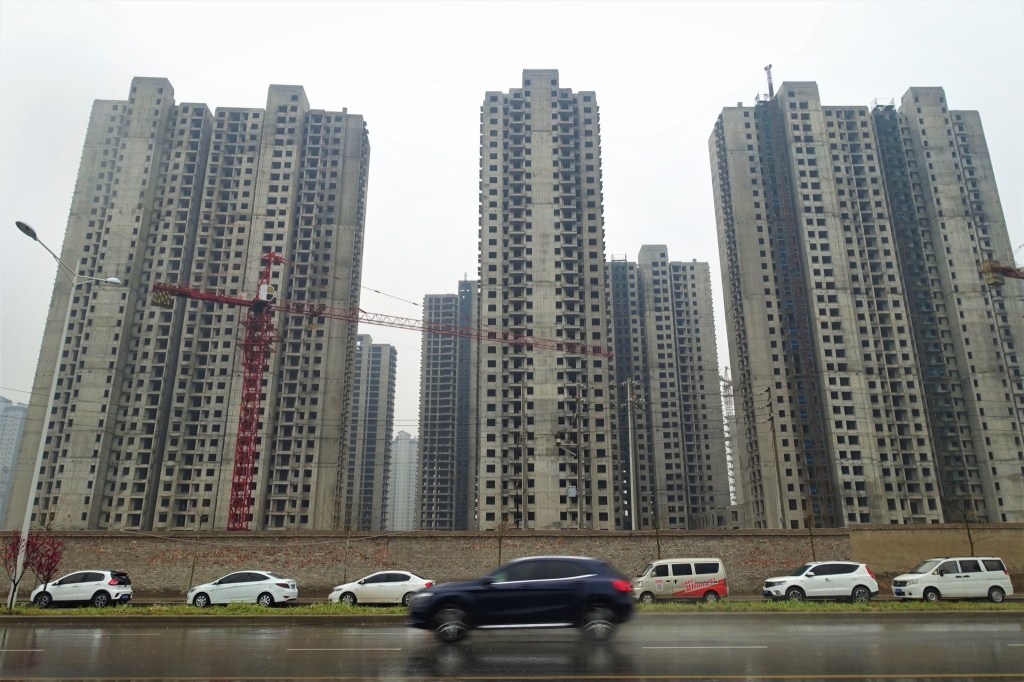
Chinese banks are suffering from the collapse of the property companies and the lack of liquidity in the credit system. Millions have been locked from withdrawing money from their accounts, and in many cases money has simply vanished, taken by the banks to prop themselves up. There’s virtually no recourse to law for this type of behavior. The government doesn’t want it to be an issue so it isn’t one.
The knock on effect has been seen through the automotive and manufacturing industries as people can’t or won’t buy products and services.
Chinese regional governments are in deep trouble – many of them relied on land sales to the property companies to make income. That stopped overnight. Those that lent money to the property companies are reeling from the loss of repayments and huge budget deficits that the central government is refusing to cover.
Major capital and investment projects have gone by the wayside, roads and bridges, rail lines and airports unfinished. All hitting the economy hard.
Chinese youth unemployment is chronic, about to be aggravated at the end of the year as another 12.7 million graduates enter the job market, already devoid of opportunities.
The government put $1.5 trillion in stimulus credits into the economy and it barely nudged the needle. When you have an endemic problem in a country of 1,4 billion people (the US is just 330 million), that amount didn’t touch the sides. Much of this is of China’s own doing. The gross overreaction to COVID – maintaining full lockdowns until well into 2023, shattered and shuttered the economy and is at the core of the problem.
The other part is that the system, where businesses and banks are supposedly independent and free of government control, really aren’t. It’s a light touch in some ways, but even that is heavy-handed in western terms. The Communist Party Of China is in control, because it always has been.
Yes China has performed a miracle, lifting hundreds of millions out of abject poverty and industrializing on a scale that can only be considered eye watering in its enormity. No other country has managed so much in the space of 45 years. The cost however has been horrific and only now is it becoming clear what that is.
Chinese politics is a dark art and the who is up and who is down watchers, would describe it, at best, as labyrinthine. The once seemingly untouchable President Xi Jin Ping seems to have slipped a little, with the tea leaf readers uncertain he’s as all-powerful as he was.
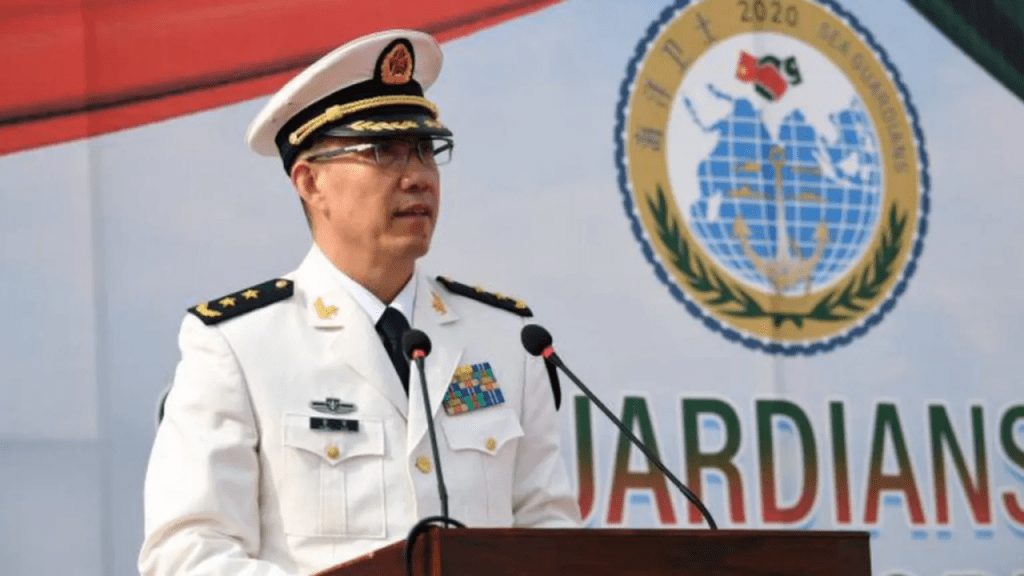
The recent bizarre series of events at the top of the Strategic Missile Forces and the Defence Ministry for one, have had everyone scratching their heads. Who is running who and who is really in charge? Xi or the Defence Minister? Did Xi demand something from the military they didn’t want to do? Or did he stop them doing something they wanted? The third defence minster this year, Admiral Dong Jun, has been arrested after only three months in office this week, allegedly under suspicion of corruption (an all encompassing charge that masks any of a plethora of possible offenses to make a power play by his enemies). Other officers were taken away with hoods over their heads. Somewhere it all seems tied up with the endless ratcheting up of tensions with Taiwan. And all this is just the tip of the iceberg. Much of it has to do with military corruption, supply contracts and backhanders. Xi may say he’s against corruption, but for many in the vast chain of military and civil bureaucracy, it’s just a way of life and how they get by.
For civilians, who cannot protest, who face the consequences of all these problems, there is a sort of malaise. A feeling of their work having been for nothing as their savings just vanish. Pleading on hands and knees to government officials has recently become a ‘thing’. Desperate people kow-towing to often junior civil servants while they eat their lunch and tell them to go away. Police who are indifferent, authorities, courts, government agencies, whose main competence seems to be to kill complaints through bureaucracy. China stifles everything to death.
And Taiwan, when it hears the concept of ‘one country, two systems’? As if some peaceful reunification might work with the mainland? They look at Hong Kong. They know China can’t abide criticism or the idea of anywhere it controls being able to express an opinion contrary to CPC beliefs. They know eventually, the two systems would become one – China’s. And they don’t want it.
2. Environmental catastrophes affect the entire country – and the planet
The skies of Beijing are so polluted that the US embassy air quality monitor reports dangerous levels of pollution on a regular basis. During the 2008 and 2022 Olympics, the only way to get the levels down was to shutter entire factories and power plants for the duration. It’s so bad at times you can’t see across Tienanmen square. Multiply that around the country to a couple of dozen multi-million population cities.
Projects like the Three Gorges Dam, which many said would be an ecological disaster in the making, have been proven right. Over the past few years climate related increases in up stream rainfall have been so massive, the dam has come shockingly close to its limits – limits it was never supposed ever be anywhere near. To stop it reaching that point its sluice gates have been opened several times to max, sending 72 million cubic liters of water through per second.
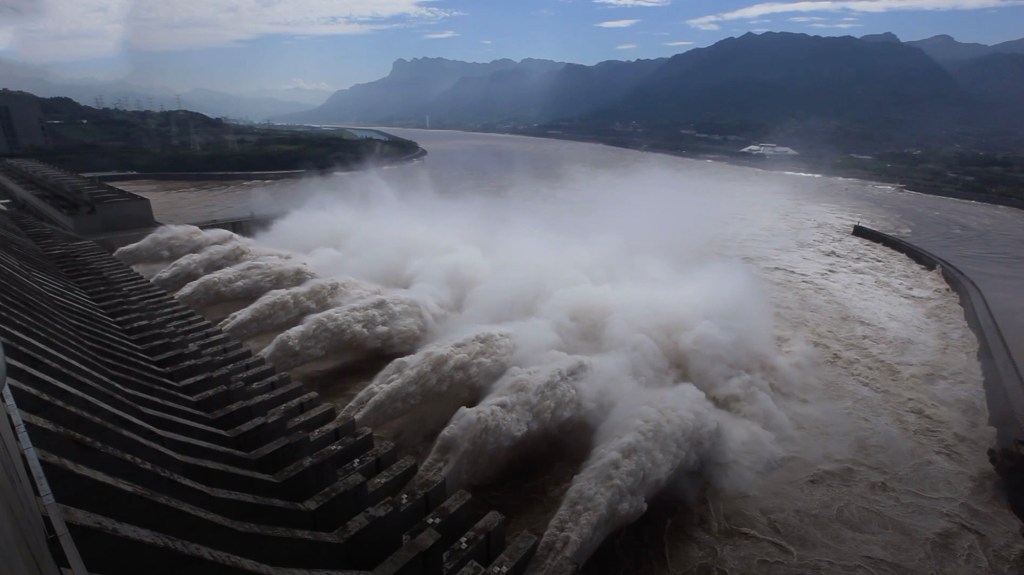
Downstream that level of water was catastrophic. The dam was supposed to prevent floods and regulate the flow, instead its been responsible for floods so horrific whole towns have been inundated as far as Shanghai. In the summer, the river estuary is so dry from a lack of water you can almost walk across the delta.
All over China, ruthlessly applied projects from dams to railways and roads have been allowed to harm the environment and cause appalling damage. Locals are evicted and walked over, compensation is a joke. Quality farmland has been destroyed, corruption is rife and nobody has the power to go up against the party machine.
Chinese industrial air pollution is so great that it’s become a primary cause of increasing snowfall in the US Rocky Mountains. The dust particulates allow ice to form on them and increase the snowpack – not that that’s an entirely bad thing in often water starved California. It’s the Co2 that rankles with so many. China under UN rules is classed as a developing country. Guess who decides if they’re a developing country or not so they can pollute more? China. That lets them get away with unreasonable and unsustainable levels of Co2 output. It completely counteracts all the good everyone else is doing, and makes China’s own man made environmental problems even worse.
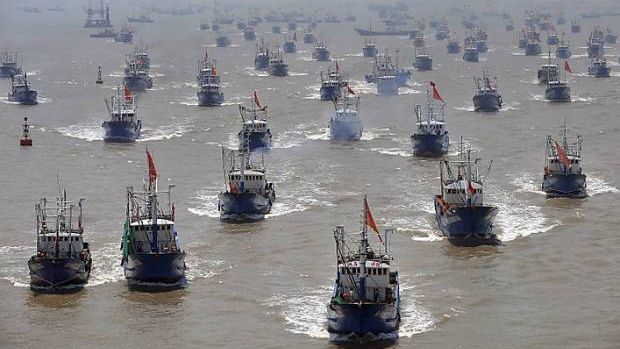
Feeding 1.4 billion is also a challenge. Valuable farm land has been lost, farming is seen as an old and unwanted industry by a more affluent generation. Chinese trawler fleets comb the world in shocking numbers. They frequently turn up in rich fishing grounds such as off the Galápagos Islands, owned by Ecuador. They will fish the waters literally up to the line of Ecuadorian control, so thoroughly that its affected the populations of animals looking for food on one of the planets most important area of preservation. They do this everywhere their ships can reach. These trawlers are also notorious in the South China Sea for being little more than a light version of the Chinese navy. Many carry military personnel and spying rigs. They’re often used for intimidating Philippine and others fishing fleets.
3. The Military Balance – If War Comes
China is not going to be able to launch a surprise amphibious invasion of Taiwan, and it doesn’t actually relish a conflict with the Philippines. It could wipe the floor with the Philippine Air Force and navy, which would send a message. However it would send every one of its neighbors into flight mode and rushing into the arms of Washington. The art of the thing is to keep it on simmer and never go that bit too far. Intimidation is better than direct conflict.
If however, Taiwan declared itself formally an independent Republic of Taiwan, rather than its legal standing as a largely unrecognized alternate government to Beijing (it is still the Republic of China, China mainland is the People’s Republic of China), China has sworn to act.
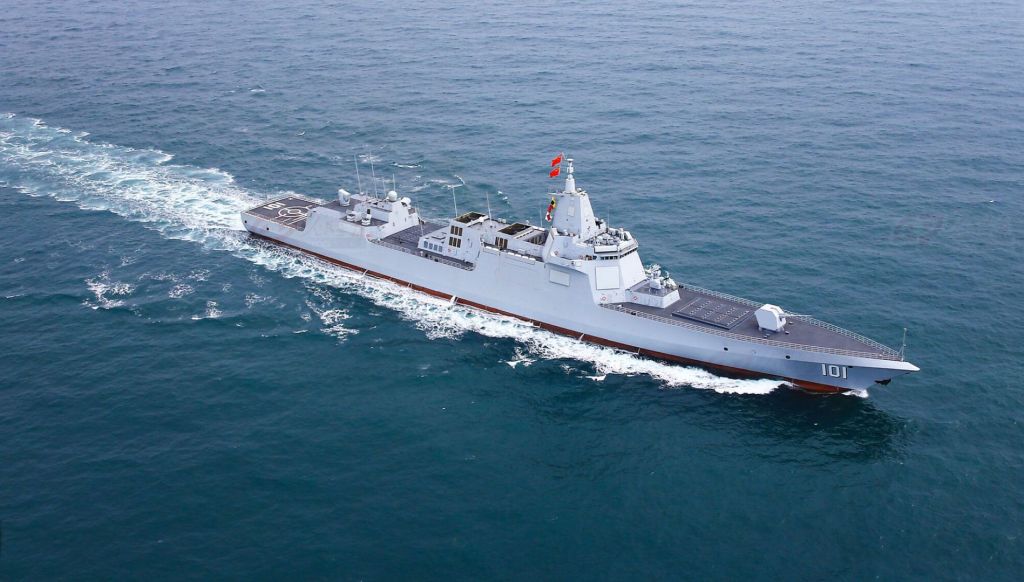
China’s People’s Liberation Army Navy (PLAN) is the largest navy in the world by number of ships. As of recent reports, the PLAN has over 370 ships and submarines in its battle force, which includes major surface combatants, submarines, ocean-going amphibious ships, mine warfare ships, aircraft carriers, and fleet auxiliaries. The PLAN is projected to grow further, with expectations to reach 395 ships by 2025 and 435 ships by 2030, a building rate far beyond American capabilities.
Legally the US Navy is required to stand at 355 ships. It currently stands at 243 active ships. However that active fleet, is only about 100 strong in terms of actually at sea on station and available, and that’s on a good day. Those active ships are spread about from the North Atlantic to the Mediterranean, Persian Gulf, Red Sea Indian Ocean and Pacific.
China has the advantage that its fleet is both very new and modern (downside; more will need refits and replacements earlier at ten years of age onward), and most of its fleets are local, designed to operate in the 1st-2nd Island chain ranges. Right now 107 of those 370 ships are missile patrol boats operating in coastal waters.
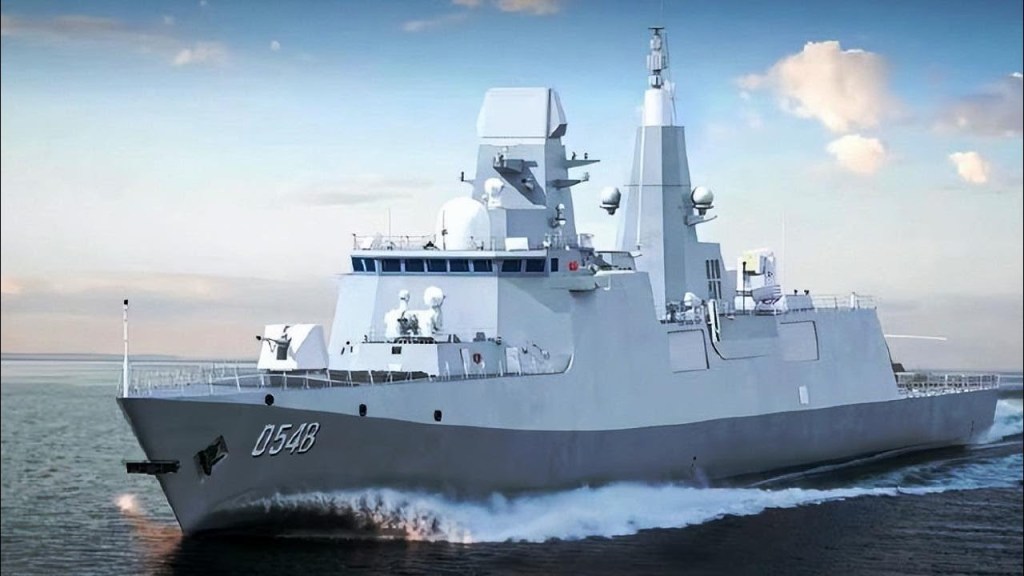
The ships that worry the west are 41 destroyers (DDG) including the powerful and sophisticated Type 055. 46 Frigates (FFG) including the excellent Type 054A. It has two ex-soviet based carriers of medium usefulness, and the new Fujian which is major upgrade and a second of those under construction.
The PLAN operates 6 SSN’s which are of dubious quality. The British found it amusing to track them in 2021 when two were set to shadow the Queen Elizabeth Carrier Group. The Chinese were unaware that it was accompanied by an Astute class SSN that had been kept deliberately out of sight for the duration. The Astute ran rings around the shadowing SSN’s, described as being so loud they sounded like a spin dryer on high revs and the Chinese were not amused when the Astute surfaced in the South China Sea to make a point. Their SSN’s quickly departed. However they are improving all the time and their Zhou class is said to be equal to the US Los Angeles class from 30 years ago. That will no doubt be quickly improved upon and within ten years they will be building SSN’s every bit as good as the US and UK. And that is genuine concern, because they can build them very quickly, when they don’t accidentally sink being fitted out in Wuhan as the latest one did. The SSBN force is largely irrelevant tactically as it hides in the Yellow Sea, largely out of reach because they are so noisy they’re too easy to track down.
China also operates 48 diesel electric submarines, and these should not be underestimated.
Allowing for China to have 80% availability because of proximity, age and motivation, they could probably manage as many as 70 DDG/FFG and at least 2 carriers. 4-5 SSN’s and 35 or so diesel electric subs at a push.
The US has theoretically a high capability. In reality it can be quite worrying. For a couple of months this year there was no aircraft carrier battle group in the western Pacific at all. That was caused by the Iran-Israel crisis and the Houthis. There is now a carrier (USS George Washington) permanently home-ported at Yokohama.
Now this is very important, because the Navy is converting from the F-18 Super Hornet 4th Gen fighter to the F-35 5th Gen with its vital stealth capabilities and the George Washington has been upgraded to carry them. (Oddly the Navy couldn’t wait for the new USS Gerald R Ford to get them, so the newest carrier still has the old F-18).
These are crucial in giving the US an edge in dealing with the huge Chinese aviation advantage from operating from its mainland bases.
In the event of a potential conflict that looked like it was manifesting itself, the US could surge a second carrier from San Diego, probably within a week and maybe a third if it had enough time, but I’d doubt it.
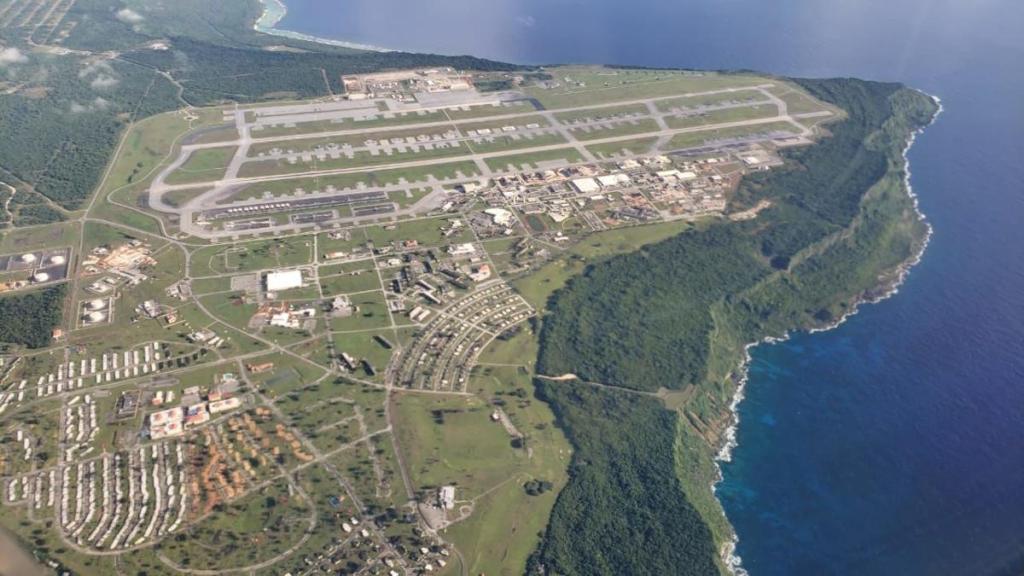
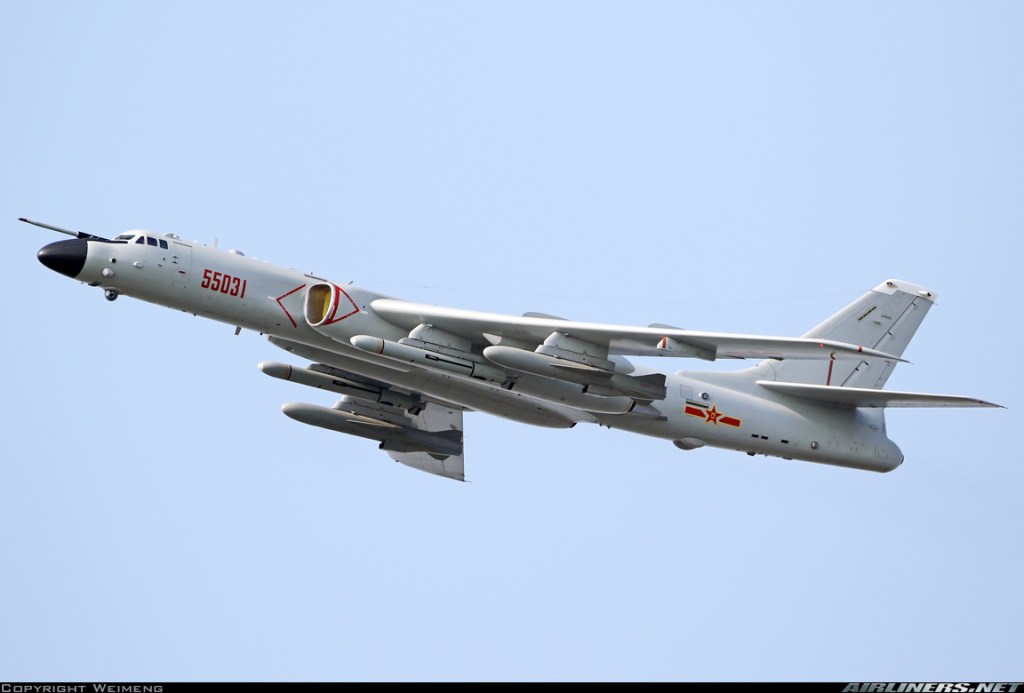
Crucial in these preparations and any conflict will be the ‘fortress of Guam’ – basically an island that’s mostly an airbase, harbor and barracks. It’s likely to be the recipient of massive Chinese attack so violent I’m not sure anything much would be left viable there. The other main site is Okinawa, but again, even though heavily defended, as a fixed position its going to be hard to avoid the force of 231 H-6 Bombers with their long range missiles, or even China’s IRBM’s with hypersonic strike vehicles, regardless of the fighters defending the island.
While America will struggle to defend its Island bases, if China thinks they haven’t taken that into consideration, they’d be wrong. Because unlike China, even given trouble making by Russian Pacific fleet units out of Vladivostok, the US is not alone.
Japan has just purchased 534 Tomahawk land attack cruise missiles. It has a sizable Air Force, and one of the most effective and large fleets in the world with some remarkable submarines. South Korea is also very capable and it will act.
The US also has an impressive Marine Corps with a long range capability. The question is can the carriers, the marine forces and the allies, with as many as 20 American SSN’s in support, let alone potential Australian, Philippine, Taiwan’s own forces, battle their way to the island to save it?
Wargames have proven disturbing. Three were run with very similar outcomes. Based on a 2027 scenario. The US does save Taiwan, just. Mostly by getting its aircraft to Taiwan, troops on the ground, and huge losses flogging the Chinese Air Force. In the battles, on all three occasions, two carriers are lost, and 60% of the frontline US Air Force.
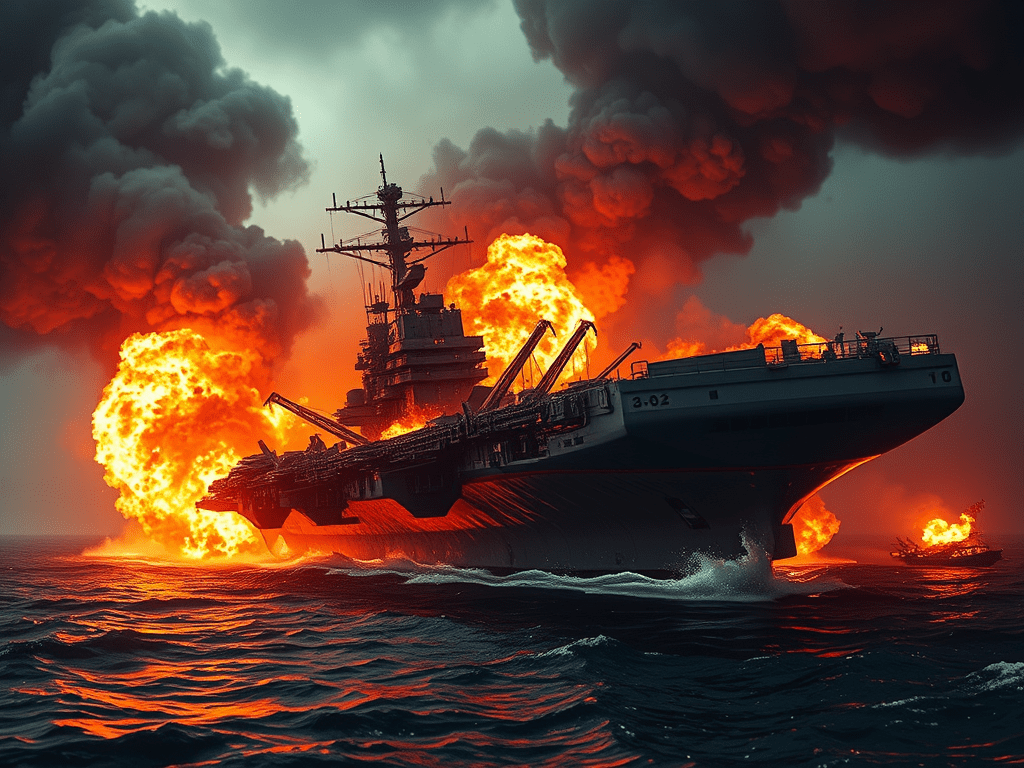
The lesson from the games was that it really doesn’t take much more force and China’s chances of winning increase quickly. The question for strategists is with China so close, after 2028-30, is there ever going to be a scenario that China cannot win, and Taiwan, even if the US fleets doubled in size, would simply be impossible to get close enough to?
In other words, is there really anything we can do to stop them?
Which brings us back to trade and money. Any war would be crucifying to international trade and finance. It would tip the world into a rapid recession and upend the global balance like never seen this century.
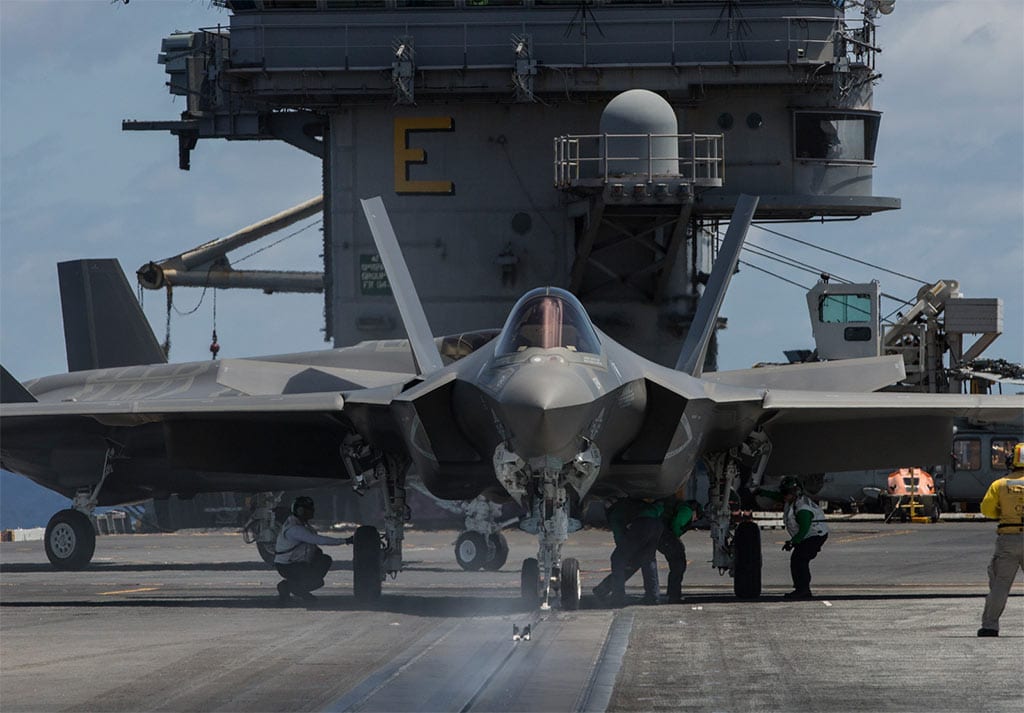
America loosing two carriers would have the same effect loosing HMS Hood to the Bismarck had on the British in 1941. Utter disbelief and massive reaction. Could America even consider nuclear use? The humiliation of loosing two carriers would be huge, let alone the potentially Pyrrhic victory of saving Taiwan. The whole concept of the super carrier would have no more validity, and with it a pillar of American military power would be shattered in the perception of its enemies.
As an aside, I believe they have huge validity in peacetime as a deterrent and suppressant against weaker states. But once its proved they can be sunk, its game over, just as it was after the battleship Prince of Wales and battlecruiser Repulse were sunk off Malaysia in 1941. Add Taranto and Pearl Harbor to that and we all knew the day of the Dreadnought was over. A war with this kind of loss would end the reign of the super carrier, add to that the massive Air Force losses and the US would be in serious trouble.
A war with China would be a defining moment no matter how it ended. An American victory that only just managed to succeed would mean it was just round one. A Chinese victory would scare the world.
It would be best if we never find out.
To do that we had best arm Ukraine so that China is left in no doubt, the West isn’t so easily pushed around and defeated. That way it won’t even try.
The Analyst
militaryanalyst.bsky.social
Written on the 7th December 2024 the 82nd anniversary of Pearl Harbor.

 The Military Analyst
Thank you, very interesting. What is the chance of a battle group with only drones as air cover , surveillance , attack and what ever other craft would have advantages? The number of drones would be measured in 100s of 1000s with every available space storing these weapons. I imagine that 1 aircraft carrier could carry this number of drones to act as a swarm or many swarms. This would also require less operational personnel which would give more room for storage of even more drones.
How many drones to defend a carrier or to sink a carrier or defend a convoy? I also think a weapon has to be devised to counter attack a swarm of enemy drones which of course means these ships still need missiles etc. Planes are so expensive compared to drones. 1 F35 would pay for how many drones?
LikeLiked by 1 person
Such a scenario would need war gaming out.
LikeLike
Spot on. China is not invincible by any stretch, but the west must lift itself from the fog of brain-dead complacency and self- indulgence.
Like ruZZia, China has deep structural problems, and neither the capacity nor agility to dance out of it.
It’s also a commonly expressed misconception that the CCP lifted vast millions out of poverty through the economic miracle of its redevelopment. While it’s true that some 250 million Chinese were lifted out of abject poverty through redevelopment, it was western money, and western technology, and western assistance that did the heavy lifting. The CCP rode the coat-tails of that effort, and we’ve seen that they respect the assistance as much as Papa Joe respected US aid in WWII.
LikeLike
What are your thoughts on the new US weapons system Rapid Dragon. https://afresearchlab.com/technology/rapid-dragon
I believe that if the kinks can be ironed out and serial production be undertaken it can act as a cheap force multiplier to allow those us allies without a significant fighter/bomber fleet to more significantly contribute to their collective defense.
I thoroughly enjoy your articles, keep up the amazing work
LikeLiked by 1 person
Rapid dragon is a brilliant idea if you have the ammunition for it. Such concepts go back decades. I remember the 747 filled with cruise missiles!
LikeLike