
Russian ships evacuate, aircraft flee. Russian soldiers left behind.
This analysis isn’t about how we got to where we are, the mistakes that were made, the civil war, or even the internal fighting and consequences for Syria.
Suffice to say I firmly believe Syria needs peace. Almost half a million refugees were crossing the border back into the country overnight after years of exile in Turkey. They will play a vital role in what happens next and may well put a break on any of the rebel groups getting carried away with their own importance.
This analysis is about the loss of Syria in the context of the Russian Federation. It can and should be separated out even from the ‘Axis of Resistance’ Iran seems to think is some noble cause with Hezbollah, whose umbilical cord to Tehran has been cut. Hezbollah is in danger of withering on the vine, a victim of Israel’s determination to eradicate it and Iran’s lack of capacity to supply it with tech and weapons.
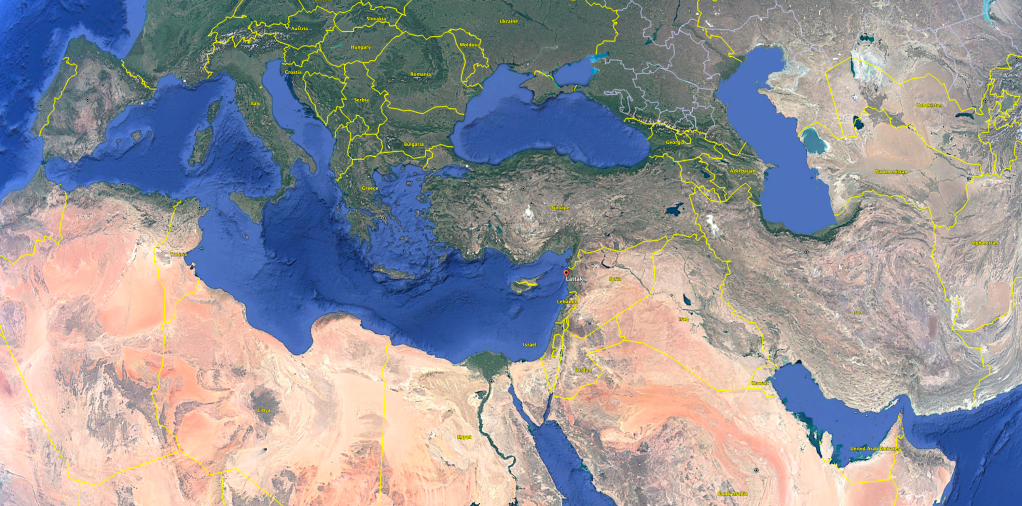
For Russia this is potentially the end of almost 54 years of military facilities on the coast and a staunch and reliable client state in the Middle East.
Since the age of Peter the Great in the 1600’s, Russia has sought access to the wider world through the Bosphorus at Istanbul, it longed for a port in the Mediterranean it could access global trade and possible colonies through.
In 1969, the Cold War racing ahead, Hafez Assad, former air force commander and Syrian defence minister, led a coup. He remained firmly in power until his death in 2000. His Baa’th regime was not dissimilar to Iraq’s soon to be under Saddam Hussein who modeled his success partly on Assad.
Baa’th nationalism and socialism suited the Soviets and they quickly established the long held Russian dream of influence in what they regarded then, and still do now, as their backyard. Previously, France and the British had dominated this area and before them for centuries, the Ottoman Turks.
To see why it mattered so much, remember this is the Soviet era, all of the Caucasus states now independent were Soviet territory. NATO as today, borders Syria to the north as Turkey, Turkey bordered the Soviet Union directly – one of the few countries in that period of NATO that did (the others were Norway in the far north and the US in Alaska at the Bering Straits).
American nuclear weapons were (and are) based at the US base at Inçirlik. The British had and still have, a spy base in Cyprus high in the mountains, as well as Sovereign port and air base facilities at Akrotiri and Dhekelia (they are forever British sovereign territory).
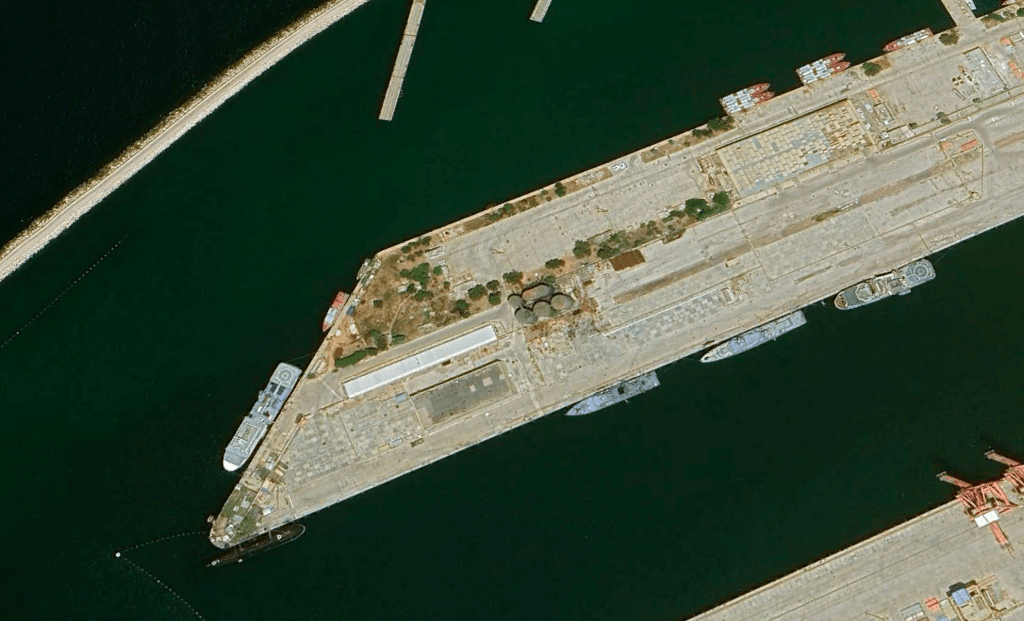
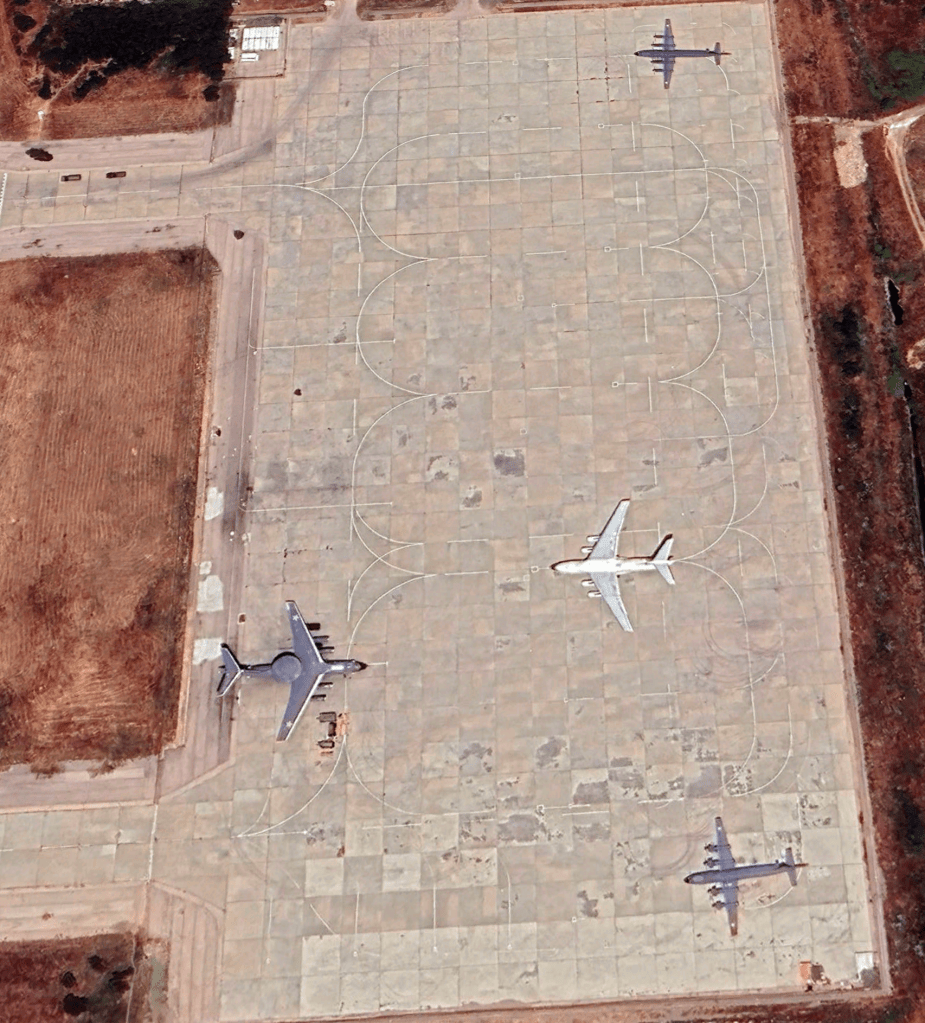
For the first time in Russian history they had access to their own port and an airbase on the Mediterranean. The West and Israel were not amused. Usually just referred to as Latakia, it’s actually a naval port in the northern section of the port of Tartus, and an airbase at Latakia about 100km to the north.
Israel hated it because the Russians kept prodding the Arabs into war – two years later in 1973 Syria and Egypt attacked Israel for a third time, largely egged on by the Soviets who told them Israel would attack any day if they didn’t. Syria lost out badly. Israel’s air force destroyed theirs and they lost the Golan Heights with their strategic mountains and hills overlooking Damascus, which Israel has annexed and will never give back.
Russian naval forces grew dramatically during the 70-80s period, Tartus was vital in maintaining a sizable Soviet fleet in the region and was a constant thorn in the side of NATO.
Post Cold War, the Russians held on to the facility but it was a shadow of its former naval power.
Then along came Putin. For the first few years of his rule, certainly until 2011, nothing much changed in Syria. By 2011 the Arab Spring saw a slew of regimes fall – Egypt’s President Mubarak, after 30 years, Tunisia, but most of all Libya. This was the trigger for a still unresolved civil war. Dictator Colonel Muamar Ghadaffi who came to power almost at the same time as Hafez Assad in Syria, found himself cornered eventually, and painfully sodomised by an iron bar until he died, which in that part of the world is the most dehumanizing and humiliating kind of death that can be inflicted. The fear on his face was palpable. It was an unintentional but powerful message and dictators everywhere felt a shade more uncomfortable. Frankly, if you knew even a tenth of what Gadaffi had done it was merciful. He deserved much worse.
The problem with Libya was the way he ruled it was designed to ensure that nobody had real control over anything directly so that nobody could challenge him. There was no modern type of government as we know it, which left the two halves of the country, one at Benghazi and the other at Tripoli, facing off against each other and rebels from the Saheel in the south. Libya was an important oil producer and that production stopped almost completely.
NATO involvement infuriated the Russians who saw Libya as something of their sphere of influence although far less so than it had been in the Cold War. Russia saw a way of intervening on one side that would regain influence and began supporting the side run by General Haftar, while a bunch of Europeans (mostly the French) supported the recognized government. Everyone got involved from Qatar to the UAE and eventually Egypt (which had a counter coup that ousted the Muslim Brotherhood from elected office and replaced them with another version of Mubarak, under General Fatah al Sisi, still in office today).
in 2012 Putin, aware of the importance of Tartus and Latakia, had the port and airfield upgraded. It was further improved in 2015. Putin went there in 2017, boasting about its importance and how it would be used to crush what translates almost as ‘rebel scum’ again, if necessary. It’s a video that hasn’t aged well.

Russia used Latakia and Tartus to funnel aid to Haftar, including flying Su-34, and Su-27’s there by alleged mercenaries. The bases in Syria were critical to the operation that went on for years, until in 2020 the legal army (the GNA) recaptured the Watiya air base these Russian missions operated from. It was a portent of things to come, because the defeat was largely at the hands of early Turkish Bayraktar drones, and it was the first time drones played a decisive role in a military campaign. A portent of things to come.
The Russian operation, without an airbase in Libya wound down, but it wasn’t as if they didn’t have something new to do.
In 2013, having somehow not having suffered from the initial unrest during the Arab Spring, it hit Syria. But it didn’t devolve immediately into conflict. There was talk, of elections, changes and reform, and for a while it looked like things might even pan out. There was a brief moment that Syria looked like it might slowly change into a democracy of some kind.
The Assad family are basically a bunch of gangsters. Think Sopranos mixed with Game of Thrones, and Assad’s family were having none of it. They made him change tack and stop listening to his wife. The crackdowns began and it all quickly dissolved into a terrible and violent civil war. Chemical gas attacks on civilians, ruthless fighting, torture the works. And it looked like Assad might not win.
Then along came Putin in 2015, deploying soldier ‘advisors’, GRU and FSB units, and of course the Russian Air Force flying from Latakia and soon other bases further inland.
General Surovikin, the man who had the southern defence line named after him and for a while commanded the Russian operation in southern Ukraine and who advised the withdrawal from Kherson was necessary, cut his teeth here. He wasn’t called the butcher of Aleppo for nothing.
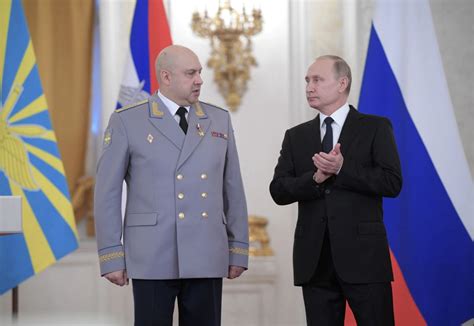
His aerial bombing tactics, developed entirely to break the populations and force them out of the cities, were appalling. Bombing hospitals purposefully, shops, schools, markets. Deliberately dropping deep penetrating bombs into crossroads and streets to destroy water, sewerage and electricity supplies. ‘Double-tap’ attacks to kill the emergency service workers responding to the first attacks. All of these were his gift to the world, and used extensively in Ukraine today.
Aleppo, Homs, the suburbs of Damascus, all turned to rubble by these tactics. And all because of the Russian bases at Tartus and Latakia.
One of the ongoing infamous operations that carried on until 2022, was the ‘Syria Express’. This was a freighter that plied its way once a week from Russia to Tartus and back carrying the weapons and ammunition needed to sustain the campaign. Putin found his supply route cut off when Turkey closed the Bosphorous in February 2022 to all combatants ships, including those carrying arms to or from Ukraine or Russia. It was this that in many ways, led to the deteriorating situation for Assad. Without the big transports of weapons and ammo, with the flight paths blocked over most areas, things got difficult, even as the civil war died down.
Quite a bit was withdrawn from Syria and sent home the long way around, especially the S300 air defence systems. As the Russian army needed more and more of whatever it could get, the forces deployed in Syria slowly cut back.
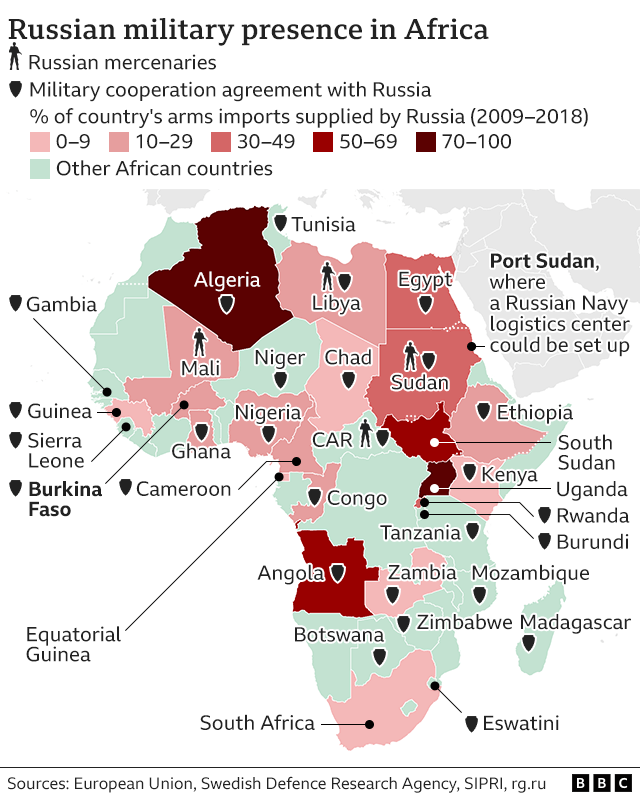
Even so the air base, now with regular flights via Iran, and often with Iranian cargo aircraft, was supplying Hezbollah, and helping to assist Wagner Group and then Russian Africa Corps operations across the Sahara.
Latakia and Tartus were involved in operations in Libya, Mali, Niger, Chad, the bitter civil war in Sudan, disturbances in Mauritania, Mozambique, the Central African republic and Congo – especially in the illegal mining industries for Koltan, Diamonds and Gold. They were instrumental in removing French and US forces from the region through carrying out military coups. France is especially peeved as much of its Uranium comes from Niger for its nuclear power industry and the US had just built a $100m base that had been instrumental in Intel gathering and suppressing the terrorists in the Sahel.
Russia has carried out a comprehensive campaign in the region, all of it operated via Latakia.
Russia is now facing a monumental problem in that its entire chain of operations has been disrupted, its potential for trouble in Africa, designed entirely to weaken western power and influence, has been sharply curtailed.
Latakia was absolutely pivotal to the whole process.
Not only has Russia lost the base and port, its lost influence and the ability to power project – if it cannot sustain its operations in Africa, it won’t be long before opponents start to reverse the process. Ukraine is already involved in doing so. France would assist if it thought it would win relatively easily and the US would like its base back. There’s plenty of people happy to see the wind of change blow the other way for once.
Inside Russia it’s clear they are suffering shock, they don’t know how to frame it or quite what to say yet, the preferred method is to say nothing and hope nobody notices. They know, Putin especially knows, how damaging this loss is. It shows weakness, worst of all its entirely because of the war in Ukraine that Russia’s prestigious presence in the Mediterranean, its influence in the Middle East, has been drastically curtailed. It’s humiliating – all the more so since most of regimes in the region despite Russia and Iran and this is a hammer blow to their mutual power in the region.
It doesn’t have just strategic repercussions either. It’s virtually impossible to maintain the submarines and warships of the Mediterranean squadron (it’s hardly a fleet these days), that far from home. The nearest ports are either St Petersburg or Murmansk thousands of kilometers away.
What makes it even more infuriating is there’s nobody to make an agreement with, there is no government, and after what Russia did to Syria no government in its right mind, having driven Assad out, is going to want to host bases for a nation so keen to pound its people into the ground.
It’s been a bad few days for Russia. It’s been just as bad for Iran. Israel must be gleeful but must be careful not to overplay its hand, having already moved to establish a deeper buffer zone. Turkey probably feels quite smug. President Erdogan must be thinking, ‘who’s the master strategist now Vladimir?’
You have to ask yourself if Putin’s strategic thinking, a much vocalised and promoted element of his character, that seems to have acquired an unreasonable degree of credit, ever existed. Has he ever been right about anything in the end? He was wrong about Ukraine and winning that in three days. He was wrong about the Europeans being so dependent on gas and oil they could never break away from it. He was wrong about supporting Assad in Syria. He’s been wrong about stopping the West supplying every type of weapons he’d nuke us for. He’s been busily attacking military industries and others in Europe, and that’s led to nothing much. His economic strategy is clearly not working. His no holds barred attacks in Ukraine have advanced around 40km in 3 years. He’s managed to kill 750,000 of his men, and been so humiliated by his weakness he’s had to buy North Koreans to make up numbers. I mean what does that say when you have to use half starved Koreans to take back parts of Russia, not Ukraine, Russia!
Putin’s only strategic genius is in making anyone think he might be one. I think it’s pretty clear he isn’t. The loss of Syria and the bases is far worse than the implications of America leaving Afghanistan. That’s virtually changed anything. Putin’s assessment of that was strategically as wrong as everything else he’s come up with. It might have looked bad, but in the end America is better off out of it and globally its made no real difference. Losing Syria and the bases is a blow to 54 years of Russian power – and Putin’s war on Ukraine is to blame. That’s the trouble with being a dictator. In the end the buck stops with you. And every one of your toadies knows it. Just another reason to remove him. Because sooner or later it’s going to happen.
The Analyst
militaryanalysis.bsky.social


Absolutely 100%. Well said.
LikeLike
Another brilliant history lesson. You filled in so many blanks for me. Thank you.
LikeLiked by 1 person
You’re welcome!
LikeLiked by 1 person
good report but have they really lost those bases….money talks after all.
LikeLike
Seeing Assad fall has been a true joy. What follows is hopefully not a band of tyrants bent on greater chaos.
That being said, isn’t it jumping to conclusions to assume Russia is now out of the picture and has lost it’s bases? If and when a stable government emerges, Putin will be willing and eager to pay a price to retain those bases. He will not just give up on them, and a new Syrian government might want to cash in on that deal.
As awful as Assad was, the neighborhood is not known for upstanding government examples who want representative democratic government. With the small US base there, maybe the USA will have some positive influence. Is there any chance the USA takes control of those bases?
It would be a coup indeed but Trump still seems like he wants to play buddies with Putin and that move would be rather embarrassing for Putin.
LikeLike
Thank you again. How ironic that he was going to make the Russian territory bigger and he is only making it smaller and increased the size of NATO, well done.
LikeLiked by 1 person
“Putin’s only strategic genius is in making anyone think he might be one.”
Quote of the year 🙂
LikeLiked by 1 person
The fog of war clears here and there. The cracks in Putin’s Russia are spreading quickly. By the time Trump gains his second POTUS, his old pal may be beyond the pale.
LikeLiked by 1 person