
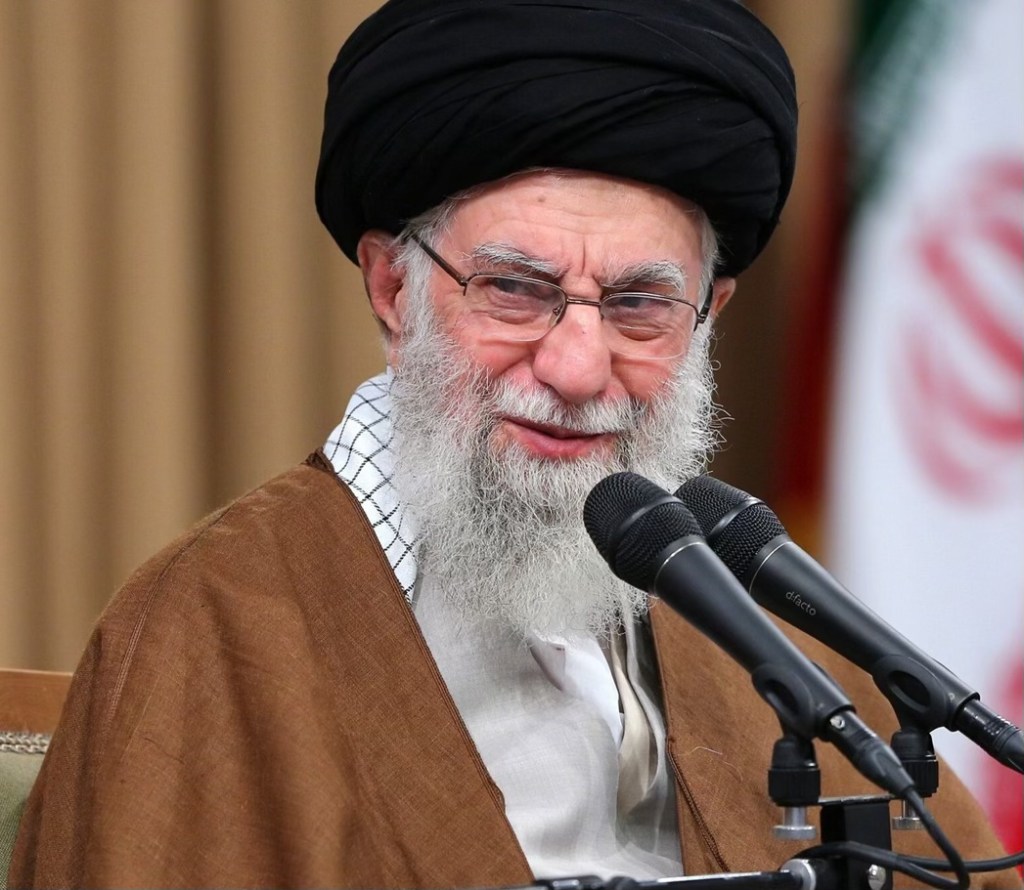
The fall of Syria and the departure of President Assad has caused an unprecedented level of top brass conflict inside Tehran’s military. The political elite – especially the aged Supreme Leader Ayatollah Ali Khomeini, is so incensed at the way its all unfolded, and the threat it appears to place on his own sclerotic regime, that he’s to address the nation on Wednesday.
The military are in what amounts to a ‘wall thumping’, screaming at each other mood, where everyone is blaming everyone else but nobody is willing to take responsibility.
The commanders of the Iranian Revolutionary Guard Corps and the elite military are beyond vexed over the issue. They cannot understand how it’s all fallen apart so fast, despite the billions of dollars Iran has spent, the material effort and the on the ground assistance Iran has provided. For almost ten years they were all that kept Assad afloat. The humiliation of having the Iranian Embassy in Damascus besieged and then ransacked has shaken everyone in the upper levels of government. There is a recognition that it could one day soon be them and they don’t like the idea.
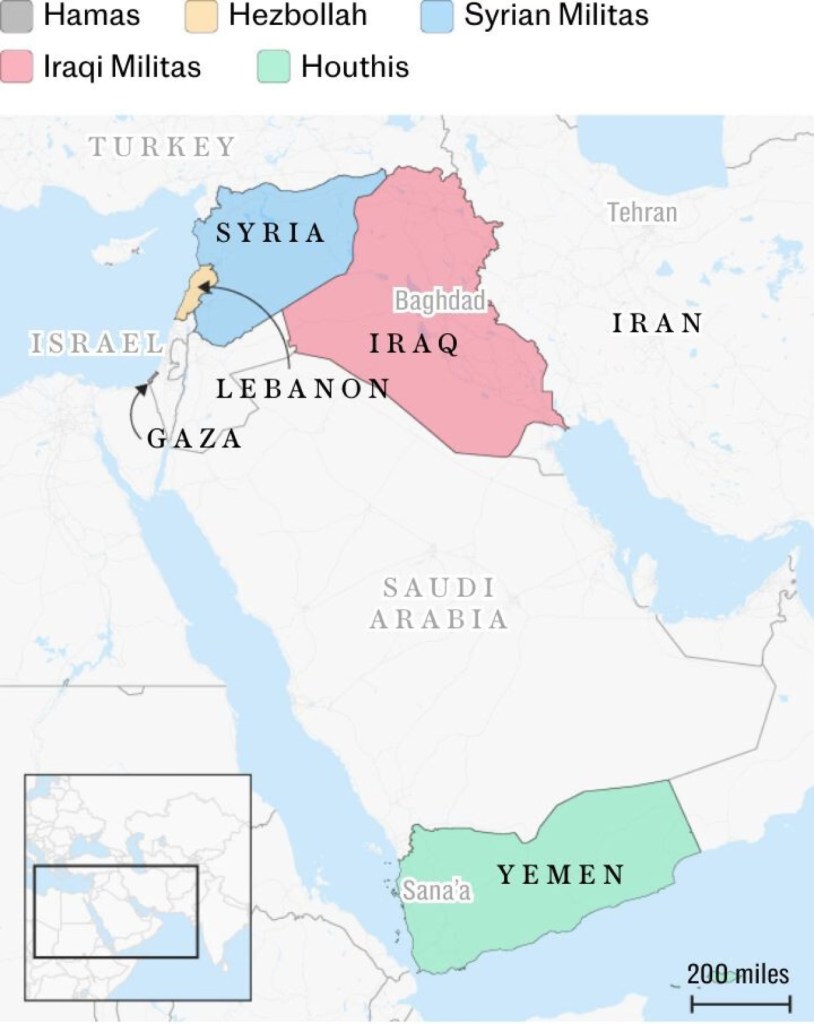
Iran has had a bad year. Its proxies the Houthis ended up on the receiving end of crushing military attacks by American bombers, largely ignored in the rest of the world, but which successfully destroyed command and control centers as well as missile storage sites. Hezbollah leadership were almost literally beheaded by the Israeli pager attacks, and have never recovered. The leader of Hezbollah and then his immediate replacement were both killed.
The war against Hamas in Gaza has been a disaster for Iranian influence and the leader there killed. Even the Hamas leader in Iran was killed in his guarded apartment in Tehran by Israeli operatives.
The first missile and drone attack ever on Israel by Iran directly was a total embarrassing disaster – Iron Dome and air forces of multiple nations rendered a huge strike into scrap metal with barely a few windows broken and not a single Israeli killed.
The second strike was just as bad. The Israeli counter strike was surgical in the extreme, destroying specialized military industrial facilities and part of Iran’s nuclear weapons research sites.
Syria is the icing on a cake of utter misery for Iran, which for years has gotten away with expanding its violence and anti-Israel operations as far as it can. Now the tables have completely turned. Gaza is gone, Hezbollah in Lebanon almost powerless, and worse, its supply lines cut with the fall of Syria. Just to make matters worse still, Israel has a a near complete air and ground blockade operating against Iranian forces crossing into Syria. In the past few days Israeli forces have moved into the flat lands below the Golan Heights and closer to Damascus to set up a ‘buffer zone’.

General Qaani isn’t someone to take the blame lightly – but fingers point to him for not being sufficiently on the ball over what was happening. Even then Syria unfolded so spectacularly fast it’s hard to see what he could’ve done about it.
Not unlike Russia’s foreign ministry and official statements, there’s a reluctance to frame the Syrian situation as having changed. Despite ransacked embassies and military bases being evacuated, statements of ‘continuing friendly relations’, and the jaded phrase ‘historic ties’ are used to try to force a pretense at friendship. At present there’s nobody in charge in Syria to pay any attention. Though a prime minister has been nominated late Tuesday.
Syria needs to be left alone to resolve its own problems free of foreign influence and interference, but that seems mostly unlikely.
In Iran, the Supreme Leader was said to be concerned at what was happening, calling high level meetings to find out, but nobody knew any more than most news channels were reporting, it moved so fast.
Iran’s commitment had come at considerable cost, now the regime looks weak, has wasted billions of hard to come by dollars, lost most of its influence beyond Iraq and its domestic supporters are already few. What to tell them?
Over all of that has been the endless rumbling of dissent in the general population. And like it or not Iran has tied itself to the Russians – a move that could well backfire at any time, something that seems to be concerning many.
One IRGC official is quoted as saying, “You don’t need to be an expert to see that we are in our weakest and most vulnerable position in decades and many acknowledge that here.”
There’s also a growing realization that the new US administration is going to hammer Iran with harsher and deeper sanctions. Some think there’s a time for change on the horizon. Conflict with America and the west, as a driving force of the nation’s goals have failed miserably. Nobody is getting anywhere with a fight that just leaves Iran worse off. None of it is worth the rare minimalist victory that puts words on a page for a day or two and then everyone forgets it.
If the mullahs are going to hold on, if they’re to prevent another uprising of civil disturbances they have to find a way out of this. It’s estimated 90% of Iranians are delighted by what’s happened in Syria. Social media and telephone chatter is full of it. The government knows it. They also know that they’re next if they don’t manage this right and learn some valuable lessons.
However this is Iran, and there are a huge number of deeply vested commercial, military and religious interests tied to the ideals of confrontation.
Will anyone learn? In a reactionary conservative government that cannot abide change or dissent it seems unlikely. What they do see is that Russia may be a chain on their ankle they could do without. Its the embarrassment of being seen to change tack that they can’t easily face.
Will Iran give up supplying the Houthis? Probably not, it’s been too useful an operation. and it’s a bargaining chip in the event of any talks. Nor will they want to give up on Hezbollah, but how they maintain that link in the future will be far more problematic.
Either way and regardless of the line the Supreme Leader takes, under the surface, the fall of Syria has changed Iran’s destiny. They seem to know it even if they don’t like it.
The Russians on the other hand don’t even want to discuss what it means. And that means Putin doesn’t want to talk about it. And that suggests someone doesn’t want to extrapolate the consequences his genius strategic visions caused to unfold.

Syria may have played almost no part in the wars since 2022. Yet the regimes sudden demise, tied so firmly to authoritarianism in Russia and Iran, seems to be a marker. The high tide has passed. The currents of history are starting to flow the other way. And for once everyone can see it, except Putin.
The Analyst
militaryanalyst.bsky.social

 The Military Analyst
Thank you, I like the way this is leaning.
LikeLiked by 1 person
Try a thought experiment…Imagine, if you will, the excitement in putin’s inner circle when the HAMAS strike against Israel went from a possibility to becoming his grand birthday present. The scenarios he worked through his mind. The smug smile that “they won’t expect this!”, and “Netanyahu will have to respond. He’ll over-react. The western media will forget about Ukraine…that will stop the flow of aid…”
And it worked…until the laws of unintended consequences came into effect.
Imagine putin reflecting on the words of General Syrskyi from 26 Nov: “The next counter offensive will be where the Russians least expect it…”
It’s the despot’s dilemma. No-one can (nor would if they could) tell them they might be wrong… all powerful, but no safety net.
LikeLiked by 2 people
terrific analysis. Very welcome in these days of bots and trolls.
LikeLiked by 1 person