
It is largely understood and appreciated that a combined and properly armed and equipped European military could defeat a Russian invasion. If it was simply based on armed force, a fully equipped army with integrated air force is more than likely to repel a Russian attack. However it would likely be more costly and bloodier than it should be if we were better armed, equipped and ready.
However there are digital weaknesses in reconnaissance, and intelligence gathering that need urgently to be addressed. None of the larger western governments have an extensive reconnaissance satellite system, or the means of analyzing what they see and prioritizing the information to make it useful as the US does with SENTINEL. This is an area that can be developed and within five years – but would almost certainly require international cooperation.
For the first time the major allies do have a recently acquired flexible but largely national military communications presence, with the the UK, France, Germany, Spain, Sweden and Italy all having their own military communications satellites capable of supporting most of European NATO – provided they weren’t being attacked by militarized Russian satellites.
The UK Skynet system (believed to have been the namesake for the Terminator movie which it predated) has been in service since 1969, with Skynet 5 currently in service and Skynet 6 is due to launch soon and operate until 2041, a program that’s cost £5 billion. It’s a full global comms system for Government, the Intel Agencies as well as strategic and tactical military operations.

France uses two satellites, Syracuse 4A and 4B, launched in 2021 & 2023 and is a highly robust system resistant to jamming but principally for French use, although that doesn’t preclude it being expanded to others, and is again, a global system.
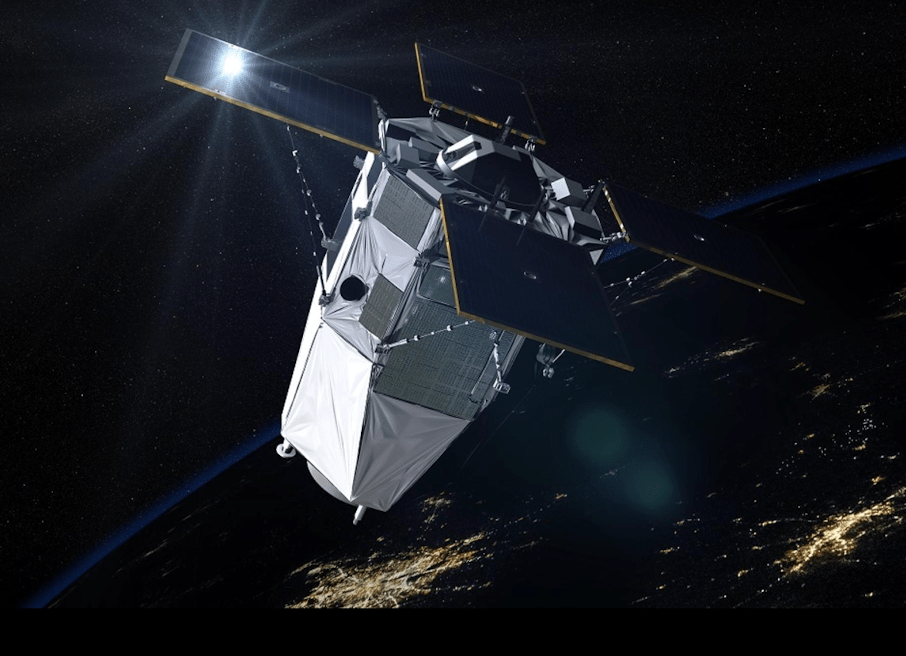
Germany uses the COMSAT-Bw system with two new replacement satellites due to enter service in 2027 and last to 2041, at cost of €2.1 billion . Germany’s satellites are actually more widely available to NATO as a whole.
Italy operates military comms systems based on the SIRCAL family, used for its own purposes and those of NATO. It’s also using the Athena-Fidus systems in conjunction with France, which has more civilian capability, but is still used for NATO and other military comms. Italy is also building more LEO series satellites as part of the Galileo GPS system. The European GPS system Galileo, is completely separate from the US System and equally as effective.
Poland doesn’t have a military comms system in space, but uses systems available through its NATO allies. Partly this has been because the principle large European powers have inherited global territories and interests outside of of NATO, which Poland has never had. However it recently signed a deal for four spy satellites under the MikroGlob Porgram, and for two more ultra-high res satellites from Airbus, all due to enter service by 2027. With optical and radar imaging for defence as well as early warning, they stand to be a valuable addition to western awareness on Russian operations.
Spain operates SpainSat NG-I which has only just be launched and enters operations in June 2025, with NG-2 due to launch by the autumn. Again designed to support Spain’s needs, but also NATO generally.
Even Sweden has now joined the military comms satellite club, with a super modern new system called GNA-3 launched in 2024. Primarily experimental, its the start of a program of military reconnaissance and comms satellites planned for the future.
Norway uses the 2024 launched system ASBM (Arctic Satellite Broadband Mission) , which is dual use and designed for NATO collaboration.
Finland is working on new systems with ICEYE for a synthetic aperture radar satellite largely for reconnaissance and surveillance as part of its defence modernization.
The Netherlands deployed a test unit in 2021, a BRIK-II nano satellite, for secure comms and SIGINT. This has led to the decision in 2025 to deploy the PAMI-1 satellite for military comms and intelligence in operation by 2027.
Denmark possibly has the most awkward situation being part of the US WGS system for secure comms. Belgium uses leased Airbus-hosted satellites for comms, but probably has the weakest overall space based system. Belgium’s defence budget has been derisory for years, but they have sworn to increase it.
Portugal too has realized it needs to take part and in January 2025 launched PoSat-2 as part of a 12 unit maritime comms system with military and civilian applications.
The European Defence Fund has been integral for many of these nations. It’s no coincidence that other than the UK and France, which have had decades of military satellite use, most of these new programs have happened since the Russians attacked Ukraine in 2022. Many have only just been launched in late 2024 and even this year. Overall they represent a quantum jump in European satellite capabilities, which is actually more than impressive, because the Russian military comms and recon systems are actually surprisingly dated.
The problem for the Europeans is that much of their weaponry – for instance MLRS/HIMARS needs US input for targeting long range fires. There are other issues too, such as the fact many European military systems such as StormShadow/SCALP-EG contain American parts and they have the right to prevent their use.

Now its true in my mind, that if it came to defending Europe and the Americans were saying ‘well you can’t use that F-35 against Russia’ it wouldn’t actually stop anyone using it. Although there has been a fair bit written in recent weeks that the US is able to disable them remotely if it needs to. That’s a whole new question – how to prevent that happening and it calls into question ever buying American equipment ever again. It also means that western air forces are in desperate need of advanced new 6th Gen affordable fighters – having bypassed the fifth generation effort, ones that do not need American licenses or parts to operate. This may not be convenient but it does mean that Europe will have to develop the supporting industries to produce everything from microchips to specialized machine tools it may not otherwise have. With the Dutch company ASML producing the world’s most sophisticated microchip manufacturing machines, this really can’t be as difficult as we might think if it was approached in the right way.
AREAS EUROPE HAS TO DO BETTER
Allowing for command and control, intelligence and reconnaissance capabilities to have reached the same levels as the Americans by 2027/28, what else does Europe need to deal with?
Air forces operating at range – say from inside Germany, UK & France, as well as the Benelux air forces will need a lot more in the way of air tankers. My estimate is another twenty aircraft would just bring the European Fleet to a state where it was sufficient to be robust. Its current size is a little stretched.

Air defences are a major weakness. The UK is horribly vulnerable to missile attack and the fact is it shrank its RAF basing to little more than four mega-sites. Attention to disbursement, additional sites needs to be considered. The UK has zero anti-air missile systems designed to shoot down ballistic missiles, Kinzhal hypersonic or even cruise missile or drone attacks on land. If the Americans leave, then the UK needs to take back its air base at Mildenhall for its own use.
All of Europe will face the non-availability in the long term of Patriot, that needs to be rectified if the Americans get funny over use and missile production – although Spain is now building PAC-3 missiles on license, you cannot trust that will last.

AWACS is another issue. NATO has selected the Boeing built E-7A Wedgetail, which won’t enter service until 2031, and the with only six so far agreed (there were 23 E-3’s). They may have to start looking at alternatives, the same has to be said of the P-8 Poseidon maritime surveillance aircraft. Yet we also know alternatives exist. Sweden produces AWACS, however there’s no maritime surveillance replacement. A modified Airbus A319 has been suggested in the past and may well be resuscitated.

Suddenly those old French warnings and their rationale of going it alone starts to make sense. I can see De Gaulle standing there over his grave waving his finger saying “Je te l’avais dit” (I told you so).
Long range strike systems to replace HIMARS and GLMRS have got to be on the list of urgent systems Europe needs to develop. We cannot be reliant on the Americans. it could take 3-7 years even if pushed at speed to develop and field such a system, but it could be done.
All of these American systems have to be regarded as suspect. Those nations in the process of buying them either place blind trust in the willingness of the Americans to let them use them or supply more ammunition for them, or they change tack before it’s too late.
This is in the end all it’s about trust. Do we trust America under 47 and his successor to supply what we need and let us use it without conditions? Especially if its against their new found friends in Russia? The old administration wouldn’t let these weapons be used in war against Russia until the very last minute, why should the new one permit their use?
This is a fundamental issue. It both outlines our weakness and the need to counter it with our strength of will and purpose.
The scale of European investment in satellite reconnaissance and communications has been massive, near simultaneous and almost revolutionary in its change from the bare minimum to a near embarrassment of riches. It shows what can be done when it’s needed. Now we have to embark on everything else.
A DRAMATIC SHIFT
As an example of dramatic a shift is required, the British Army has laid out a plan for the next five years. After reducing the army to 72,000 from a post Cold War high of 180,000 (55,000 were stationed permanently in Germany as the British Army of the Rhine), the reaction to the war in Ukraine is dramatic.
The plan is to take a 5,000 man brigade, establish a score for its lethality now, double that by the end of 2027, and double it again by 2030. That way, using smarter weapons, drones, long range fires, improved communications, integrated operations and networking, it can deliver better results without the cost of increasing manpower by a significant about. Making what already exists better and then some is the preferred methodology. It makes it easier to transport and get to where it’s needed, and it compensates for almost certain Russian reliance on increased manpower to overcome its technological and command system failings. However not one British Brigade is actually fully manned or operational because of the last governments deliberate attempts to slow recruitment, a problem that’s affected all three services. It’s far from being a UK only problem.

Changes in policy towards Russian behavior with its spy ships and its submarines, harassing and monitoring them at every turn when they’re in or near our waters, making it impossible for them to do their insidious work, are also important ways to get the message across. Tougher responses to cable cutting and attempts to do so, must be enforced, arresting ships and prosecuting collaborationist crews.
Naming and shaming, keeping intelligence operations they try to perpetrate against us, getting the public to be aware of the threats and the issues we face that most of us thought went 35 years ago with the Cold War, we have to make sure people understand why it matters.
Preparation brings victory. The Russians were not prepared when they invaded Ukraine and they paid the price. They won’t make that mistake next time. And nor will we.
Effective coordinated policy amongst the European NATO allies and a determination to be ready is the greatest deterrent of all.
Even so, it’s far more than that. A serious industrial and military program has to be entered into by all parties. In the air, on the ground at sea and below the waves. Being ready means doing it properly. We can’t be in a position like Spain was where it had dozens of Leopard-2 tanks on paper but they were un-serviceable and took almost a year to bring back. No more of this skimping and scraping by on old equipment and overly ridiculous procurement processes. We don’t have time for all that. We must act now. By 2027-28 a major global crisis could well happen, with either China invading Taiwan or the Russians doing something stupid.
We cannot solve every problem by then but we can do more than we have been – we have shown clear examples of what needs doing, and what has been done. We have to decide on how much we trust the Americans. Britain has to throw its lot in with the Europeans and work with them, not apart from them the whole dreadful Brexit saga and the animosities it caused on both sides have to be forgotten.
United we stand, divided we fall. It’s an old adage, but never has it been more true.
The Analyst
militaryanalyst.bsky.social

 The Military Analyst
The good thing is that now we know, with exhausting detail, what we are up against.
A privilege we did not have during the Cold War.
We can now build what we will really need and skip on things that have proven to be unnecessary.
LikeLiked by 2 people
I disagree on that. The Czech were already building improved versions of the GRAD launchers back in Soviet times, GRAD are unguided, but the technology to integrate rockets with light fast trucks is pretty old. I am talking about the “vampyr” that got so much media attention on pro-Russian sites with claims that the AFU was shelling Belgorod, while the Vampyt only has a 21 km range.
Ukraine has a few own models which look pretty good, like the Vilkha, which is a heavy 300mm launcher, much like a Smerch on steroids. The rockets are guided with GPS and inertial systems. The problem seems to be rather that systems are slow to reload.
Then there is the Israeli PULS, which is being purchased by a few European countries and a part of them is European too (the truck is a Mercedes) and it could be armed with the German JFSM with a range of 500 km…
I also recall a Turkish one. I wouldn’t trust Erdogan for a metre, but it’s always better than US stuff…
LikeLiked by 1 person
I sincerely hope you are an advisor to the UK government or the British military. You provide clear, strategical thinking and honest solutions to the decision-makers who are half paralysed by fear and bureaucracy.
What can the ordinary person do to support Europe and Ukraine?
1. We can boycott US products, including Tesla cars and trucks.
2. We can dump all US stocks and shares so the US stock market is weakened while we invest in European shares instead.
3. We invest in European made weaponry, (SAAB, Kongsberg, Rheinmetall, Hensoldt, Renk, Leonardo, Thales, BAE, BA, etc.) instead of feeding the US military industrial complex.
What can governments do?
1 British and European governments can revise all the tax relief that US companies get in Europe (Apple, Google, Microsoft, etc) as a counter to 47´s tariffs.
2. If 47 still wishes to play dirty, the EU could threaten to block the SWIFT payments system for the US dollar, making it extremely difficult to receive payments in USD, just like it did with the Russian roubles.
3. The most powerful measure would be to threaten him with no longer using the USD as the World´s Reserve Currency, but demanding the Euro be used as default for trade with Europe. Since more and more BRICS countries are dumping the dollar, this would accelerate the fall of the US economy. They are seriously worried about this happening as they realise it would mean the end of the easy money they have had since the 1970´s agreement on the petrodollar. The national debt of 36 trillion dollars is just waiting to bankrupt the whole economy and the US would no longer be the world´s only superpower.
We beat the bully by using his own tactics. We can fight back using the one thing that the US fears most – the end of the petrodollar.
It might even be enough to just THREATEN to do it. Suddenly, the playing field would feel a lot more level.
LikeLiked by 2 people
Given the venal penchant that Trump and his acolytes have for dictators in general and Russia in particular, there is little doubt that Europeans need to take strong steps to rapidly and effectively rebuild their military capability. It also places a question over AUKUS and the reliability of all the US security alliances.
The “peace dividend” account has been massively overdrawn. The upside is that it’s an opportunity to build for the 21 century, especially with lessons learned from Ukraine.
LikeLiked by 1 person
I think moving away from Boeing and using Airbus would also be advantageous as this helps Europe in jobs and do not have to worry about the US saying no. Trump is forcing the world away from the US which will prove to be disastrous for the US over time.
LikeLike
Airbus is as European as it gets, building parts for aircraft in the UK, Spain, France & Germany
LikeLiked by 1 person