
My loyalties have been and will always remain with Ukraine, but it has not been immune from criticism and rightly so. There’s a habit in the west of overlooking anything Ukraine does because nobody wants to sound negative. There’s a point where we have to talk up anything they do, even when it’s not that brilliant. They’ve made a lot of mistakes, that happens in war, under immense pressure, from the top of the command chain to the bottom. Its even harder when you had to throw an army twenty times the size of what you had together, get it operating and effective, never mind win some key battles, against what appeared to be a very well prepared enemy.

Ukraine has operated a mix of NATO trained brigades and soldiers along with old school Soviet era trained officers and its often led to some very dire consequences.
If you remember back in summer 2023 an old style commander tragically sent hundreds of troops and their vehicles into a Russian trap, when it was obviously a Russian trap, resulting in the loss of some 80 tanks and APC’s, with their troops. It was the failure of two old style commanders to communicate at Avdivka that opened up a Russian opportunity to advance and helped break the lines. It was another two old style commanders who botched up the Ochertyne front by failing to coordinate their rotation – leaving the front empty, and the Russians just exploited it relentlessly and we ended up with another ‘spike’ offensive that ended up in the Pokrovsk salient.
Russia consistently looks for gaps in Brigade to Brigade boundaries, and weak communications – then they try to exploit them. Russians would tell you if they could that exploiting these Brigade to Brigade boundaries was how they had managed to push so far so often. Poor comms and a lack of wider oversight has been a persistent weakness.
Ukraine has finally learnt from this and has now completed development and integration of its first Army Corps. The program is being rolled out across the front lines, which is no mean achievement as it takes place during hostilities. Three corps are now largely operational.
The army corps principle replaces what was a brigade level command structure. The problem with Brigades is its too easy to loose coordination and operate in mutual support either offensively or defensively. With a Corps level command as many as nine brigades can work well together under a single command aware of what’s going on across its whole area of responsibility.
There is some argument that a corps running 6-9 Brigades is unwieldy and the return of the Division – with around 3 brigades – working under an overall Corps command over three divisions would be better, but for now I think the Ukrainians don’t need another layer of command structure until they’ve used what they have developed to see how well it functions. Means of communication have changed and Ukraine has gained enough experience to know what it wants, we must give them the benefit of the doubt – they’re the ones fighting. There’s also a highly developed sense of Brigade Identity in the army and loosing that would be counterproductive to morale and the many specializations some of these Brigades have developed.
Until now Ukraine shuffles its brigades on an as needed basis into the four army commands. The 47th is a well known example of an elite heavy brigade that’s well equipped and used, probably most often as a fire brigade to stop a Russian advance somewhere or to initiate a Ukrainian counter-operation.

The problem with the brigade only operation is that they don’t have a real HQ, they don’t have the depth of intelligence, reconnaissance, planning and deep strike coordination that a Corps level staff would be able to draw on. Part of the purpose of the new corps structure is to reverse this weakness, and allow better support and coordination, through artillery, drones, HIMARS, to wider front operations including better logistics.
The problem the Corps structure will have to overcome is that its made up of the right balance of forces, that the Corps Commander can manage the number of competing brigades and their needs, without the benefit of a divisional command that can potentially manage three brigades more effectively on the ground. There’s an old argument that if you only have brigades you tend to end up focusing on what Americans call ‘the rock star’ brigades – such as the 47th – to the detriment of others. This may be the case of something the Ukrainians have to relearn, or they find a way of making the system work.
Either way, this seems to be to be a major positive in putting up a unified defensive force with better coordination, though I’m not so sure it would be as effective on the offensive, where things can unravel quickly and a divisional command can keep a tighter grip on what’s happening.
From experience I know that the NATO advisers would much prefer a divisional policy. They would also like to see more civilians operating the logistics chain and allowing the military to use the soldiers it would release on the front.

I am concerned at the way the corps system may be too much – but it’s got to be better than what they have. My main concern is that the corps commander is overburdened with so many brigades in a highly tense combat scenario. You have to know everything that’s going on to hold that in your head and form a picture of every brigade and all of its people – that takes a special kind of brain. I’m not joking, there are not so many people who can use image data processing, maps, terrain, equipment data, location and know their officers on such a scale. You have to be able to ‘see’ it in your head to act swiftly and decisively. Linear thinkers are not good for this type of role, its the creative thinkers who work best. I’d rather have a general who paints watercolors for a hobby than writes computer code. You have to be something of a mental holographic visionary. There are many examples of such commanders in history – Field Marshall Lord Kitchener of Khartoum was a notorious creative flower arranger, Winston Churchill painted watercolors and built brick walls for the fun of it, Patton was exceptionally flamboyant and an incredibly articulate orator, as was Montgomery in his very British clipped certainty. Rommel was also known to demonstrate his knowledge of his command in a way that was extraordinary. Napoleon was able to visualise on a massive scale as was Alexander the Great; all the records show their ability to demonstrate visualization and turn it into insightful command.

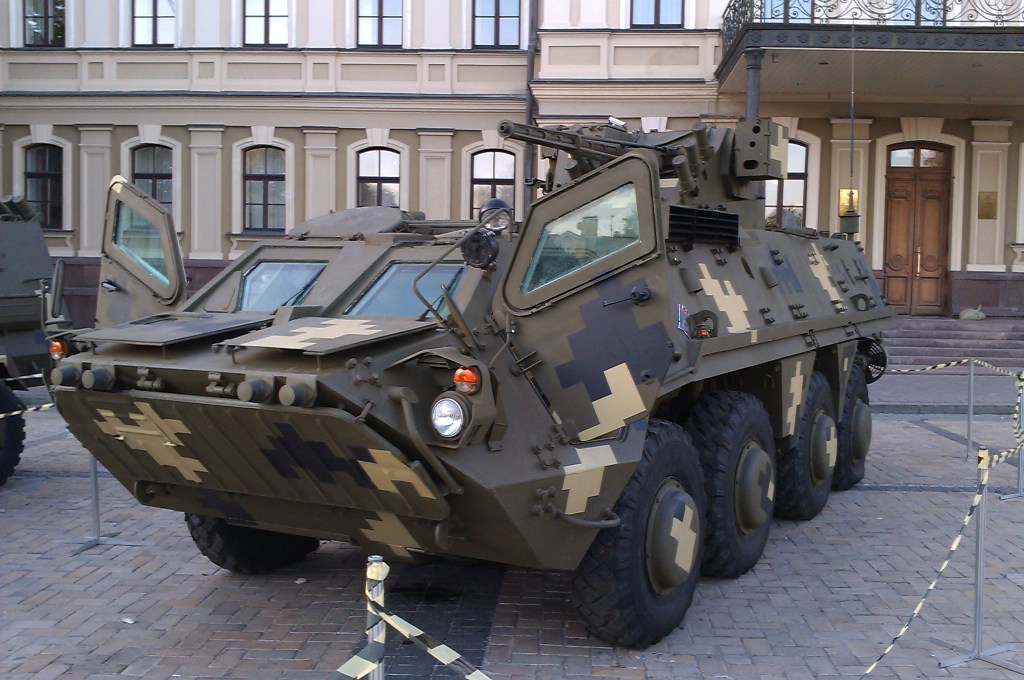
Ukraine has made a big move and it’s a positive one, it shows a change in thought, a change in mission and it’s a forward looking concept that sees military success in the longer term future. It may well soon see how effective it is as Russia prepares for its spring offensive. On May 9th the annual military parade in Moscow is a highlight for Russia. Many expect a major mobilization effort to replenish the ranks and make one last effort to, as Putin said in his own words just last week in Murmansk, “to crush Ukraine”. He hasn’t managed it so far and he won’t this time. The new corps structure may well prove key in preventing it from happening, provided its commanders are up to the job.
The Analyst
militaryanalyst.bsky.social

 The Military Analyst
Exceptionally well-presented.
LikeLiked by 1 person
This! Linear thinkers are necessary, but creativity is vital to success. Failures are inevitable in any complex operation – especially conducting a war in defence of your existence. Learning from them is essential. You can learn by listening and studying, or you can learn by suffering – or suffer until you learn, or because you didn’t.
You should always assume that your opponent will improve, which means that you need to be ahead of them when they do.
There’s one level of intelligence gathering, validating and merging into a landscape-wide view that requires objectivity and logic; then another level of thinking, a kind of fluid vision that works on creative pattern recognition – where the strengths and weaknesses are texture; and apparent problems or opportunities toggle depending on perspective. The best minds see more than one possibility, and can turn problems into resources with imagination.
I love your description of the creative thinkers and their chosen hobbies…that makes perfect sense.
LikeLiked by 1 person
interesting that the wall clock is not 24hr.
glad to see Ukraine modernize it’s command structure. I would have thought it would be eaisier to implement if they had done it with divisions from the start. Maybe they didn’t have enough division leaders?
LikeLike