
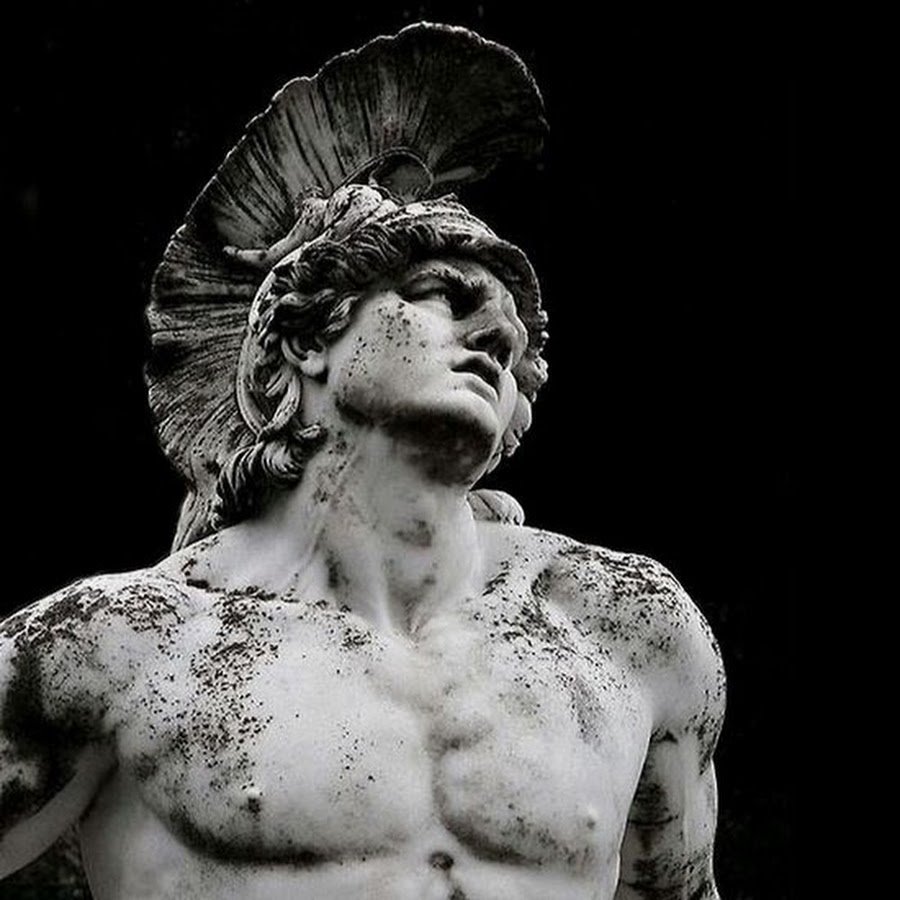
Achilles was the greatest of the Greek Warriors, son of one of the Argonauts, Hero of the Trojan War. Legend has it, though it was a myth created in the first century AD by a Roman writer Stetius – (the Romans were obsessed with the heroes and myths of Greek legend), was that Achilles’ mother, Thetis had held him by the ankle and dipped him in the River Styx. The Styx is associated with the space between life and death, and Achilles’ entire body, except the heel and ankle by which his mother held him, was invulnerable and could not be pierced by blade or arrow. Paris, Helen of Troy’s lover shot Achilles in the ankle with an arrow which eventually killed him during the siege of Troy.
Since then the phrase ‘Achilles heel’ has come to be used to emphasize the weak point in anything that seems otherwise impossible to overcome. It is therefore fair to say that while nothing much has come close to overwhelming Russia – and its nuclear weapons effectively prevent anyone ever doing so because they would never survive the attempt – it has one very real ‘Achilles heel’.
The Russian economy has relied on oil more and more as the decades passed. The Russian Empire had some of the worlds largest active oil fields in the areas around Maikop/Grozny in the Caucasus, and by WW2 these were flourishing oils fields that in 1942 drove the German Summer Offensive, with Nazi troops coming within a whisker of the oil fields they needed so desperately. Baku in modern Azerbaijan and the Caspian Sea were a huge source of oil – and oil and gas remain vital to the mafiaesque regime’s survival in Azerbaijan to this day.
Russia has never been an industrial giant in the way that western nations have been at one time or another. Industrialization came late, far too late to help win WW1. Stalin’s mass forced industrialization of the 1930’s under the soviet system failed to bring prosperity because its focus was never consumer products to please the millions, but weapons to face a rising threat in both Japan at one end and Nazi Germany at the other.
The costs of that industrialization were horrific in lives and the environmental damage they created. However once turned fully to war and the defeat of Nazi Germany, it could almost be said it was Russia’s crowing glory in the 20th Century, because once passed, its legacy was nothing more than a different version of autocracy.
As the available oil deposits suddenly became clear in the 1970’s, and with the Cold War seemingly less threatening with the policies of détènte pursued by both sides, though more energetically by the west than the Soviets. American and other western oil giants signed deals to explore the resources of the north. They were never allowed under the Soviet system to ‘own’ any of it, but they did provide expertise and technology on how to get at it, much of it in cold and remote parts of the Siberia.
Inevitably the Soviets misbehaved – their Afghanistan invasion in 1979 was the end of the road for cooperation in the economic sphere and a new and more dangerous Cold War took hold with the advent of the Reagan Era.
By this time Russia was an important oil exporter, though more was to come decades later. Its industry was inefficient, lacked Western expertise, pollution in the leaking oil fields was massive and dangerous. But the worst part was that between Reagan and the Saudi Arabians they noticed how bad the Russian economy was and how very dependent it had become on its oil exports for revenue. The two contrived a plan to pump so much oil it reached as low as $9 per barrel, and effectively broke the Russian economy. A key element in the mix, coupled with the Afghanistan body count, the lies around the Chernobyl disaster and a general malaise that Gorbachev and Perestroika created. While a positive step forward, they were nowhere near enough to meet the demands of an unsettled public.
With the Soviet Union broken and the Cold War over, Russia turned into a basket case economy, reeling from state controlled rigidity to a free market capitalism that was more like a corporate land grab for anyone who could find the cash to buy the companies they wanted. Oil and gas featured highly in the demand stakes.
By the time Putin came to power at the turn of this century, Russian oil and gas were turning around and beginning to fire the industries of Europe – a process he was absolutely behind and determined to use to the maximum. And in the belief that it would bring Russia towards the western democracies, they were happy to embrace it.
This concentration on oil and gas brought in so much money so quickly, (as did the other huge commodity industries like potash, aluminum, iron ore, diamonds and gemstones), little effort was made to actually invest in anything that made finished goods. There were car factories and medium sized businesses that made this and that, but mostly for domestic consumption and it was never a huge part of the economy. Russia was addicted to the revenue from oil and gas. It was that which financed its military, and that that gave it leverage when it invaded Crimea and then the Donbas.
The oil money had been used to build up a huge Sovereign Wealth Fund of some $600 billion – around a $150 billion of that was in Russia, $300 billion of it in Brussels banks used to finance Russian Euro transactions, and the rest all around the world.
Not wanting to trigger a warning they were about to invade Ukraine – despite the wise decision of the Americans to actually make sure that knowledge was publicly available – the Russians left the money in situ, thinking they would get it back in short order. The war hasn’t gone as planned as we all know and that money is now being used to back loans to Ukraine it will never need to repay. That left Russia with just about $150 billion in its war chest.
The plan was to carry on selling crude oil, which at first was easily seen as the best decision, energy prices blew up and Russia was raking in tens of billions per month in revenues. Yet as time has gone on the Europeans quickly changed their habits, most of them getting out from under the curse of Russian oil and gas within 12-24 months – a massive achievement that’s devastated gas revenues. Russia simply had nowhere else to send it because of the pipeline system.
Oil was more problematic, but much of the world just saw a chance for cheap energy and as long as they got a discount – and they did, by as much as 30%, they didn’t care where it came from or what the money would be used for.
Yet slowly over time, thanks to Russia’s own stupidity in reneging on deals over production quotas with Saudi Arabia, the oil price has dipped and stabilized, but at a lower point than Russia needs.
Now if Agent Kraznov turns out in the history books one day, to be real, he’s turned out to be the worst disaster Russian intelligence ever manifested. If his mission was to bring down America he was well on his way, but Trump unleashing the trade war tariffs – even though not one has been applied to Russia (or Belarus or N.Korea), has undermined business and trade sentiment to such a degree that, in a twist of fate, with demand likely to fall, a recession looming, the oil price has started to tank.
This is bad for everyone. Its bad for Britain because it will receive reduced tax revenues it can ill afford right now, its bad for American producers because much of the fracked oil and gas is quite expensive to produce and their margins will be cut fine, it may even end up with some fields closing if its a prolonged reduction.
For Russia it’s a catastrophe. When they say the Kremlin is panicking over prices they’re not joking. It was already at $52 per barrel last Friday out of Primorsk-St Petersburg terminal. Since then Brent Crude and West Texas has dropped to $60 and $56 respectively, so Russian crude prices (which are a little mysterious to divine because of sanctions and price caps), is likely in the $46 range. That’s barely above production costs on some fields.
More damaging to the Russians is that their entire budget was based on crude sitting in the $70 range for most of the year as a minimum. They’re looking at a vast drop in revenue.
8.5 million bpd at $70 = $595m per day. At $46 its $391m per day, A loss of $204m per day, that’s $74.46 billion per year. That’s almost half the amount the entire military budget has been given for the year. This war is costing Russia around $500m per day just in basic operating costs, never mind new equipment and weapons.
The best estimate is that there’s $40 billion left in the emergency fund – many think its already gone, because there’s plenty of evidence in the economy that the Central Bank is ‘printing’ money and feeding it through the commercial banks as forced loans into the military industrial complex. ‘Printing’ money when you still have income is dangerous but not as dangerous as when your income falls and the printed money is your only means of keeping things going. That is a completely artificial situation and will quickly unravel.
I cannot help but think Putin and his cronies are operating like the last of the Roman Emperors in the West. They had long given up trying to stop the empire from crashing down completely, they kept the locals happy and themselves comfortable, always staving off the final doom as they remained and protected their own power – even as the empire was chipped away from under them. Is Putin the modern day Orestes, the real ruler of what was left of the Roman Empire? Will he be crushed by his own version of Odacer the Barbarian?
Will Russians or any of the millions of Muslims inside the country rise up and say they’ve had enough? Will it trigger the end?
There are signs even the military is at its wits end. One of the fanatical Z bloggers – a woman no less, whose name I forget, was ranting at the army, the government and the system about conditions on the front, the dreadful tactical drone situation that she intimated was a war Russia has lost against Ukraine. Endless corruption, lack of vehicles, lack of food, lack of small arms ammo. It’s all stuff we have heard repeatedly through this whole war. Daily loses running at an average of 1,290 per day. Even the over cautious British military intelligence review places deaths at 250,000 and the Americans at 790,000. Ukraine claims they are closer to the 1,000,000 mark – a figure by their count that’s just 50 or so days away.
I feel it. I have the feeling that when they launch their offensive – which may be sooner than we’d expect as there’s been little or no rain and the mud season has not materialized and now probably won’t, is going to be a catastrophe. One of the issues that the complaining Z blogger was ranting on about was attacks still being conducted recklessly in armored columns, that have failed since the start of the war to achieve anything. ‘Who’, she asked, ‘is being held responsible?’ ‘All we ever hear is everything is alright’.
Well it’s not. It’s all very wrong. The Army is broken and about to be thrown into a combat it cannot ultimately win, and will break it irreversibly. The leadership sits at home comfortably thinking they have this sorted, it’s all OK. The reality is its a thin shelled Easter Egg that’s about to be thrown at a steel porcupine, its going to shatter at the front and its going do fly off the economic rails at home. And its going to be a mess. No regime like this or state constructed in this way ever survives this type of disaster.
All of Russian history in the past three hundred years has led it to this position, its unreality, its mocking of the individual in the name of one man, be it a Czar, Stalin, or Putin. Russia’s empire is an artificial construct, a leftover from the age of colonialism that’s finally going to face its reality.
The Analyst
militaryanalyst.bsky.social

 The Military Analyst
May the Gods hear you. May Pallas give the noble Ukrainian warriors wisdom and strength. May Zeus smite them with the Olympic lightning and Poseidon crush their cities with earthquakes.
LikeLiked by 2 people
Too right!
LikeLiked by 2 people
really nice synopsis, thanks. I was aware of some of this, but not all and in context. Very useful. As always, thanks for taking your time to put these together for us!
LikeLiked by 2 people
You’re most welcome.
LikeLike
Trump has not imposed sanctions on the authoritarians as he wants them onside for his own dictatorship.
LikeLiked by 1 person
The lady you are thinking of is Tatyana Montyan. A well known turncoat Ukrainian Russian speaker. A lawyer born in Kerch she decamped to Russia in 2021 and has appeared on RT etc. extolling the glory of Russia.
LikeLiked by 1 person
Maybe ‘lady’ is a strong term but thank you for the information! I just couldn’t remember!
LikeLike
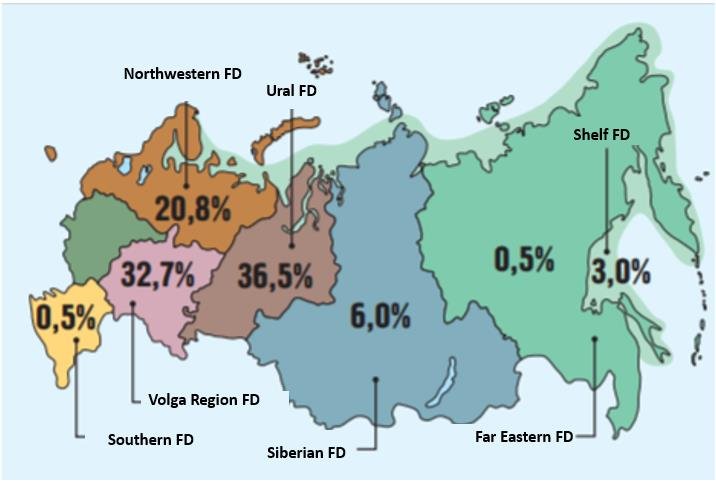
Thanks for that write up. I hadn’t realised almost 90% of Russian oil production was in the Western half of Russia, very convenient for strikes on their infrastructure.
Hopefully the Ukrainians are fully prepared and able to repel any upcoming offensive successfully. With support remaining strong and resolute within Europe as the Americans slink away, disgracefully abandoning their allies in a time of need.
LikeLiked by 2 people