
I’m going to answer then question straight away, because I have always known that should it have to, the answer is ‘yes’. Europe has some of the worlds largest defence manufacturers, from Rheinmettal in Germany to BAE in the UK and Dassault in France, and their are many more.
These companies have suddenly found their share prices rocketing as Rehinmettal for one example surpassed VW Group as one of Germany’s most valuable companies, approaching $54 billion.
The reason for all of this sudden European activity isn’t what is going on in Ukraine – although its should have been. It’s what America has suddenly become under the increasingly authoritarian rule of Donald Trump; unreliable, untrustworthy and disengaging.
It has become such an issue because Europe has willingly purchased military equipment from the United States – and now it has realized that may have been a mistake, that America may not support what has been purchased if it has reason to no longer do so, and trust, in short, has vanished. Things are so bad that Portugal has in effect said that it is now unlikely to buy F-35’s, others are in the same position. Germany has decided to continue because it needs the aircraft so badly to replace its nuclear role Panavia Tornado fleet that dates back to 1992 for the last delivery to the Luftwaffe. The UK too, has no choice if it’s ever going to have enough aircraft to use both carriers – they have no catapult so the naval version is a must.
Yet across Europe+ the decision is pretty much unanimous – the US can only be trusted so far and no more. Each day seems to suggest that trust continues to evaporate.
There is also another big motivator in bringing weapons development and purchasing inside the Europe+ market. The US has benefited from production scale by selling more than it needs as exports. That volume lowers costs for all buyers – but especially the Americans themselves. It does that largely because the cost of development can be mitigated against so many units being sold, that all buyers are contributing to the R&D budget – but only America gets the technology IP and the research that underpins it. If Europe+ buys more inside its own framework, then not only does its IP remain with it, it stimulates the technology base that IP is derived from, which contributes to better product and keeps the cost savings inside the Europe+ market.
Conversely, by behaving as it has, the US is working against its own interests by selling less abroad, making the cost of buying weapons more expensive for itself and reducing the available budget for R&D for new products. That in turn reduces the important technology lead the US has always sought to keep to overcome its near-peer rivals. Without that lead the US will struggle in the event of a conflict with China. If you wanted another argument that Trump is working for Russia – this is just another example of why so many believe it. Everything he does is seemingly against the US long term interest.
EUROPE CREATES A PLAN
You will notice I have mentioned only Europe as the EU here, and not the Europe+ bloc, because this plan is only applicable to the EU. That excludes key countries like Turkey with its highly innovative defence sector, the UK with its long established corporates, Norway with its novel defence sector that kicks well above its weight, along with Ukraine & Canada. They are not part of this project being outside of the EU fiscal policy arena. However it’s hoped that longer term all will be involved through new frameworks currently being negotiated. Turkey is the main outlier because Europe struggles with the autocratic Erdogan regime, even while it wants very much to work with its defence industries like Roketsan and Baykar. Italy’s Leonardo has already signed a deal to work on unmanned systems with Baykar – a field in which Europe is very much gong to need Ukrainian help as well.
The main plan is to create an €800 billion pot of defence expenditure available to plug gaps in the EU states armed forces and kick off a whole new generation of military acquisition. The EU which has strict guidelines on national debt as a percentage of GDP, is looking to relax those rules specifically and only for this purpose, while at the same time encouraging private capital to invest and make profit by accelerating the Savings and Investment Union. The European Investment bank will also take a big role, with the overall plan to make defence spending across the EU equal to about 3.5% of GDP.
In fact the other positive side of the deal is that the EU expects its overall GDP to grow by around 1 to 1.5% from these activities alone.
Another €150 billion fund will be created to allow the EU’s central budget to be used to buy defence equipment directly. There are 36 major defence companies in Europe who will benefit.
The Europe+ defence sector is looking at stock value jumps of nigh on 40% because of all of this and investors see a bright future – the same cannot be said for the US where the defence majors are seeing 4-5% value drops.
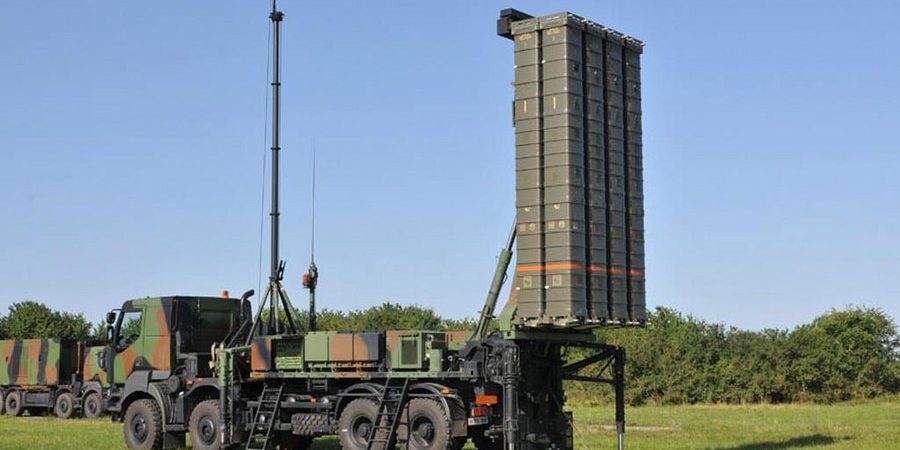
CAN WE DO WITHOUT AMERICAN AIR DEFENCE SYSTEMS?
The biggest ticket for the air defence world is the Patriot system. Now thirty years old in concept it’s been updated dramatically. American missile production is however pathetic and not expected to reach even 750 a year until well into 2027. At the current rate of use, Ukraine alone is using probably half of that each year – so many in fact there probably aren’t enough to go around and some of the batteries may have to be withdrawn. The only European solution is the SAMP-T – its almost as good as the latest Patriot, and with investment behind it it stands to create more work in Italy & France. Production rates are still derisory, but investment could pick up the slack. Another issue is that the UK will also be looking for a strategic level air defence system when the Defence Review is published in a couple of months – because right now it has nothing at all, although its more likely to choose the system the RN’s destroyers use to save on time and development cost. Ukraine too, has already stated it’s going to begin work on its own strategic air defence system.
INVOLVING UKRAINE
Most of the big European defence conglomerates are already signed up to produce everything from APC/IFV’s to the Bodhana artillery system. The later has proven so successful, Ukraine is producing more guns than it can mount on trucks because the trucks can’t be built fast enough. (The current truck is the Czech Tatra 158 Phoenix 8×8 chassis, featuring a locally designed armored cabin by Ukrarmor and a semi-automatic loading system). That in turn has lead it to produce a towable version which has itself had teething issues finding a suitable carriage. It was hoped to use old Soviet ones from obsolete guns but now a purpose built one seems more suitable. If Europe can work at the speed Ukraine is to resolve these issues things will change dramatically. Ukraine has a lot to offer in mobilising European industry.
Having said that, one of the large Spanish conglomerates, Tecnove, has bought the production licenses to two of Ukraine’s light APC/IFV types and will be producing them in Spain for sale to European and global buyers.
•   Tecnove and Praktika have established a partnership called Human & Safe Systems, which will oversee the licensed production and promotion of these vehicles in Europe.
•   The agreement covers three main variants for both the Dzhura and Kozak: a medical evacuation vehicle, a troop carrier, and a vehicle for special operations.
•   The Dzhura is a lightweight tactical vehicle based on the Toyota Land Cruiser chassis, designed for extreme conditions and various mission configurations.
•   The Kozak series, including the Kozak-5 variant (built on a Ford F-550 chassis), is known for its high protection, mobility, and suitability for tactical operations such as troop transport and medical evacuation.
This partnership allows Ukrainian armored vehicle designs to be produced within the EU, facilitating access to international markets and bypassing current restrictions on Ukrainian arms exports. It’s a small step but is a start. This is the type of cooperation we need. Imagine how things will change when Ukraine is in the EU – it stands to become one of the most important exporters of tactical combat vehicles of every type imaginable. Battle tested and reasonably priced, because quantity is going to matter in a drone filled battlefront.
EUROPEAN WEAKNESS NEEDS TO BE OVERCOME IN ISR
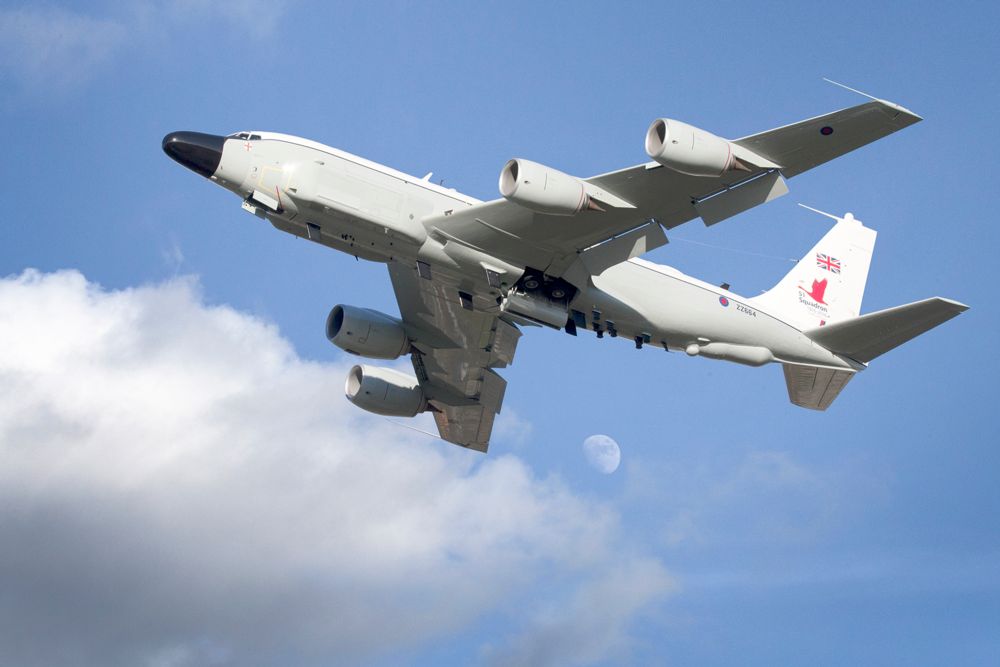
Intelligence Surveillance & Reconnaissance aircraft are a major weak point for the Europe+ nations. Between them they have little more than 19 aircraft; most countries have none at all, and the largest fleets, belonging to the British and Turks are just three each. France has just one. Sweden is the only European player with a system ready to go but it doesn’t have an aircraft to put it on. It has long been suggested that Airbus converts the A319 or A320 series to military use as needed, but they’re more likely to be existing older airframes than new ones as the civilian airline business has a waiting list thousands long, that would take as long as eight years to clear with no fresh orders. Production rates are around 50 per month, rising to 75 by 2027. It’s also a prime example of what defence industries will need to overcome as the increase in production has been planned for over four years – and delayed twice – because of supply chain constraints.
INDUSTRIAL CHALLENGES
The lack of subsystem and component manufacturing is going to be a big deal – as is the training of a workforce to a high enough skill level, and using modern industrial robots and practices – the factories themselves are a massive and time consuming investment. Germany has a great record in genuine apprenticeships and providing an industrial workforce, France and Italy less so. Worst of all is the UK where the concept of a job in industry like this, even with good pay is often seen as not being the thing to do. The apprenticeship system if you can call it that, has been a continuously dreadful failure despite repeatedly being backed by governments. Poor marketing and understanding what it means has been much of the problem. It does work when it’s managed right, but it rarely is. And the UK is not the only country with this problem. Europe generally has got to get to grips with a re-industrialised arms industry.
MILITARY AVIATION
Dassault Aviation is going to build 4-5 additional Rafale aircraft per month – eventually – again supply chain issues will have to be overcome. Eurofighter which is built between the UK, Germany, Italy & Spain, came perilously close to announcing an end of production only last year. An order from Qatar, Germany buying a handful to stop the line ending, a request for 40 from Turkey and a changing environment have saved it. Even the UK looks to order more. It’s vital for all of these countries not to lose aviation specialist industries because they will need them for the upcoming sixth generation fighters.
The fact is too, that the Eurofighter is a good aircraft. What exactly do the Russians have that we should be so afraid of? Their own fifth gen is pathetic in comparison to an F-35. It may be a stop gap, but Turkey is already building a fifth gen aircraft – Indonesia recognizes it and has asked to join the program. Turkey is entering production in 2028. Europe will just have to swallow its pride and buy in too. It will be a lot cheaper than the F-35.
ARGUMENTS OVER BUYING OUTSIDE OF THE EU
The Germans want to be able to use the €150 billion for buying equipment from Europe+, Japan, S.Korea and even Australia. The French are arguing over the fact they want the money spent inside the EU. It hasn’t been resolved yet but constraining yourself when in dire need – especially as Germany has the most run down armed forces in Europe (other than Spain), seems a bit short sighted.
FACING RUSSIA
Let’s argue for a second that Russia doesn’t collapse and its economy flatlines – because it will. But it still poses a military threat. What if we have what amounts to an over-armed Europe and Russia falling about like it did in the 1990’s? This time it should change nothing because Russia is like a bad penny, it will always turn up. It will always chose the same path and it will always use military force one way or another when you least expect it. You can never not be ready and you can never be complacent like we were in the 1990’s and up to 2022.
There is good news. Europe’s economy is vastly bigger than Russia’s, at €19.2 trillion. Russia is not even in the world top ten and behind Brazil, Canada and Italy, at barely €1.5 trillion – and that was pre-war. It’s less than that now.
Its only really major advantage is its nuclear arsenal, an over-sized expensive folly that Russia believes makes its voice louder than everyone else’s. What really makes it heard is its willingness to do what nobody else considers normal. Its willingness to use force is its power. Only a willingness not to be cowed by that force and show you mean it, will keep them at bay.
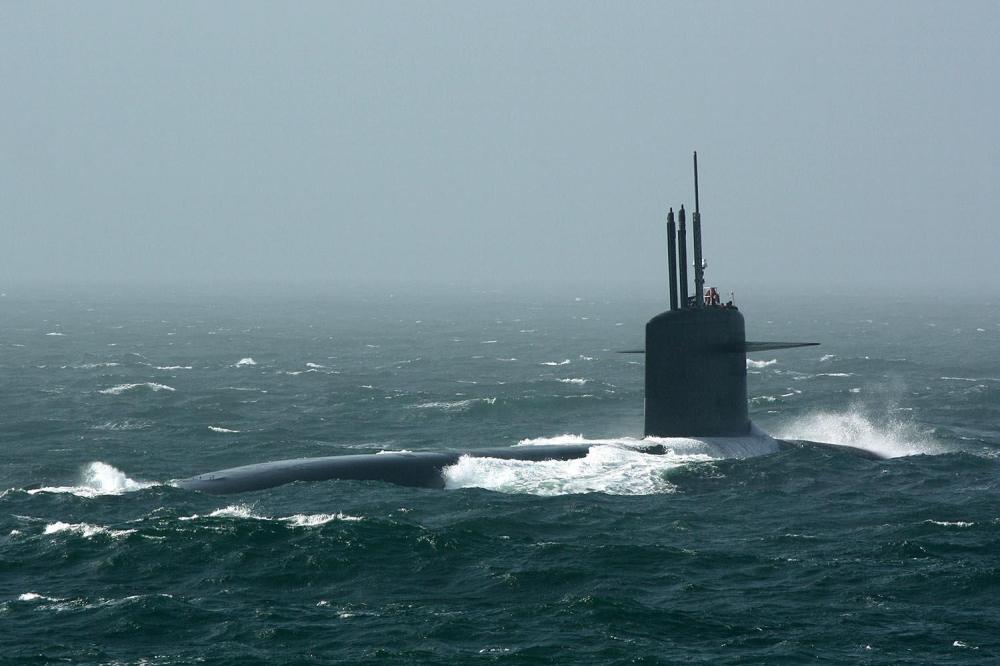
Part of that will be the French and British nuclear deterrents. France is willing to expand its nuclear arsenal of tactical weapons. Britain has nothing to deliver any such tactical weapon – it would need to develop one. France has usually one submarine with missiles at sea since 1996, and the UK has continued to do the same since 1969. Quantity in strategic nuclear weaponry is not the point, it’s about what you can do to the enemy. The biggest danger is that the two submarines we know are always at sea, are being tracked and tailed by the Russians. Presuming they’re not then the most they can deliver is around 96 330kt warheads – from just one of the two – you really think that all of Moscow (11% of Russia’s population), St Petersburg and more besides won’t be turned to ash by that? The very heart of Russia would be a wasteland it would never easily recover from. So a real deterrent is available and it doesn’t need or require 6,500+ warheads to be viable.
What we lack now is depth of magazine – that has to be the first priority, the missiles, the shells and the bullets. Then modernization and a real understanding of where the next war will be and how it will be fought.
The EU needs to work more closely and more willingly with Europe+ and the sooner the better. We can all see that Trump is on his way out of the door when it comes to NATO. Only vanity and pretense – and a likely battle with the senate who won’t go with it so easily stand in his way. The generals can make all the arguments they like, but Kraznov has his instructions. Frankly I think without realizing it he may be doing us all a favor. The American empire and its era are now over. Finished. Now we really have to move on. And if the Russians think we can’t manage, its time we all disabused them of that thought. The EU and Europe+ have their challenges but they’re on the way to resolving them and making this work. They have to and they know it.
militaryanalyst.bsky.social

 The Military Analyst
Good report but spelling ???
It is Rheinmetall (as in River “Rhein” and “Metall” in German)
— important if you want to buy shares [RHM] 😉
LikeLiked by 1 person
I sincerely hope that Europe sticks to its guns (no pun intended) and invests the vast majority of its defence funding package within Europe+ and doesn’t start pandering to US or pathetically try to placate Trump by offering him carve outs deals to buy from them.
This is a huge opportunity Europe’s been presented with to finally stand on its own two feet to become a more self-reliant and stronger entity. Please don’t blow it with misguided sentimentality or cowardice.
LikeLiked by 1 person
One potential scenario is that Russia will be split into many independent nations. Why would the part producing the oil send all the money to Moscow and St Petersburg? The west would then have to try to contain all the nukes from being spread around the world, and none of the new independent nations will end up as Ukraina signing a Budapest memorandum and give away their nukes. Anyway; in this scenario Russia will probably forever pose a much smaller threat to Europe, and Europe would not require Europe to build this massive defense force and defense industry.
LikeLike
The only issue with the nukes is who actually controls the PAL process and can actually arm them. They’d have to be dismantled and the safeguards removed before they could be used and that requires a specialist knowledge and equipment. Most scenarios have the precursor detonator going off and spreading a cloud of radioactive unexploded plutonium dust over an area but no nuclear explosion.
LikeLike
Very informative, here’s hoping my part of the globe (Aus, NZ) comes to the same conclusion and starts to take more ownership of its security concerns.
What are your thoughts on the future of AUKUS given the current political climate?
LikeLike
I’ve been waiting to see the outcome
Of the Australian elections but it does need another article as so much else has happened.
LikeLike
The EU and like minded counties have no choice but to turn away from the US. They have just said no to a 50 billion order from Ukraine for air defense. This tells the true story of the orange blob. 50 billion to the US defense manufacturers does not mean anything to him. I am a Aussie and would like to see all ties with the US abandoned.
What is the US going to look like in 10 years? I think isolated like Russia , N. Korea and Iran.
Thank you for your insights.
LikeLiked by 1 person
Another v good article, thanks. When, not if, Trump withdraws intelligence support to Ukraine, & hits the first kill switch, clearly Europe+ won’t be ready to respond. Ukraine will exhaust the remaining usable US weapons & will have to make difficult decisions as to which sectors to defend.
LikeLike
France has offered the use of its satellite for targeting and intel. The kill switch is more a matter of legend. Technically it’s a withdrawal of use permission but it’s unlikely because the whole world would see what buying American would mean and they’d never buy again.
LikeLike
I’m not Ukrainian & live far away in Australia, so my opinion doesnt count, but when weapons run low imo Ukraine will have to stop trying to defend Luhansk & Donesk. And they’ve had over 3 years to retake Crimea, strategically the most important. The Kursk bridge has to go, just have to keep trying, Russian citizens in Crimea have been given ample time to leave.
LikeLike