
There are as yet, certain projects and programs that the US defence establishment, which stretches from the military industrial complex, through ‘concerned’ Pentagon officials, all the way to both houses of Congress, they have managed to keep largely out of sight of the ‘dark tower’ US régime. There is a nervousness that if the Eye of Moron suddenly looks over and spots the AUKUS program is carrying on, building submarines for the Australians when the US Navy can barely manage to build one for itself, the program may be sidelined or used to extract concessions from the other two parties.
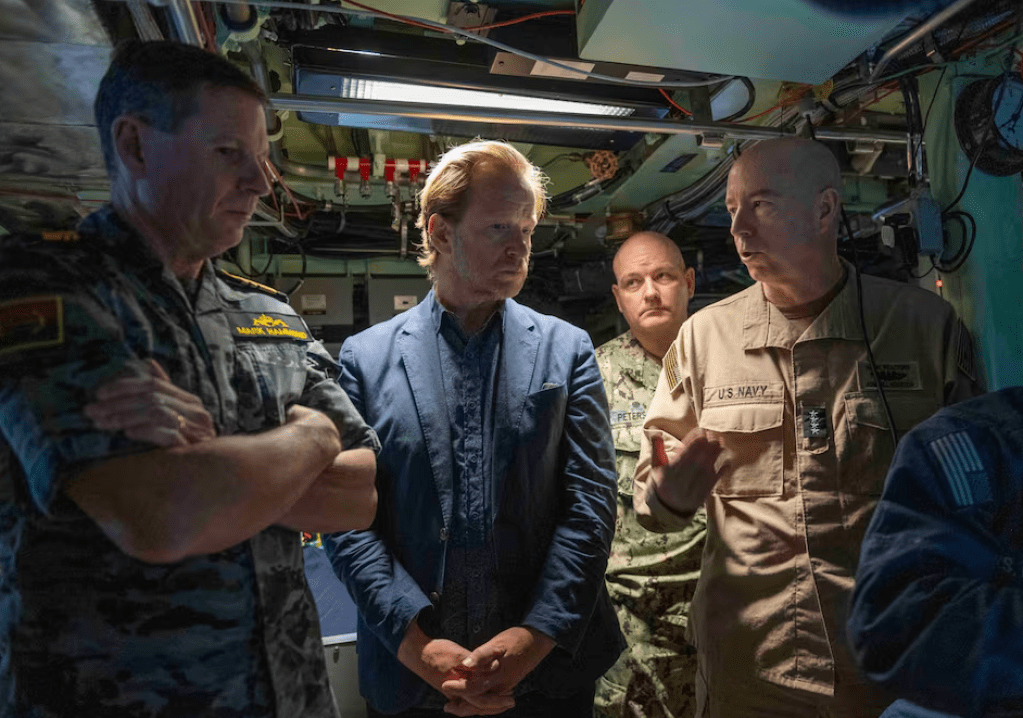
This comes in a week where the first Australian nuclear engineers have qualified after working on a Virginia Class submarine. They are the pioneers who will gain experience and then begin the process of train the trainers, so that when the time comes, Australia is ready to take delivery.
Did I say when? Maybe that should be ‘if’.
One of the only truly sensible Executive Orders that Trump has issued (yes its a miracle), is one directing that the shipbuilding industry sorts itself out once and for all, because it has to be said the Biden administration failed, as did Trump in his first attempt, and Obama for the eight years prior to that. American commercial and military shipbuilding is a joke. The Pentagon is as much responsible.
This week the Senate hearings included a devastating take down of the Constellation Class frigate program, which is so badly mismanaged by the Navy and Fincantiere in Milwaukee, the ship builder, that its on the cusp of having the entire 20 ship program canceled. The money they would have spent on the frigate program likely to be spent on a second Virginia class submarine in the current fiscal year.
Yet even that is a problem. The Navy wanted to cut the submarine buy to one so that the shipyards in Groton, Connecticut, could effectively catch up, because it is supposed to deliver 2 submarines per year, but the rate has fallen to around 1.2.
On the American side, the amount of money that’s been spent recruiting shipyard workers, training them, has been considerable (around $5 billion). However retention has been appalling. 50% of new recruits leave within a year, a mix of too much hard work and poor pay that can easily be exceeded in private business. Only sizable pay rises will bring the jobs into line with external competition and retain the staff needed. That means the shipyards have to find the money from their only customer – the US Navy, ultimately the US taxpayer.
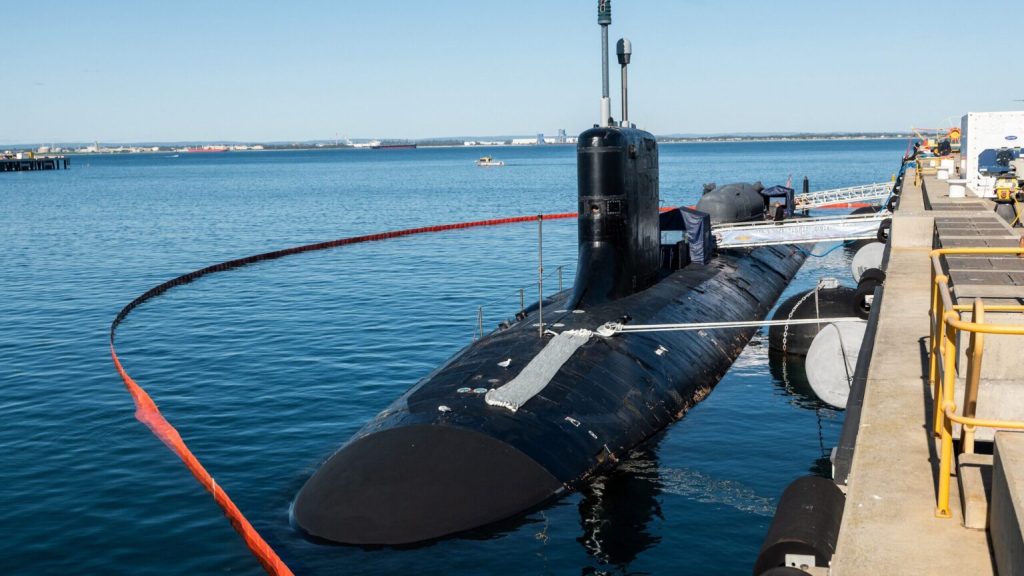
Australia has contributed $500m so far with another $500m due – all as part of making the shipyards capable of reaching 3 submarines per year so that the US can get its 2 and the Australians their 1 of three (possibly four). Bearing in mind the 1.2 current production rate and the struggle they’re having even keeping that on line, and you can see the problem. Add to that. there is a move afoot in Congress to refuse to build the third submarine at all, until the Navy can produce 2 full submarines in a year.
Meanwhile in Australia, where there is a sort of consensus politically that the AUKUS program is necessary (if only because its pretty much too late to do anything else and replace the Collins Class in any sense of reasonable time), its part two of the project that is causing the most angst, along with the increasing global concern over the reliability of the Americans going forward.
The next stage after buying the three Virginia Class, is building the new AUKUS Submarine with the UK.
The level of industrial support, the expense of expanding naval facilities, building a nuclear submarine construction industry, is no short term project. Its a particularly long term and huge national investment program that many see as the most complex in Australian history. When you look at how hard it is for America to manage its own, and its a more than experienced player in the SSN business, it partly explains why there is concern.
Australia also has no nuclear engineering experience and is effectively starting from scratch.
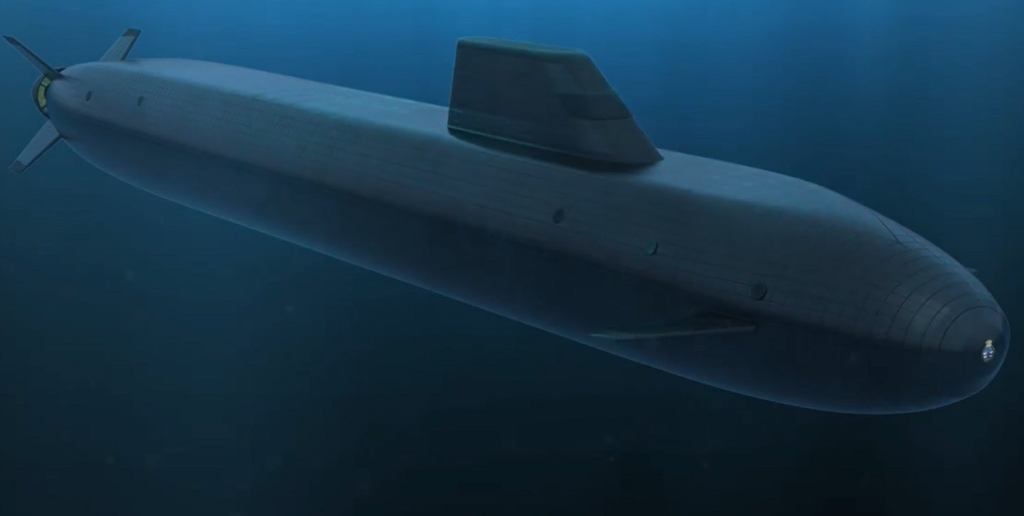
This is of course is where the UK comes in. The Royal Navy designed the submarine – which is due to be declared finalised later this year. It will then begin the long process of tank testing, simulation and construction planning. The process of providing the millions of components and systems is years in the making.
As the Astute Class comes to an end – the last is completing now – the UK will begin final assembly on the last SSBN of the Dreadnought Class, with three on the slipways as the first is launched and fitted out. By the time there are only two on the slipways – around 2034, the first of the AUKUS submarines will be laid down. That will almost certainly be for the UK, with the second for Australia. The Australians will learn on the job in Royal Barrow-in-Furness, with their next and subsequent submarines being built in Australia. That’s unlikely to be much before 2036-38.
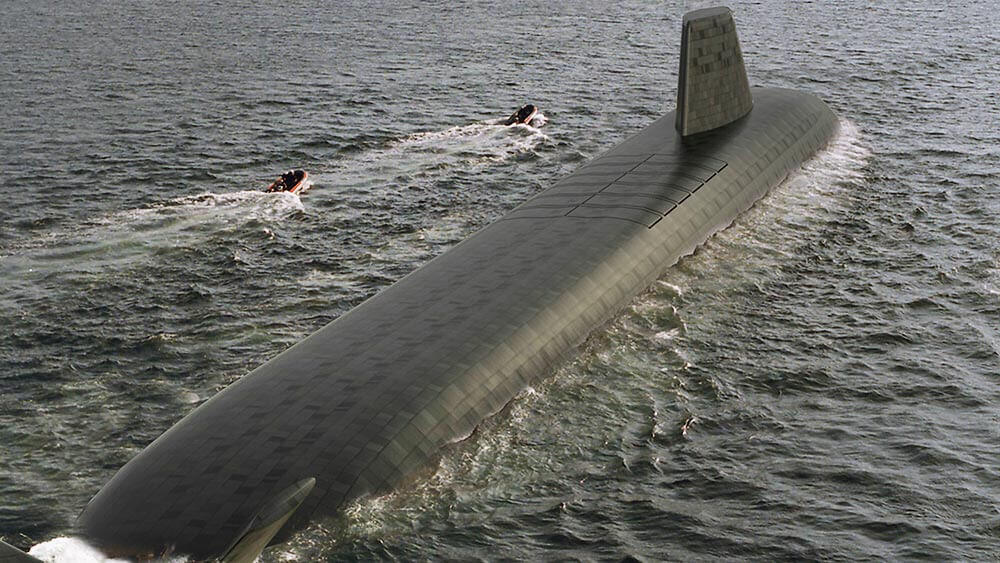
The UK and Australia have based the whole AUKUS submarine on the assumption of co-operation with the United States, because the alliance between these countries has made it practical that they use the same systems internally, especially the combat control center. Any delay in the inclusion of these systems, built in the US, any chance that they would be denied, would throw a major spanner in the world of keeping the submarine program on line.
Then there’s the underlying moral and reliability issue around the US. The Virginia Class will be wholly dependent on US parts and weapons. The AUKUS sub partly dependent, but largely UK or domestic.
The underlying but unspoken issue is that nobody wants to feel beholden to the US in the transactional way that seems to be at the core of the new régimes modus operandi. Admittedly all of this is long term, but when you cannot even be sure there will be reliable elections in the US in the future you cannot be sure the current rulers will not be in power in twelve years from now and longer. Does anyone want to be ‘allied’ let alone beholden to such a country? There is genuine concern that Australia is becoming overly dependent on US equipment and that it undermines their freedom of action – especially when it comes to dealing with China.
Australia has got itself into a position that seems entirely reasonable just couple of years ago. Working with the UK is good for both parties, there’s no argument from the UK, because it makes their programs as viable as it does the Australians. But working with the US? That may not be quite as easy as it initially seemed.
The UK has its own similar issues. Its SSBN fleet is only viable with American supplied missiles and the agreement they both have over warhead design and build and missile maintenance and refurbishment. But what if the Eye of Moron falls on that and tries to renegotiate the deal? The UK keeps it quiet, don’t mention it and nobody will ask. The general view is that the Pentagon’s civilian leadership probably doesn’t even know about the deal. Best keep it that way. You can never be sure when the Americans will try to leverage what they have over the UK. But Britain is far too far along with Dreadnought now to be changing anything, even if it wanted to.
The question now for Australia is, should they even continue with the Virginia purchase? Should they be sinking money into US ship yards to get the new submarines when even the US Navy and the submarine yard, operated by General Dynamics, can’t even manage it despite billions in cash being pushed their way?
Even before Trump, American attitudes about their needs coming first when it comes to submarines is far from new. Congress is always on the case but is up against a Pentagon where there is nobody with any complete responsibility for any aspect of any naval program, so Admiral A blames Admiral B while he blames Admiral C and all of them take a little bit of the blame and blame the ship builder for anything else. Against this wall of incompetent obstinacy where nobody takes full responsibility for anything, Congress has been singularly unable to make the breakthrough it needs to get things done – and its not for lack of trying. It’s another example of what happened with the Constellation Class Frigate, and the disastrous Littoral Combat Ship and the DDG-1000 Zumwalt class.
Australia is at the mercy of this system. And its clearly failing. Having committed the money what do they do now? They just have to wait and see, with zero control over what happens next and hope it all works out in the end. The irony of course is that by the time the US actually gets around to building the Virginia class for Australia, it’s not impossible the first AUKUS sub might actually already be under construction.
The positive aspect is that Australian personnel will have learned more, and be ready for what’s eventually coming their way. It gives the country more opportunity to train, to learn, to build the infrastructure. If only the need for the submarines wasn’t so much more urgent than the likely timetables for delivery currently suggest.
And the last obstacle – what if after so many years one of the political parties suddenly decides the next time its in power its going to shutter the whole thing? The forecast expense of AU$338 billion is likely to have ballooned to AU$500 billion by the in service dates of the last Australian built SSN.
This too is another realization for Australia; once you embark on building these things you can never stop, because if you do you suffer what the UK suffered in the late 90’s and early 00’s – the workforce had been laid off and it took 11 years to build the first Astute class with a new workforce that had no experience, and massive cost overruns. That’s why the UK is making sure this time it has no gaps in its building schedule.
The Australians are starting to appreciate that the cost of the submarines is so vast that they’re almost a fourth military service, with a budget larger than the Navy, Army or Air Force. there’s a lot of introspection that what they are doing is either a challenge that will define them as a modern western militarily capable state that has finally equaled its parent or, its beyond what they can, or even should want to do.
Yet the real problem, at the core of it all, is can the UK and Australia risk the US being so involved on the actual AUKUS submarine? Would they both be better off adopting their own combat control systems or – and this is rub – working with France to adopt theirs – the very reason Australia first doubted its need for the French submarines that kicked this whole process off over a decade ago. But for itself, Australia needs to make up its mind quickly – while it still has a modicum of choice in the matter – is this what we really want and who we need to be?
If I was Australian, I would say grab it with both hands, get on with it, but go with the UK on a different path less reliant on the Americans for the submarine while you can. If both don’t get out from under the US this time, it will be three or four decades before they get another chance.
The Analyst
militaryanalyst.bsky.social

 The Military Analyst
Its too late to cancel them but we must make sure they are not entirely dependent on US weapons. A UK / Australian missile needs to be developed that is compatible with the sub. Also one of the lessons of the Ukrainian war is big is not necessarily best and we should be looking at larger numbers of smaller simpler subs both manned and unmanned
LikeLiked by 1 person
Many thanks. You’ve laid out all of the major concerns really well. Was really hoping there was a better path forward but yes, 47’s transactional approach might offer us some protection given the $ and benefits the program brings for the USA. It’s great to learn the early training phase is actually underway and showing results. Let’s hope there are no stormy waters ahead and both US and Aus governments hold their nerve. Yup, an alternative to US missiles is on everyone’s minds. Particularly now the US is withholding Patriot air defences from Ukraine. All of Europe will be looking at that callous decision and realising that they have to go it alone or might end up in the same situation.
LikeLiked by 1 person
As a Aussie I believe we have to get away from the orange blob as far as possible. France and the UK are obvious choice and whatever the new NATO is I would like Australia to be part of it. I am wondering when he will call Australia the 52nd state?
LikeLiked by 1 person
Australian governments of both flavours dragged their feet on Collins class replacement (which is basically the Swedish sub). The problem is that geographically, only a nuclear sub will serve the purpose adequately, with three oceans to cover along with the critical northern sea lanes.
The French subs Australia was going to buy were diesel / electric versions of the French nuclear submarines, because Australia was anti-nuclear. They would not have done the job adequately, but they will be perfect fit for the Dutch (the Netherlands have ordered four of them).
The Australian Navy needs the speed and range of nuclear; and maybe should have done a deal with the French for nuclear instead of d/e. It’s not as if they haven’t jointly built critical infrastructure previously – Australian airspace management has used French technology for decades. That option is closed now, and the French (Naval) will have a full backlog now.
It’s staggering to see the US undoing so much, so quickly. It’s very hard to see where this will go. Australia finds itself exposed now.
LikeLiked by 1 person