
The past 25 years have seen a list of US blunders so long and so painful to look at it seems almost impossible there could be so many. They have resulted in a huge expansion of American national debt, a vast amount of wealth squandered on wars and actions that have essentially changed little and managed to in fact, reduce American capabilities to afford to do any more. They have changed the internal political landscape so dramatically that the resultant Trump administration is now the epitome of the concept of ‘speak loudly and carry a much smaller stick and hope nobody notices’.
Well they have noticed, and this latest saga with the Houthis has demonstrated that that stick really isn’t what it used to be. That is not by any means entirely the fault of the US, it is if anything the role of history and inevitable. Older concepts that have worked for almost a century have become less effective. What was once untouchable has been rendered endangered and at risk.
There are several examples of how something that should have happened and should have been utterly convincing as a military action, have totally failed to meet their expectations, because even the poorest or most technologically deficient nations or non-state actors, have secured weapons or technology that are the near-peer equal of the great power that chose to engage them.
THE UKRAINIANS
Ukraine should have been a walkover for the on-paper superior Russian military. A mix of determination on the one hand and utter Russian incompetence and poor planning, dodgy equipment and corruption gave Ukraine a chance.
However the first technological strike that shook everyone at home and abroad was the remarkable sinking of the Russian cruiser Moskva. Using a pair of far more advanced and sophisticated Neptune missiles than anyone realized Ukraine possessed, the cruiser went to the bottom of the Black Sea.
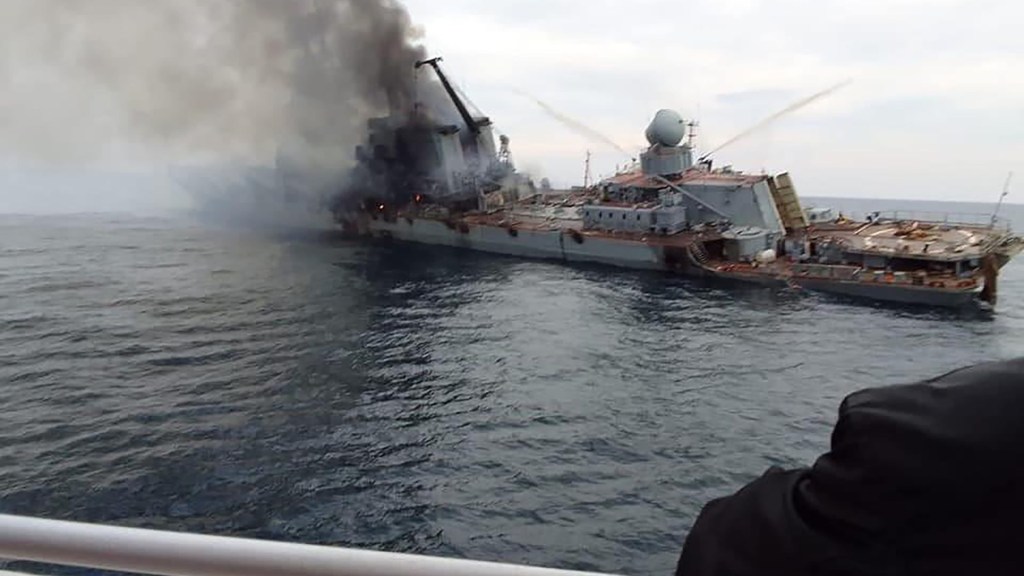
Over the coming months the substantial Russian fleet, including submarines and almost thirty surface vessels have been either sunk, or driven out of the primary combat area, forced to abandon their Crimean bases and pinned in on the far side of the Black Sea. Not by warships, but by remote controlled unmanned drones. These have now become so sophisticated that they have managed to shoot down Russian fighters trying to intercept them. They even carry their own sub-drone arsenal to attack land targets.
There’s no need to add to all of this in respect of Ukraine’s strategic drone capacity because you’re well aware of it.
The conclusion is that a country that was spending just $5 billion on defence and was far from capable of defending itself in the way it would like, has a former super power with a massive nuclear arsenal, spending vast amounts of money it can barely afford, engaged on a frontline the likes of which haven’t been seen since the Nazi-USSR conflict of the 1940’s, and its enemy isn’t winning, its effectively checked.
THE HOUTHIS
This ethnic group from the upper half of North Yemen who form the majority from that region, and control it, have been after controlling all of Yemen, including what was once South Yemen and formerly the British controlled territory of Aden until independence. N. Yemen’s capital Sa’na is a strange and magical city of extraordinary and unique architecture. It has been occupied for millennia. Even the Romans were aware of it. Yet technology and social advancement bypassed it, because it had no resources and nothing of interest that enticed the imperial powers. It managed to remain independent by virtue of being largely economically worthless.
Recent civil wars – largely the result of Saudi and UAE political and then military interference, including an aggressive Saudi bombing campaign that made conditions in Yemen even worse for the population, resulted in Saudi refineries coming under attack from drones. The Saudis backed off. Their vast military power, British and American bombs, failed to do anything than further impoverish an already poor population.
It’s hard to target exactly when Iranian backing for the Houthis began, but its original focus was against Iran’s primary regional enemy, the Saudis. Their principal disagreement is not territory or resources, but that one is Sunni and the other Sh’ia Muslim.
The threat to the strategically vital Red Sea/Gulf of Aden was not originally on the Houthi’s agenda. Many of the western nations had tried to broker peace deals and and had been responsible for much of the humanitarian aid coming through the main port in Aden. Stalled civil war fighting, Saudi bombing and Iranian pressure started to up the ante. Then came the Israeli attack on Gaza which went far beyond anything that could be considered as revenge for the Hamas attack in October 2023. The Houthis started firing ever more complex weapons at ships owned by, operated by or for, and even en-route to or from Israel, in support of the Palestinians.
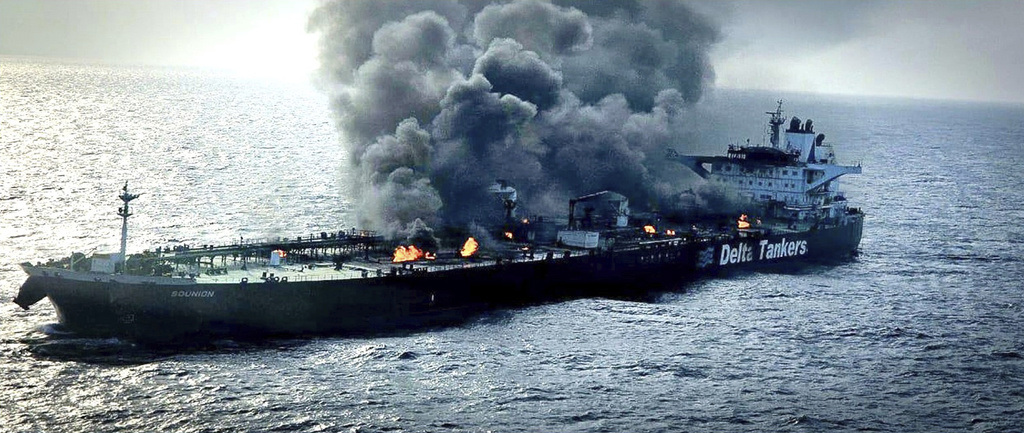
Repeated actions against a plethora of western allied ships – including defending warships revealed a shockingly sophisticated array of weapons, from meager drones to ballistic missiles capable of hitting ships at sea – and they did, several tankers were hit.
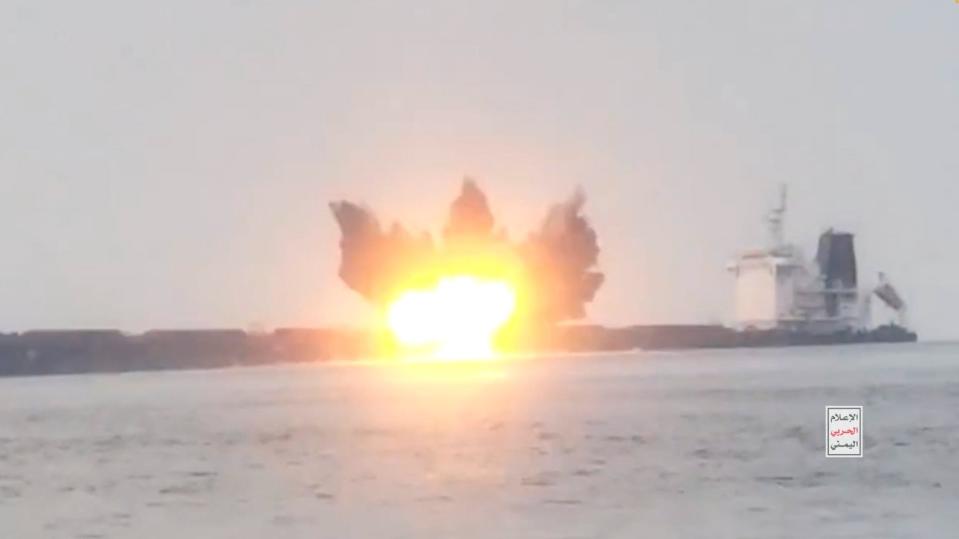
The scale of the Houthi capabilities were off the charts and well beyond what anyone had realized. It wasn’t just the technology – it was the volume of weapons that surprised.
After several attempts at quieting the Houthis, the new Trump administration decided to go all in. Noy one carrier but two. Not just two carriers but as many as ten B-2 bombers.
There was a time when a force of this scale and size would have brought most countries to their knees and they would be asking for terms to find a way out from being attacked. The Houthis were not deterred.
The following weeks saw unprecedented American heavy attacks launched form the bombers and the carriers. While the Americans have been relatively quiet about how many attacks they carried out and what they hit and what they hit it with, is largely classified, what the Houthis fired back is more the point. Their ability to partially blind US intelligence gathering by shooting down MQ-9 Reaper recon drones operating at 40,000ft was a shock – 2 in one month and 7 the next, five of those in one week.
No other country has put an American nuclear powered aircraft carrier into such a tight evasive maneuver that it caused an F-18 to roll out of the hanger deck, off of the open sided deck lift, dragging its tractor unit with it, and plunging the unmanned aircraft into the sea. Just a couple of days later another F-18 was lost from the same carrier, USS Harry S Truman, as it came into land, caused by a mix of exhausted crew error and faulty calibration of the arrestor cable. The two man crew bailed out, but the aircraft was lost.
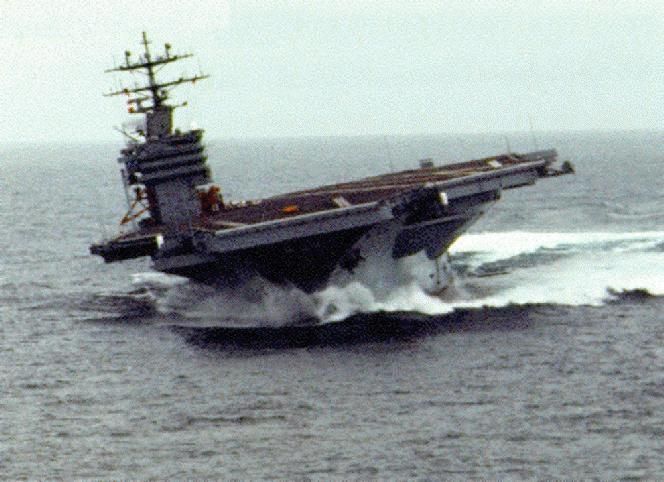
It isn’t just the fact that this happened, its that it happened to a US carrier, which came under deliberate attack, that its crew was pushed to such limits by their operational tempo they made mistakes. That we know that the Houthis were using sophisticated missiles and drones capable of creating substantial damage – and that a massive weapons platform the size of an American carrier was placed in direct fear for its existence, that it had to behave in such a way. There is no other precedent for this, it’s a first.
Only millions of dollars worth of sophisticated radars and missiles, along with point defence systems and electronic warfare stopped the whole scenario for being far worse. Because god forbid any one of the ships – let alone a carrier had been hit.
The point is the Houthis came incredulously close to achieving what nobody else has done with technology that’s only just behind what the defenders can deal with.
Not since 1946 has anyone attempted to attack a US aircraft carrier, let alone come this close to hitting one.
It can now only be a matter of time before the inevitable happens. The Houthis didn’t just break the myth that it was now entirely possible to do so, they actually tried and, even though it resulted in just the loss of one aircraft, the circumstances of that loss are critical in outlining how close they came to hitting the carrier. The carrier is like a unicorn, almost mythological and out of reach. The Houthis grazed the legend and proved it is not immortal. The myth of invincibility is gone. Now it’s been shown to be possible it’s just a matter of when not if, one gets hit, and when that day comes the bedrock of the myth of American naval power will be broken. Its already cracked.
I know it may seem to most that I’m making a big deal out of this, but it is just that. The Americans will downplay the whole thing. But I know, because I understand the psychology of the naval military mind, that they know. They see it. They understand that no matter how much they brush off the ideas and implications, it’s real. They just do not want to admit its a possibility, they’re too invested and nobody wants to stand out by challenging the status quo.
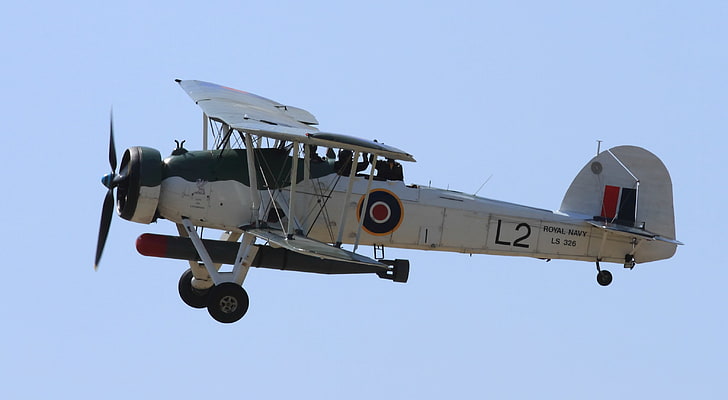
This is as important as three WW2 naval operations, all British in origin. The first was the 11-12 November 1940 attack on the Italian battle fleet at Taranto. 21 Outdated, slow, Fairey Swordfish bi-planes each with an old type of torpedo, managed to breach the defences. The attack severely damaged the Italian battle fleet anchored there, including sinking or disabling three battleships (Littorio, Conte di Cavour, and Caio Duilio), damaging two cruisers, sinking two fleet auxiliaries, and destroying oil depots and a seaplane base. It cut the strength of the Italian navy in half and gave the British dominance of the west-east Mediterranean convoy route.
It was also the inspiration for Admiral Yamamoto’s attack on Pearl Harbor 13 months later.
At that time, despite clear signs such as Taranto, the military still thought (although the message was getting across), the Dreadnought Battleship was supreme, nearly untouchable. The fact was that the latest German battleship, Bismarck was eventually caught by the very same type of slow, WW1 equivalent bi-plane with a torpedo that jammed her rudder and left her turning permanently to port – eventually caught and finished off by the British battleships.
If that wasn’t enough to convince anyone the battleship was doomed, the fact that on 10th December 1941 the brand new battleship HMS Prince of Wales – the ship that had helped intercept Bismarck when she sank HMS Hood – with the old battlecruiser HMS Repulse, were sunk entirely and only by Japanese bombers and torpedo planes off of Kuantan in Malaya. That was without question the end of the line for the most powerful ship type that until then hand ever existed. If they weren’t already being built or too far along to cancel, the majority of them were terminated. Britain only built one more (HMS Vanguard) because it was halfway along and the had turrets and guns left over from WW1. Even then it wasn’t finished until 1946 and barely served ten years, then was scraped in 1960. My desk is made from the teak of her aft deck.
The point is that despite what many wanted to believe, and had no desire to accept – including those who should have known better, the Dreadnought Battleship died and it was replaced with the carrier. The Japanese and the Americans knew it, even as they finished the largest battleships ever built. The British had already reached that conclusion.
I say we have already reached that point with the big carriers the Americans are building. Too many eggs in one vastly too expensive basket. Nobody of course wants to hear that. Extrapolation of available drone and missile technologies, Ai, networking, stealth, and simple quantity, tells you that there’s no future for them. Get out now and build something for this century, not the last one.
IRAN v. ISRAEL
I grew up, and so did most of you reading this, in an age where there was no stopping a ballistic missile. It was on its way and it was going to hit and it was going to do some terrible damage. We had lived with that concept since 8 September 1944. On that day the first V2 hit Paris and the second hit Chiswick in London. You could neither hear or see the missile. In London it was first explained away as a gas main explosion. The ballistic missile turned into a weapon of our nightmares – it still is in many ways and is far from dead as a strategic weapon carrying nuclear warheads. It remains the primary method of bringing this world to an end at our own behest.
Russia uses them to attack Ukrainian civilians almost daily. Only a handful of expensive systems such as Patriot and SAMP-T can stop them in Ukraine.
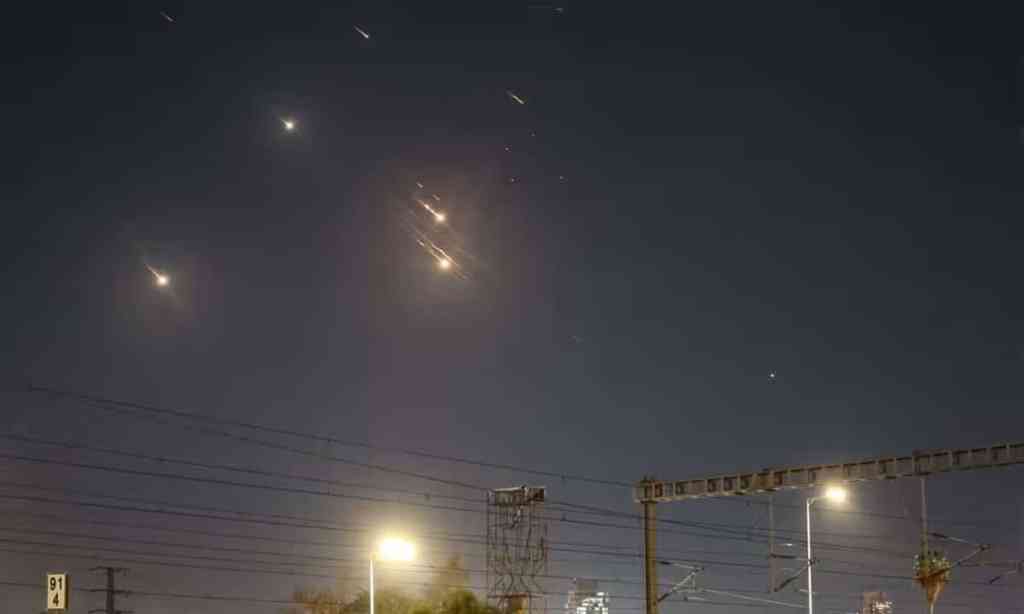
Yet its demise has already started. Iran stored up a massive arsenal of ballistic missiles and fairly primitive drones in substantial numbers and on two occasions in 2024 fired them at Israel.
April 13–14, 2024 Attack (Operation True Promise):
• 170 drones
• Over 30 cruise missiles
• More than 120 ballistic missiles
October 1, 2024 Attack (Operation True Promise II):
• About 200 ballistic missiles, launched in at least two waves
What was truly and utterly remarkable was that other than one airbase where drones and missiles hit, they did almost no damage because of the hardened facilities. The Israeli defences were strained but did not break, and coupled to allied aircraft destroying drones and cruise missiles, along with US destroyers using their anti-missile systems, the Iranian attacks were rendered utterly ineffective,
It was probably one of the most significant moments in modern military defence imaginable. Iran was stunned at its ineffectiveness and the rest of the world as equally stunned at the triumph of a technology based defence, that rendered such a massive attack useless.
What its shows is that the right technology – and the west can still create it – can provide a real defence against the worst weapons. It’s not all a one way street.
CONCLUSION
I look for historical comparison, and then I apply the monumental nature of that moment to now. I then extrapolate what we have and its likely trajectory over time, and reach a conclusion.
- The big carrier is dead. Smaller ones where the power of one is distributed across many, maybe stand a chance.
- The drone/robot in the air, under the sea and eventually on land will become the dominant form of weapon. It’s a dangerous and worrying outcome because none of it is truly viable without Ai and we may live to regret the day we let that happen. Our ability to control what we unleash is our greatest threat.
- Defensive systems against one of the most dangerous weapons humanity ever developed, the ballistic missile, and then cruise missiles are real, they’re viable, and they will become even more capable in time – again almost certainly driven by fast acting hyper calculating Ai.
But it’s more than that. It is the transfer of military and therefore political power from those who have technological leadership that has guaranteed their domination of the world stage, to those who do not and could not possess that power in the past.
Technology has raced ahead at such a pace, its price has come down so dramatically, that while I hate to use the word, it has ‘democratised’ weaponry, by making it available to people who were once incapable of accessing anything comparable in a different age.
In the 1930’s a massive battleship could have sat off the coast of Yemen and shelled the locals into submission. If they had anything more than a sword it would have been a surprise. That battleship wouldn’t last ten minutes now.
The battlefield, be it in the air, on land, or at sea, and even to a lesser degree so far in near space, has leveled. Those who looked down at their enemies and knew they could dominate them – Russia and America are probably the worst for this, now see they can’t do it so easily. Russia has come completely undone in Ukraine failing to recognize that fact. The Houthi’s re-taught the Americans a lesson they learned in Vietnam, then in Iraq and Afghanistan and still don’t seem to have grasped. They fail to learn at their peril.
We in the UK, in Europe need to learn the same lessons. Because we’re embarking on projects like the Dreadnought SSBN that underwater drones and Ai will potentially render useless before half of their lifespans have passed. Our own carriers are fine in peacetime for flag waving – anyone’s are. But their real utility in a hot war? They won’t last a week.
We have seen remarkable technological breakthroughs and we have seen them used in Russia and Ukraine, Iran and Israel, between the Houthis and the Americans. While it’s wrong to over generalize, the order of things is now in transit. National sovereign military power as a concept is not dead, but the way it’s deployed and used is changing so quickly we will never have what we need because we cannot keep up. More importantly how can we ensure that the Ai we will fast come to rely on will not become a problem long feared. Eventually a transition will occur. It will happen either over time as old systems become obsolete and we develop the new ones, or because of a war where we learn it the hard way. Usually its the later. Military technology never stands still, but occasionally a generational shift occurs. We are in one right now. Ignore it militarily, and politically, at our peril.
The Analyst
militaryanalyst.bsky.social

 The Military Analyst
The lesson from Ukraine is simple, the smaller the weapons platform the more effective it is
LikeLike
Good insights, as always. The MIC needs to go beyond the Skunkworks proposition and into a virtual-war mode if the West is to remain a military power.
LikeLike
Thank you TA for a real eye opener article, I hope those military influencers we rely on are of a similar view to you. I must say, the reality you demonstrate in your article worries me greatly. Not that we’re not capable of developing necessary countermeasures and weaponry to meet the needs to defend our way of life, but that the collective West turns a blind eye, refusing to accept the inevitable. More than ever we need the skills of Ukraine on board with us and not under the control of Putin.
LikeLiked by 1 person
Thank you once again for your practical insights and observations. it would seem a type of smallish drone carrier could be in a formation either airborne or seaborne with a large cache of said drones is a probably very likely not too far off possibility. Very scary to be in the wrong area, no escape for how many square hundreds of metres.
LikeLike
Everyone laughs at the Iranian drone carrier tanker conversion but it’s actually just a development platform – long term I can see where the concept is going.
LikeLike