
Western sanctions are starting to reach far and wide at sea. The recent 17th Round Of EU Sanctions, world out in coordination with the UK which added the same vessels, (Lloyds of London is the biggest maritime insurer in the world), added 189 tankers. That brings the total to 342.
The UK added another 18 of its own on top of another 100 to the EU list and by today, with EU+UK and other global institutions and or governments, 706 Russian grey fleet tankers are sanctioned. That’s over 10% of the world’s entire tanker fleet and its expected to rise to 13% by the end of this year.
To gain a perspective on what this means for Russia, there’s been a drop of 76% in oil exported using the grey tanker fleet. That’s because most countries won’t take the risk of having uninsured, unsafe and elderly vessels (average ages are 20-25 years, when its largely considered that they’re end of life at 20 years).
Many of these vessels are old enough to have been built with a single hull rather than the much safer double hull – designed to cope with ruptures and not break open the tanks. They nearly always have second or third rate crews, are often ‘unflagged’ meaning they have no active registration with any country and therefore no legally valid right to even be at sea, no governing law and are in effect, pirates.
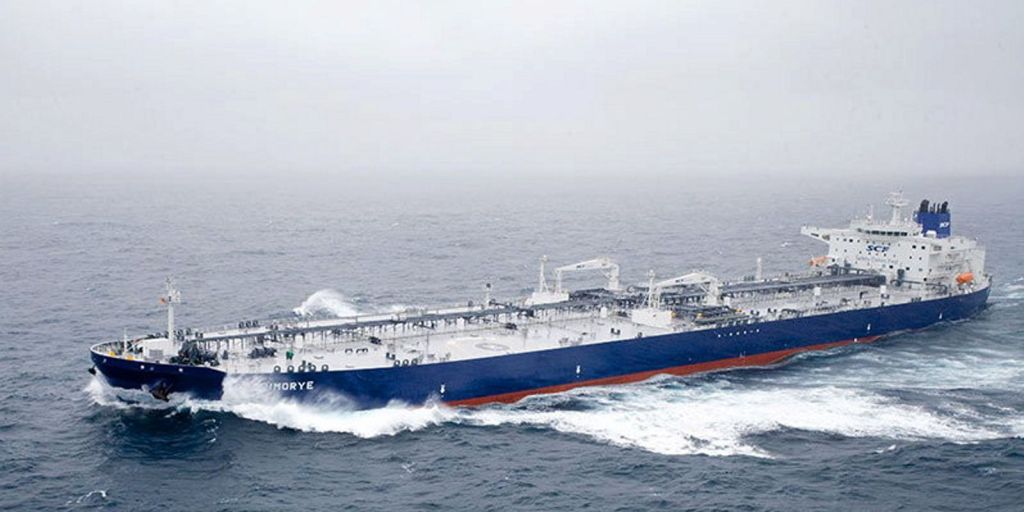
Their ownership is often mired in a series of false sales and front companies, name changes and registry moves, all designed to conceal their real owners, the Russian state shipping company Sovcomflot (SCF Group). In order to keep trading they have spun off many of their tankers to dubious front companies.
Many of the tankers are Aframax types – these are capable of transiting the Suez Canal. They’re the bulk of the Russian tanker fleet.
It was one of these that recently caused a major incident in the Baltic between Estonia and Russia. Estonia has the misfortune of having a border with Russia but also has ownership of the south coast of the Gulf of Finland, the north coast being Finland itself with the city of St Petersburg at its eastern end. It’s mainland Russia’s only access to the sea that stays open all year. Its home to a huge oil and gas export terminal that the Ukrainians have managed to hit several times.
A Gabon registered tanker, the Jaguar, was approaching the terminal, ready to load oil. Because of the width of the Gulf of Finland it’s not possible to have a 12 mile territorial limit of sovereign waters so it’s effectively split equally between Estonia and Finland. The traffic management requirement that day was that entry to St Petersburg traveled on the right side heading east.
Estonia chose to go after the sanctioned tanker, registered in Gabon, largely because it wasn’t actually flying a flag and, as is so often the case with the grey fleet tankers, it wasn’t using its transponder correctly if at all. It was also not loaded, reducing the likelihood of the Russians protesting too much.
The Estonians in short, ended up with egg on their face. They only have 8 rather good looking and modern patrol ships, but they’re not capable of boarding an unloaded tanker while its underway. They had a helicopter on hand but it wasn’t manned or equipped to land on the ship and force the issue.
In the meantime the ship warns the Russian port authority which set in motion a rapid chain of events leading to a single Russian Su-30 fighter crossing Estonian air space to get to the interception site as fast as possible. Its appearance persuaded the Estonians it was best to leave as they were unable to do anything anyway. Meanwhile a pair of Portuguese F-16’s turned up from the NATO Air Policing Mission and chased the Su-30 off.
The potential for a major incident is clear. The fact the Russians were willing to cross Estonian air space – entering NATO territory – shows you how brazen they’re prepared to be.
Since then, Russia has started escorting its tankers out of the Gulf of Finland with a warship. The Law of the Sea requires that all legal shipping be allowed to pass unhindered even in territorial waters in contains like these. A similar situation exists in the narrowest parts of the English Channel between Belgium/France & the UK. Again between Denmark and Sweden.
There’s also been an incident where a Greek owned Liberia registered tanker was arrested by the Russians off St Petersburg although it seems mired in mystery as to why.
Russia and to a lesser extent China, have both provocatively used anchors to break internet and power cables in the Baltic region. That’s just one type of provocation, and NATO has stepped up its monitoring dramatically in the Baltic, even shadowing likely suspects. The result has been a dramatic drop in incidents as nobody wants to get caught red handed.
The question for the whole of NATO in Europe is what to do about the grey fleet tankers. Many want them to stop them carrying oil to their destinations, intercept and arrest them – but you have to have grounds to do so. You cannot just drop on board and pull the ship over. If it has verifiable insurance, and is flying a flag of its country of registration, there’s not much you can do. However sanctions do have teeth, they have implications and they’re wide ranging.
Enforcement of Grey Fleet Sanctions and Real-World Impact
Key Enforcement Mechanisms
1. Port Access and Service Denials
• Sanctioned vessels are banned from EU ports and prohibited from receiving services (e.g., insurance, repairs, bunkering) from EU entities.
• Example: The EU’s 17th sanctions package (May 2025) expanded port bans to 342 vessels, forcing many to reroute or cease operations.
2. Targeting Third-Party Enablers
• Sanctions now extend to shipping companies, insurers, and brokers in the UAE, Türkiye, Hong Kong, and Seychelles that facilitate grey fleet operations.
• The EU and UK are tracing and sanctioning front companies used to obscure ownership.
3. International Coordination
• The EU and UK collaborate with the G7, IMO, and flag states to pressure countries hosting grey fleet vessels to cease doing so.
• Military partnerships like the UK-led Joint Expeditionary Force (JEF) monitor chokepoints (e.g., Baltic Sea) for suspicious activity.
4. Behavioral Tracking
• Maritime AI systems detect high-risk patterns like:
• Dark activity (turning off transponders): Over 1,000 instances among EU-sanctioned vessels.
• Illicit ship-to-ship (STS) transfers: 790+ cases, often near the Mediterranean or Black Sea have been detected.
• GNSS manipulation: Spoofed locations in the Arabian Gulf and Malacca Straits.
5. Legal and Financial Pressure
• The U.S. and EU are pursuing secondary sanctions on banks and traders processing grey fleet transactions
However despite all of this the Russians, as you will be hardly surprised to hear, like to push boundaries. They almost dare us to do something that crosses a line, waiting for us to trip up on some incident that they can raise an issue over. That’s why the sanctions are not about arresting or stopping the ships – they’re about making them unusable.
But incidents like the one off of Estonia are inevitable at some stage. One of these tankers will cross a line or set a scenario in motion that can too easily get out of hand.
Yet it is vital to understand that these sanctions are working. Russia spent the best part of $2 billion buying up these old tankers from around the world – they’re pretty cheap. Yet it’s increasingly problematic using them. By January this year illegal tankers were shipping 12% less than the year before – down to 53% of all Russian oil by sea from 65%. The number of ports they can access has dropped drastically. They face higher costs, difficulty getting valid and viable crews, and have to travel longer routes because Egypt is slowly coming round to not letting them pass through the canal.
Russia is faced with using just its legal tankers (Sovcomflot operates 100 that are considered fully legal), and still has 79 grey tankers that for one reason or another haven’t yet been sanctioned – usually because their registration or ownership has been impossible to prove.
What it does mean is that legally shipped oil is restricted, price capped and difficult to sell. Russia spends a good deal of effort trying to find buyers. It’s not as easy as it was. Even though the official price of Urals Crude as I’m writing this is $62.04 per barrel, the real discount rate Russia gets for it is around $43.43. That’s close to the point where it’s cheaper to keep it in the ground. Saudi Arabia is oversupplying, determined to keep its customers and get back old ones. China reduced its oil imports from Russia by 13% in the past month, and coal imports by twice that. India buys less than it did. Trump’s tariff wars and economic mismanagement are putting the brakes on the global economy and once it starts to slow, just suddenly changing his mind doesn’t get it going faster again. The US shale oil boom is about to bust if prices keep dropping – they have some of the highest production costs in the world, and many of the majors are already shuttering wells. You can forget ‘drill baby drill’ if you can’t get the right price for it.
While that may well hurt America, its going to hit Russia far harder. They have nothing else. Take away oil and Russia is bankrupt. Putin may think he can win on the battlefield, but I would beg to differ. Ukraine now is not the Ukraine of 2023. The oil market is not the oil market of 2022/3. Russia is in deep trouble. The tankers are just one more example of a death by a thousand cuts, except this is a particularly deep one. And that is why Russia may grow more desperate to protect its tankers, take risks it hasn’t done before, and challenge our willingness to do anything about it.
Sometimes the fight isn’t worth the risk. The Estonians realized that a bit late in the day and made us all look a bit silly. But it doesn’t fundamentally change anything – the sanctions are biting, the tankers are becoming a problem and Russia’s options are continuously diminishing.
The Analyst
militaryanalyst.bsky.social

 The Military Analyst
Thank you TA.
It would seem that the time has come for fellow NATO members to provide Estonia and Finland with the means to effectively impose the sanctions that are being called for. Better on an empty tanker from a safety point of view and less problematic politically. The Estonian and Finnish waters seem ideal for the task.
LikeLiked by 2 people
The path to defeat for Russia has long been its economic vulnerability more than military might or limitations. Putin doesn’t care how many Russians die, let alone any other people. His strength was oil. His greatest vulnerability is also oil.
Europe can apply more pressure. It must. Trump accepts whatever Putin dishes up – maybe he sees his own abusive father in Putin’s persona, or some other bizarre reason for it. Whatever, it has become increasingly obvious (now even to some blind MAGA cultists) Trump looks very weak and very stupid in his dealings with Putin. OTOH, Zelenskyy looks wise and strong.
People often lose sight of how history is written – it’s after the fact, when the outcomes are known. Interim positions (such as territory held at point ‘x’) often don’t matter through that lens. Trump’s pandering may not matter as much if he allows congress to do what most Americans want – put Putin back in his place.
Meanwhile, Europe needs to stand up and be counted. It needs to quickly decidewho is onboard and who is not – and exclude those who choose the Russian path from their future. That may mean changing the structure of the EU and varying the Shengen Agreement, only revisiting when rogue states such as Hungary “swipe left” on Orban, and Slovakia does likewise with Fico. As a minimum, these states need to lose voting power for the time being.
It’s now or never time. Russia can be taken down. Ukraine deserves much better support for the courageous fight they’re enduring.
LikeLiked by 1 person