
The Russian government is in the process of covering up the incoming financial crisis by pretending it doesn’t exist. Laying the groundwork for a financial collapse and how to inform the public, as well as controlling what it looks like outside of Russia.
New laws are being drafted that will:
- Ban the transmission or copying of state economic data
- Ban reporting of, or dissemination of, state economic and banking data
- Using state or corporate financial and banking data to create public discord
- Transmit or by act of omission allow the transmission of such data to foreign agents
- Use for any private benefit of any economic data
- Manipulating state economic data in a way hostile to the Russian Federation or its interests
- Promote the abandonment of payment, or the creation of deliberate indebtedness by way of default or non-payment of personal debt
- Court orders will no be longer needed to enforce debt payments or repossess personal belongings, homes or cars.
There were a host of other provisions but the gist of it is clear, nobody who doesn’t need to know should have access to any of this data and its going to be tightly controlled. Not that that has stopped Ukrainian security services repeatedly getting hold of it, or insiders leaking it securely one way or another. Russia isn’t what it used to be.

The Government is clearly aware at this stage it cannot contain the crisis that’s unfolding. It’s like a deer in the headlights of a 44 ton truck about to hit it head on and there’s no way to avoid it. But what it can try to do is manage the perceptions Russians primarily, and foreigners, have of it. The fact is it has to be both. If it can manipulate foreign news agencies and reporting into thinking the crisis is nothing like as bad as it is, then the Russian public are less likely to believe external sources – and hard as it is to obtain, they do have external sources.
The scale of the problem is snowballing out of control and the government knows it. Here’s a list of things that we know right now, that are pushing the banks into meltdown, and that has them looking for a government bail out.
Corporate non-performing loans (those over 90 days unpaid are deemed ‘non-performing’) Have surged to 4.1% in the past quarter.
Domestic/Personal credit card debt defaults are now at 12%. Over 3.8 million credit cards are now in default. At the end of May credit card debt unpaid jumped a shocking 160 billion rubles to 576 billion (about $6 billion)
Domestic/Personal secured mortgage loans have reached 90 days in 5% of cases.
Personal loans and car finance loans have reached 11.1%.
Cash withdrawal restrictions locked at €550 equivalent per day with plans to extend that to a week for consumers.
Government plans to print 15.2 trillion rubles – about $145 billion in fresh currency between now and October largely in 5,000 ruble notes.
Corporate defaults reached 4.6% – but alarmingly many of these companies were not attempting to negotiate restructuring – which is what the government wants – but had gone straight to bankruptcy saying they couldn’t even afford to restructure.
Most stressed industry sectors
These are the ones literally running hand to mouth and almost unable to get through a day, their collapse could be any time:
Coal – waiting for an $800 million government bailout. China stopped buying and the price of coal has collapsed.
Retail malls – shopping footfall has cratered as credit card defaults have spiked, leaving many smaller retailers to go insolvent which in turn threatens the malls they rent space from. On top of that a large number of high profile fires has forced insurance premiums through the roof and the malls can’t afford to pay.
Trade declines have left 30% of road haulage firms – many of whom are small businesses with 1-5 vehicles, unable to meet their leases and bills.
IT is particularly hard hit, being principally business to business. Nobody is buying software, they cut back on support contracts and make do and mend rather than buy new. The ‘brain drain’ of IT experts abroad has had a huge impact.
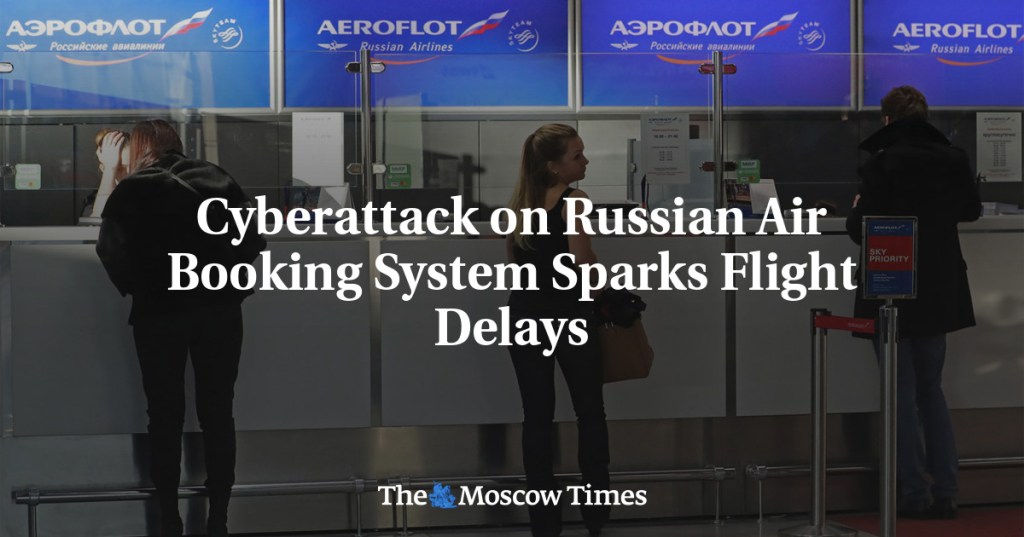
Airlines – the private lines like S7 are struggling, unable to get spares from Airbus or Boeing and all airlines, including state owned Aeroflot are losing money hand over fist with every closure of Moscow airports and dozens of regional centers, caused by Ukrainian drone attacks around the city. Thousands of flights have been canceled or diverted and under Russian law there is no compensation, so customers lose their money too.
More than 20% of Russian businesses with loans are paying interest costs exceeding 66% of their pre-tax profit – that was the end of 2024 (10% up from 2023) and is now believed to be nearer 35%.
Official base rate interest sits at 20% – indicating the real inflation rate is nearer 30% rather than the state claimed 10.2%.
The government is forcing the sale of bonds using ‘repos’ (repurchasing agreements), which means they use a short term system where you buy the bond, they agree to buy it back from you at (in this case) a pre-arranged margin price, so you make a small amount of money. They then force you to re-buy the bond using the full amount they just paid you for it. The bonds become illusory to the owner because you never get to see any profit because its compulsorily re-invested, and the profit you do make is taxed, so you’re actually worse off and its a win-win for the government.
High interest rates and high inflation are the drivers of the crisis, coupled to excessively high military expenditure, pushing the country into a forecast 21% deficit.
Printing money only ever does one thing – pushes up inflation which in turn increases wage demands, and should technically force up interest rates – but there are plans to reduce those (which will mean inflation will rise) – and even if they do come down as much as 2-3% its now considered too late to rectify the trends listed above.
All of this is starting to have an impact on everyday Russians, the war is coming home one way or another, in terms of dead relatives or empty bank accounts.
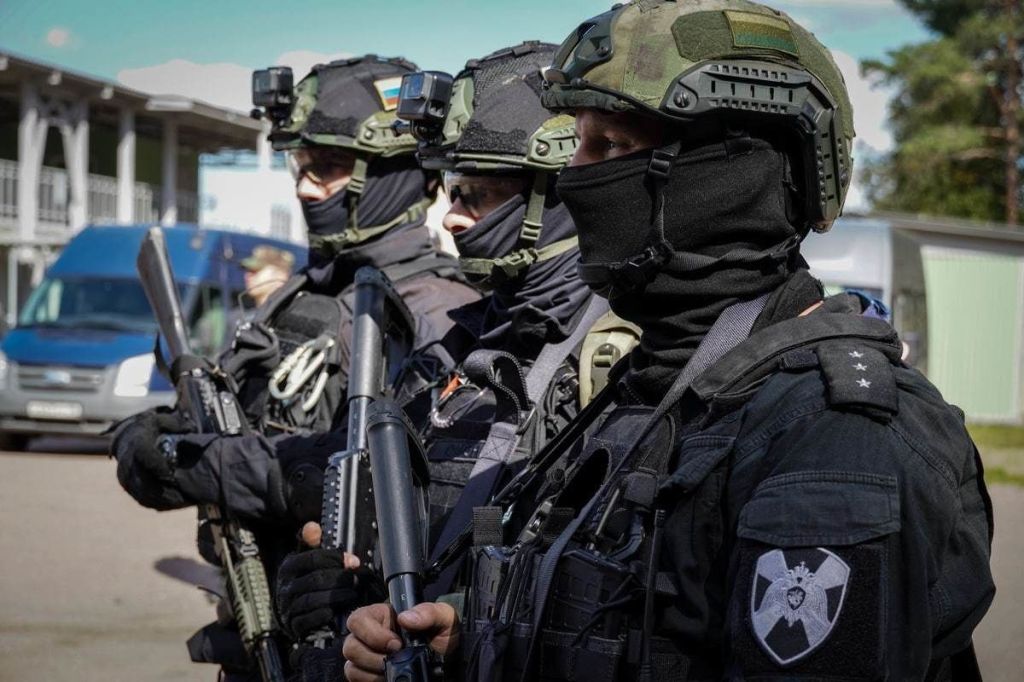
The governments attempt to cover it up and stop people discussing it will only work to a point. When the argument over who didn’t pay the credit card, the car loan or the rent so they could eat that day, as a terrifying debt collector barges his way in and starts taking the TV and computers and the car gets towed, its going to get difficult. Even more difficult will be how those with vast corruption gained fortunes are still swanking about in their grey import BMW 7 Series flown in from Dubai or Kazakhstan while others lose everything. The inequities in Putin’s kleptocracy will be revealed and exposed.
Russia is not a normal economy, it cannot be judged by others anymore and should not be.
Just because the government says it isn’t all bad, doesn’t make it so.
The Analyst
MilitaryAnalyst.bsky.social

 The Military Analyst
Thank you. Well written and thoughtful as always.
LikeLiked by 5 people
Thank you. I understand that Russia is no way rich, but why is there so much talk about war with Europe in 2030 if Russia is on the verge of collapse. The 2 do not go together.
LikeLiked by 3 people
You’re not wrong. The problem is that Russia plans (even today) to militarise the country further and expand is military for war with NATO. It’s the only way Putin can hold on.
A perpetual enemy of his own making.
War for the sake of his own hold on power until he dies. It isn’t logical and it’s not affordable – but he doesn’t care as long as he stays where he is.
LikeLiked by 4 people
I totally agree with you. With most dictators, and Putin in particular it is a big mistake to assume that any importance is given to the futility or consequences of their actions. Normal and reasonable folk age quietly and aim for a hassle free end to their lives. Putin, Hitler, Saddam, Stalin, etc.have strangely different motivations which are difficult to comprehend, but should never be ignored. That is where most of us go wrong, and that is what these dictatorships rely on.
LikeLiked by 3 people
In the Russian economy, it should be understood that a high interest rate is effectively a tax. Russia has very little foreign debt, because (a) as an energy exporter, it could run on EU income until Putin invaded Ukraine; and (b) post invasion, no foreign country would loan Russia money.
Hence, Russian government spending exceeds receipts, resulting in the Central Bank issues currency to cover the shortfall. It then offers bonds for sale…to balance the government books and avoid visibly massive fiscal stimulus (i.e. fuel for inflation).
However, no-one in their right mind would buy Russian bonds; so they have a scheme where the Central Bank loans money to state owned commercial banks on the proviso.. that they buy Russian govt bonds. The bonds are then given to the Central Bank as collateral on their loans. It obfuscates the trickery, but doesn’t prevent the inflationary effect. However, the bank credit used to move the war economy of the government books is subject to Central Bank interest on loan money extended, and that interest accrued is essentially tax, or has the same effect of financial transfer from commercial and private Russians to the government coffers.
Ultimately, this is all subterfuge. Russia is spending more than it can afford on a war it cannot win. Putin launched the invasion by reasoning that Europe was too dependent on Russian energy to do anything more than protest and pontificate, and Europe would fund his war. He miscalculated.
Europe has doddered along at times; the US certainly made multiple myriad missteps. However, all the while, Ukraine has largely kept its focus, innovated; and learned. Ultimately, unless a pivotal battle is decisive, wars are won politically and economically. Economically, Russia is comprehensively screwed. It appears that economics is not Putin’s long suit.
LikeLiked by 3 people
We in the West see the Russians’ dilemma, and the Russian civilian population sees it, or at least feels it. Unfortunately, the Russian population is still too afraid to take to the streets (understandably).
The economic pressure on Russia must therefore continue and be massively increased, both from the West and through Ukrainian drones. The sooner the Russian economy collapses, the sooner genuine peace negotiations can be conducted. But the way I see it right now – since the US, with its Orange Man, is still not enforcing further sanctions and secondary sanctions – the war will likely drag on for a very long time.
Thank you @ TA for your constant updates and information.
LikeLiked by 2 people