
The article on AUKUS triggered some interesting BlueSky conversations on submarines in the age of fast evolving drones. Were they worth the cost and expense? Should they be as big, or smaller, quieter, less expensive?
Nowhere does that argument hold more water that when it comes to the question of the SSBN – the ballistic missile strategic nuclear weapons carriers now equipping the US, Russian, Chinese, French, British and Indian navies.

Originally conceived as a second strike weapons platform, the SSBN was always there, under the waves so that if either super power unleashed a land based nuclear ICBM attack on the other, they would always know that retribution would spring from the oceans, and there would be no winner.
Britain opted for them next when it realized its airborne V-Bomber force was not up to the job long term and the Americans ended the Skybolt air launched missile system they were to use. So it switched to the new Polaris system in the late 1960’s fielding four SSBN’s, as the Americans built the George Washington Class, then the Ethan Allens, but these were quickly superseded by the Lafayette Class as well as being removed because of the SALT-1 treaty by 1981.
Russia too had embarked on a major SSBN program – the Yankee Class which reached 34 in number and operated the SS-N-6 Sawfly, a similarly specified missile to Polaris, 16 per boat. Then came the Delta series.
The 1980’s was the ‘Golden Age’ for the SSBN. There was absolutely nothing, other than another submarine that could really find them hidden at depth. The arrival of the Ohio Class, carrying 24 missiles rather than 16 was the pinnacle of the US effort. It might be prudent to mention here that the very same USS Ohio that arrived in Brisbane a couple of weeks ago was funded by the 1974 National Defence Act and went into service on the 11-11-1981. That’s how old the US SSBN fleet hulls can be – though some of the subs are in worse long term condition that she is as an SSGN.
The Ohio class was built well into the 1990’s but since the last one entered service nearly 28 years ago, and the oldest is nearly 44 their real value and ability to remain truly stealthy and viable has got to be questioned.
The UK has a similar problem in terms of age – although the Vanguards are newer than most of the Ohio’s they’re at the end of their lives and maintenance issues have plagued their reactor systems.
Russia built some massive submarines – the vast Typhoon with its 20 forward mounted missile tubes weighed in at 48,000 tons the biggest ever built and likely ever will be. They too are now all gone. A handful of the now elderly Delta-IV Class remain, but Russia was far quicker to replace its SSBN fleet than the Americans, building the new Borei class of which 12 are planned. These are very capable, 16 missile submarines and no expense is ever spared on their upkeep.
The UK has already begun construction of the Dreadnought Class SSBN, with lifespans expected to reach (by design this time not luck), 50 years. The US District of Columbia Class is also underway (and barely holding on to its schedule). France is about to embark on its 3eme Géneration SSBN program. China has continuously improved its designs – most provided by Russia – and is expected to produce a true deep ocean SSBN that doesn’t sound like a bag of bolts. The earliest iterations were so bad they don’t dare deploy them outside of the Yellow Sea. But the thing with China is they keep at it, until they get it right and before long they’re every bit as good as we are. India too, has joined the SSBN club and plans better submarines, largely to reach China and provide itself with a true deterrent.

So everyone above is building huge, complex unbelievably expensive nuclear submarines to maintain their nuclear deterrence posture. Except they’re not just a second strike weapon anymore. France, Russia and the US/UK are perfectly capable of launching first strikes from the seas, the missiles are so capable. Not that anyone wants to say that.
The UK is expected to spend around £110 billion on them over their lifetime at today’s prices. That’s two years of defense budgets. They take up so much of the defence procurement budget during their peak build phase in the next five years it’s close to 60% of all new equipment funding for all three services. They’re a huge undertaking. And don’t think it’s any cheaper for the others relative to their budgets and incomes, because it’s not. The USN complains constantly that the SSBN program takes up too much money – and should be funded separately so as to not impinge on the rest of the fleet. That fleet of 12 boats is likely to cost around $1 trillion over its lifespan.
So that brings us to the inevitable question; is it worth it?
Despite the many new and proposed technologies for hunting these massive machines as they lurk 2km under the waves, crawling along at barely 1.5 to 2 knots to keep silent, the Atlantic and Pacific Oceans, the Arctic Ocean, they are so vast that its like looking for a needle in a massive haystack. But it can, and has been done, I’ve experienced it first hand. An SSN that finds a ‘boomer’ coming out of the Polyarny inlet or the Rybachiy base and tracks it for several days is likely to receive a commendation – promotions are likely from such a feat. There’s no fleet SSN operator who would not be delighted to have one up on the enemy. The Russians are notorious for trying to spot Ohio’s leaving Kings Bay in Georgia, and we know they’ve done it. And they know the Americans have. Yet its the British who have the best track record.
However these deep sea games – and they get very tense – were the only real way to find these machines. The fact is that sooner or later unless there is something wrong the SSBN will slip away into the murk and be gone.
At least they were the only realistic way. Now we seem to be facing a whole new world. Undersea drones are unmanned, potentially long ranged and relatively cheap. Once you may have needed an expensive SSN to track down a boomer, but in the future you could buy 100 deep sea drones for the same cost, have them crawl the oceans with their Ai powered intelligence and locate the aforementioned SSBN. They could just as easily sink it.
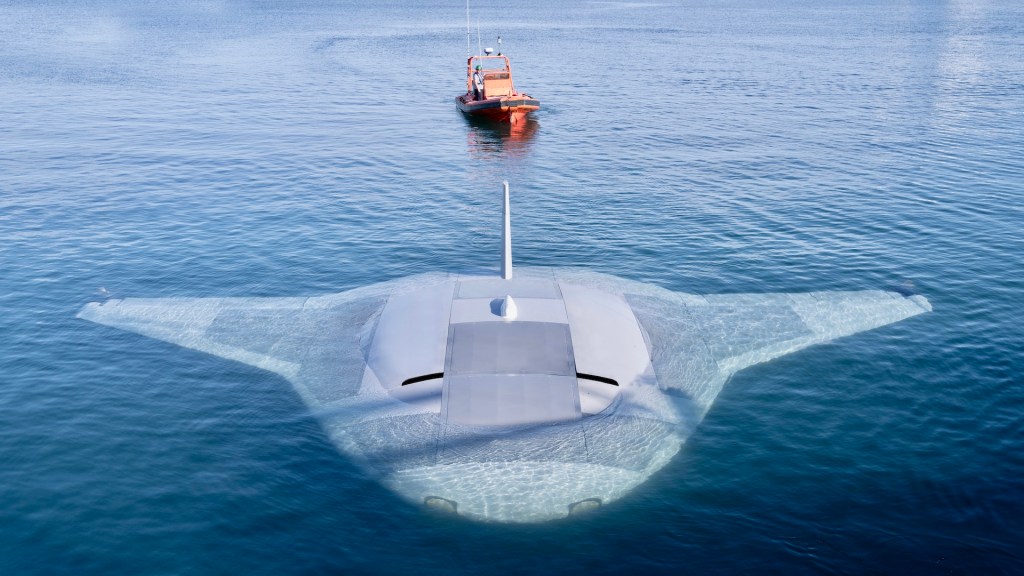
Already equipping SSN’s with ‘loyal mermen’ drones they can deploy to assist their own search patterns is under discussion. Its inevitable really. The drone genie is out of the bottle and we already know how effective surface naval combat drones are. Going under water and operating there at scale is inevitable.
We know the Russians have been deploying sophisticated deep see monitoring stations, along with subsurface passive sonar buoys – because we see them dumping them off the coast of Scotland to catch our SSBN’s and they’ve washed up on shore. How long before its drones?
The tracking and potential destruction of SSBN’s, is a huge national priority, a silent war that goes on 24 hours a day all year round, and has for decades. If drones can improve to the point where they are capable of hunting for days, increasing the complexity of the sensor net designed to find these machines of last resort, is there anything we can do protect them, or in twenty years time, will we all have to face the fact they’re obsolete and no longer a viable proposition?
There are those who would argue that the SSBN is still incredibly difficult to find. That drones will make its life harder but not impossible. We know for instance that submarines produce a chemical trail of death as they move through the oceans, disturbing the microscopic life that lives in the sea. SSN’s have been equipped with sensors designed to find even that. At depths where cameras cannot see the only truly reliable ‘eyes’ for any submarine or drone – is its ears. Sound propagates further and faster under water than in air. Sonar systems have to be very large and very sensitive, they have to be coupled to an outstanding processing system and undoubtedly Ai with a human interface could help make that more efficient .
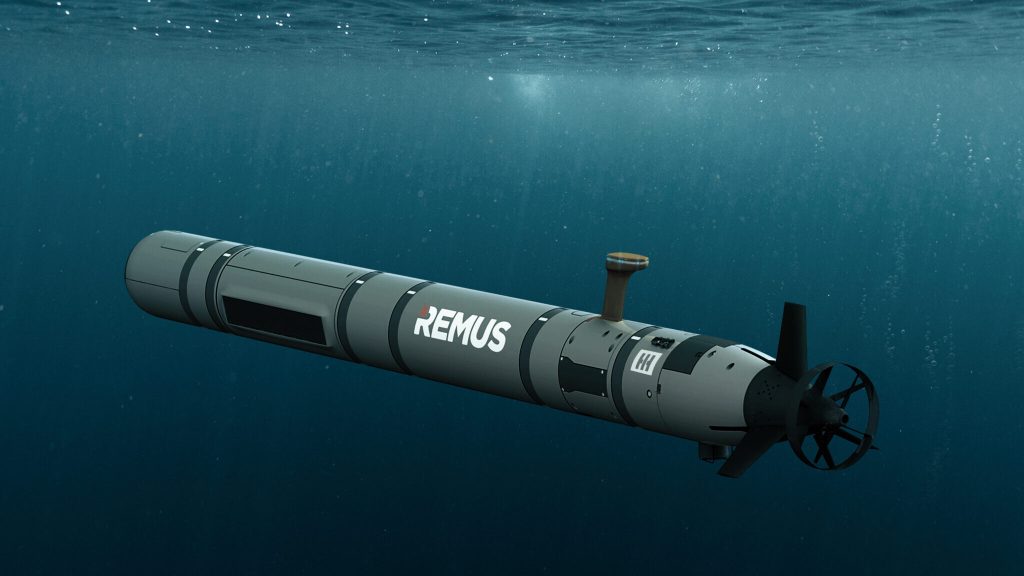
Could a drone do all of that? Does it need to? Would quantity and cooperation overcome any potential size deficiency?
Those things we don’t yet know. But the questions have to be asked. Where is this going and how fast?
If it’s going to lead us to a place the SSBN is no longer viable, then so be it. It may just as quickly take the SSN with it. But we need to know that far sooner than later. We’re putting a lot of very expensive nuclear missile ‘eggs’ in one very large and incredibly expensive ‘basket’. If we’re wasting our time and money we need to decide sooner than later. Because for one we will need an alternative – probably the long range bomber with hypersonic weapons – or small countries like the UK and France risk having their anti-nuclear blackmail force ripped out from under them.

The problem is that Naval commanders and policy makers are notoriously resentful over losing ‘big ships’ and changing the way they’ve looked at things and accepting change. When it comes to national defence at the point of last resort – we don’t have that luxury.
The Analyst
militaryanalyst.bsky.social

 The Military Analyst
The war in Ukraine has shown the larger the platform, the more vulnerable it is. We urgently need to diversify our nuclear deterrent with numerous systems including ground and air launched missiles and smaller submarines, perhaps unmanned.
LikeLiked by 4 people
Thank you TA for a most readable article. What a dilemma for all the nations to find themselves in and there is no right answer at the end of it all. One thing for sure, the West must cease providing the likes of Russia and China with the funds to develop these weapons. Be they SSBNs or underwater drones. To a large extent the genie is out of the box, but we must make things much more difficult by bringing back our domestic manufacturing in house. We can no longer allow our dependence on cheap Russian energy and Chinese low cost manufacturing rule the way we live. For example, Australia needs to be encouraged to find different international markets for it’s iron ore and and other commodities instead of China. Almost everything we buy has “Made in China” in small print on the box or label. We are blindly funding the defence industry of our enemy!!
LikeLiked by 5 people
Thanks for posting this, learned so much from it about something that has concerned me for awhile.
LikeLiked by 4 people
The air drones from Ukraine and Russia do point towards massive amounts of drones of varying sizes and different capabilities. I think this will be the case with submersible drones as well. The hunting and tracking drones and the attack drones. Once the hunting drone has found a target it just stays with it for as long as required. In the case of war a attack drone or swarm is sent to kill. This may mean every sub is followed by hunter subs. Thank you for your commentary.
LikeLiked by 4 people