
IT’S AUGUST 2027, PRESIDENT VLADIMIR PUTIN HAS BEEN ASSASSINATED IN A KREMLIN COUP…
August 4th 2027, after a devastating winter of power cuts and fuel shortages, the never ending decline in Russia’s economic situation finally cracks as the oligarchs feel the pain and the military flounders in Ukraine. The military has gone unpaid for three months at almost every level and the frontline is seeing mass desertions and fighting between units. Ukraine has been left wondering quite what to do as it watches the occupation army and the ‘front line’ seem to vanish in places, and yet still resist in others.
Putin’s removal has left uncertainty at the top all the way down to those in the field, reactions change depending on who finds out at the front and when they know it. It’s a dangerous and oddly delicate situation. Does Ukraine risk an attack to speed the process along or will that merely harden resistance? What if the attack is in fact not needed and the whole frontline just melts away, leaving the occupied territories a land of traps, mines, and destruction?
Nobody is quite sure who is in charge in Moscow. Former Putin supporters are not quite fighting with those who have seized the keys to the Kremlin and generals are under pressure to put their forces under the command of one side or another, not that they have much to command with any certainty. There is paralysis, given that Russia is a state where nobody does anything on their own initiative, the administration will quickly break down until its given orders.
As the days pass the masses start to gather demanding action. Across Russia’s sprawling eleven time zone empire, those who have dreamed of independence and escaping the dead hand of the stultifying Russian state sense their moment has come. Just as equally the existing leadership in many republics know that if they play their cards right, they could be the leaders of independent nation states just as happened in the early 1990’s.
So where is it they are most likely to make the move? Why? And do they stand any chance of making it stick?
The most likely areas to demand they go their own way, and would have popular support for such a move behind them, are those with distinct ethnic identities, historical grievances, and existing separatist movements. Most such regions are found among Russia’s ethnic republics and certain resource-rich areas with comparatively less of an ethnic Russian population.
North Caucasus Republics
- The republics of the North Caucasus, especially Chechnya, Ingushetia, and Dagestan, have the strongest precedent and ongoing aspirations for independence. Chechnya pursued independence in the 1990s, which was ruthlessly crushed by the Russian Federation (and largely under Putin’s direction). While Ingushetia and Dagestan have seen recent declarations and formations of independence movements and battalions.
INGUSHETIA
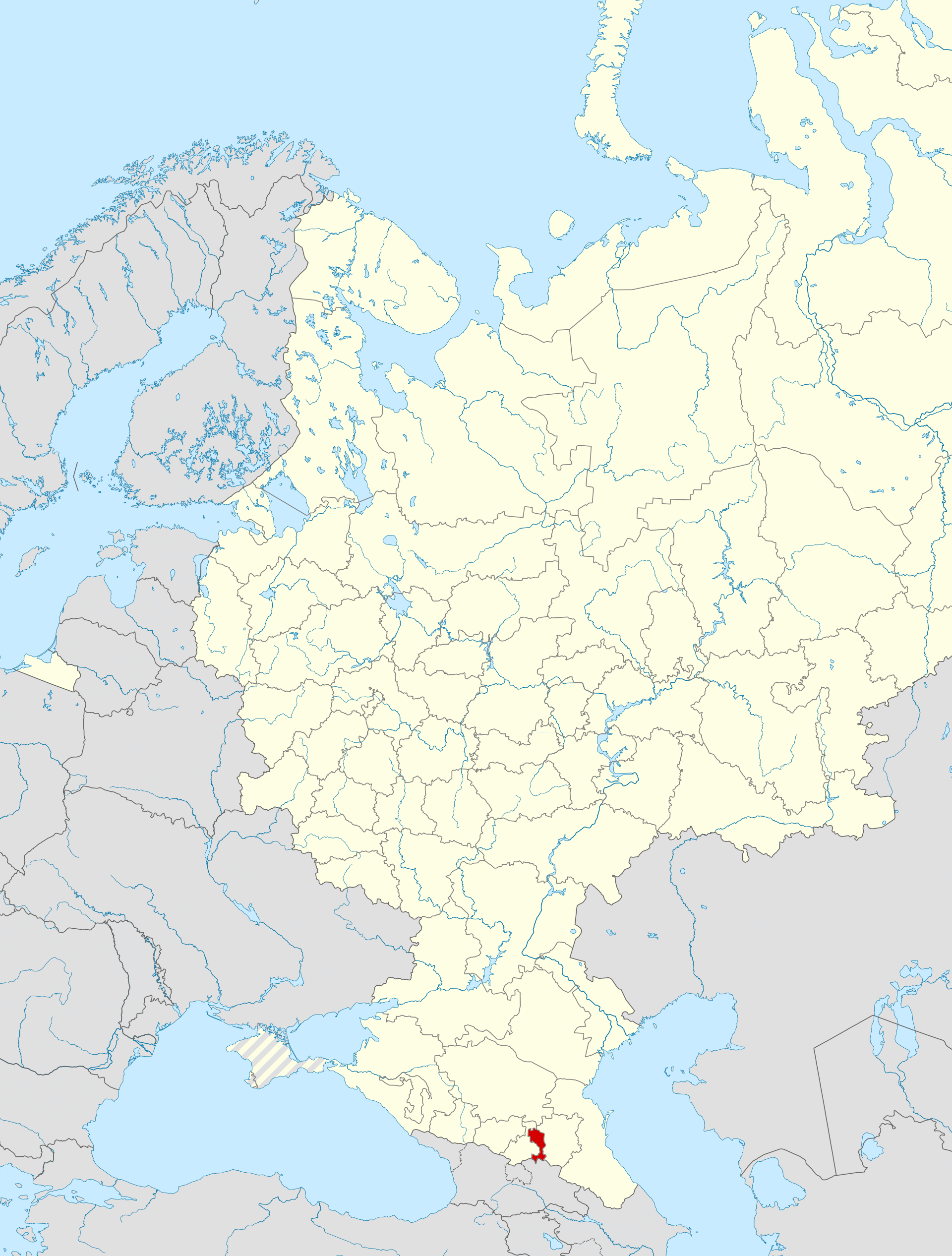
- Ingushetians formed the Committee of Ingush Independence in 2023 and the Ingush Liberation Army was formed in April of the same year as its armed wing. Ingushetia was originally, part of Chechnya, but there is no love lost between them. Ingushetia is very likely to take the first opportunity open to it to break away.
CHECHNYA

- Chechnya has a complicated relationship with the Putin regime, which financed its reconstruction and the expensive life style of its leader. It has been both at odds with the regime and in support of it during the war with Ukraine – mostly in what are more often than not ‘cowardice roles’ – such as shooting retreating soldiers. They were notorious for their bombastic, loud demonstrations of barbarity against, ideally, those who were defenseless, along with taking endless selfie videos, until hundreds were HIMARS’d when they gave their location away. Currently they are more likely to go for full independence and take the opportunity to seize it while the Russian military is disorganized and weak.
DAGESTAN

- Modern separatism in Dagestan is complex due to its highly diverse ethnic composition, with some groups advocating for a united multi-ethnic independent Dagestan, while others prefer independence for individual ethnic regions like Aghulistan, Avaria, Lezgistan, and others. Separatist and Islamist armed movements emerged, most notably the 1999 invasion by Islamic militants declaring an “independent Islamic State of Dagestan,” though this was met with local resistance and a military counterattack by Russia. Since the 2000s, separatist influence has been limited by security operations, but underlying tensions remain due to ethnic and religious diversity, political centralization, militant insurgencies, and disputes over regional autonomy. Despite these movements, Dagestan remains an autonomous republic within the Russian Federation, and there is no widely recognized independence movement with unified leadership comparable to other regions like Chechnya or Ingushetia.
OVERALL
- These regions are characterized by low ethnic Russian populations and a history of ethnic violence and resistance to Moscow’s control, and have been for a very long time, in many cases going back to the end of World War 1.
Volga-Ural Republics
- Tatarstan and Bashkortostan have both significant economic resource bases (notably oil and gas) and strong regional identities. Movements for Tatar independence are well-established, and local elites may be incentivised to claim autonomy in the wake of federal collapse to control their resources and ensure political survival.
TARTARSTAN

- The one that didn’t get away after the fall of the Soviet Union. Tatarstan, a historically autonomous republic within Russia with a strong Turkic and Islamic identity, has a long legacy of separatist movements but currently nobody openly advocates for breaking away from Russia. Separatism in Tatarstan peaked in the early 1990’s, when it declared sovereignty and held an independence referendum; the majority supported independence, but the movement was suppressed and sovereignty was ultimately retracted by federal pressure and court rulings. Part of the problem was the unexpected nature of the situation and that there was no means of enforcing the independence they voted for.
- Putin’s brand of dictatorship has been very different, as has the inherent racism and anti-Islamic undertones of the Russian Orthodox Church. There’s also the fact that regions like this have been highly susceptible to recruitment advertising because locals are not especially wealthy even as their resources are sucked out of the ground for the benefit of Moscow’s elites. The death toll has been impactful in such regions.
- Recent years have seen Tatarstan’s formal autonomy further curtailed, including the abolition of its presidency and tighter Moscow control over local affairs.
- While separatist voices persist, particularly in exile communities and groups such as the All-Tatar Public Center, open calls for independence in the republic itself are suppressed through criminal law – activists have been imprisoned for separatist statements.
- Episodes of public protest and parliamentary démarches do occur, often triggered by federal measures that affect local identity, such as restrictions on the Tatar language in schools.
- Tatarstan remains a vital economic and diplomatic player in Russia due to its high level of industrialisation and links to Central Asia and the Islamic world.
- Foreign interests, especially Turkish investments, contribute to Tatarstan’s prosperity and fuel Moscow’s concerns about outside influences on local sentiment. Yet, one of the reasons there is Turkish investment is the local Turkic population. Ankara would find it difficult not to recognize and even support its independence, so would the ‘stan states’ to the south.
- Despite these dynamics, Tatarstan’s leadership generally balances collaboration with Moscow, focusing on stability and leveraging economic ties, while public separatist sentiment remains tightly controlled and relatively low-profile. That doesn’t mean that given the opportunity, a force for independence wouldn’t quickly emerge. Exiled leaders and diaspora groups continue to call for restoration of Tatar statehood, arguing that federal policies systematically erode Tatar identity, language, and autonomy.
- These movements rely on symbolic gestures and appeals to the international community but lack meaningful recognition or support within Russia or abroad.
- Overall, while Tatarstan retains deep-rooted aspirations for autonomy and independence among some sectors, practical prospects for breaking away from Russia are remote under current federal controls and political realities, and separatism remains largely a suppressed or symbolic movement. It’s my opinion that given a loss of centralized control from Moscow, it would only be days before a major public demonstration started to cascade a desire for independence.
BASKHORTOSTAN
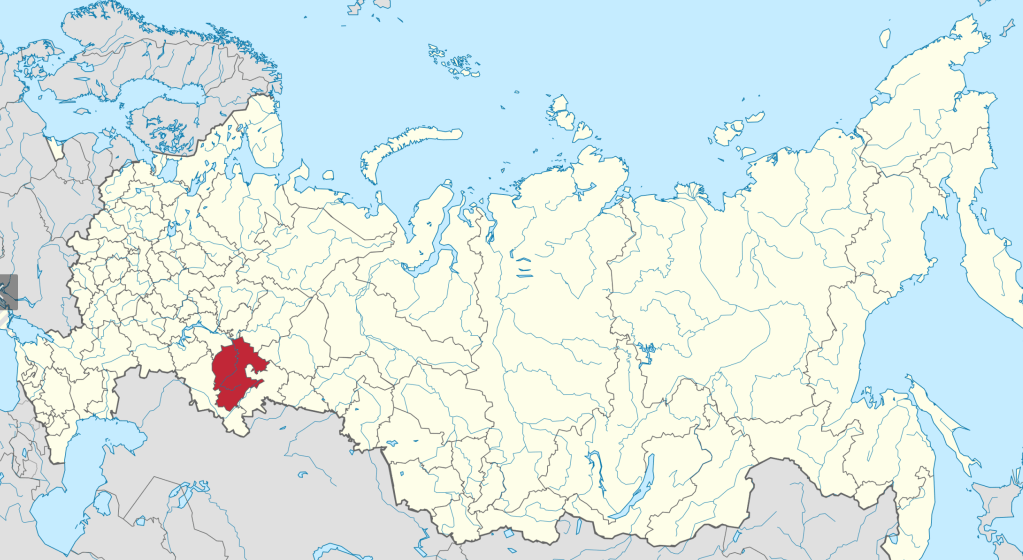
- Bashkortostan is a large, resource-rich republic in the Volga-Ural region, that has seen a notable surge in nationalist and independence sentiment, especially since Russia’s war on Ukraine and the Kremlin’s increasing centralization of power.
Bashkortostan was among the first republics to declare state sovereignty in 1990, securing at one point a unique power-sharing deal with Moscow that granted significant autonomy and control over resources.
Since the 2010s, Moscow has steadily rolled back this autonomy, abolishing the republic presidency, increasing Russification, and labelling Bashkir nationalist organisations as “extremist,” with leaders like Ruslan Gabbasov forced into exile.
In recent years, especially following Russia’s mobilization for the Ukraine war, a clandestine independence movement known as the Committee of Bashkir Resistance has claimed responsibility for sabotage actions, calling for a free Bashkortostan and attracting attention as a significant threat to Moscow.
A major wave of protests occurred in January 2024, after the jailing of activist Fail Alsynov. These protests, sometimes violent, saw strong state repression and claims by Bashkortostan’s Moscow-appointed head that separatists abroad were fueling unrest.
Security services have targeted independence activists, branding their activity as terrorism or foreign subversion. The republic has faced periodic blackouts of messaging services and extensive police action in response to demonstrations.
Exile figures like Gabbasov and the Committee of Bashkir Resistance openly advocate for independence and operate clandestinely, receiving some local support and media attention, but most activism inside Bashkortostan is heavily policed and publicly suppressed.
Analysts warn that while the groups are small, Moscow’s mishandling of ethnic and economic grievances could further radicalize some sectors and bring separatist aspirations closer to the mainstream, especially if the Kremlin’s hold on power weakens. - Of all the Russian empire’s colonial possessions, Bashkortostan is the one most likely to bring about its independence relatively swiftly, but sadly almost certainly with some blood being shed. It’s one of the places Moscow has tied up a considerable portion of its security services . The threat of rebellion here is real and strong, it would take little to bring it out into the open. If Moscow blinks, the region will take advantage of it. Only harsh repression has held it in check in the past decade.
Siberia and Far East
- There is a growing “Siberian independence” meme and some local activism, though concrete movements are less pronounced than in the Caucasus or Volga-Urals.
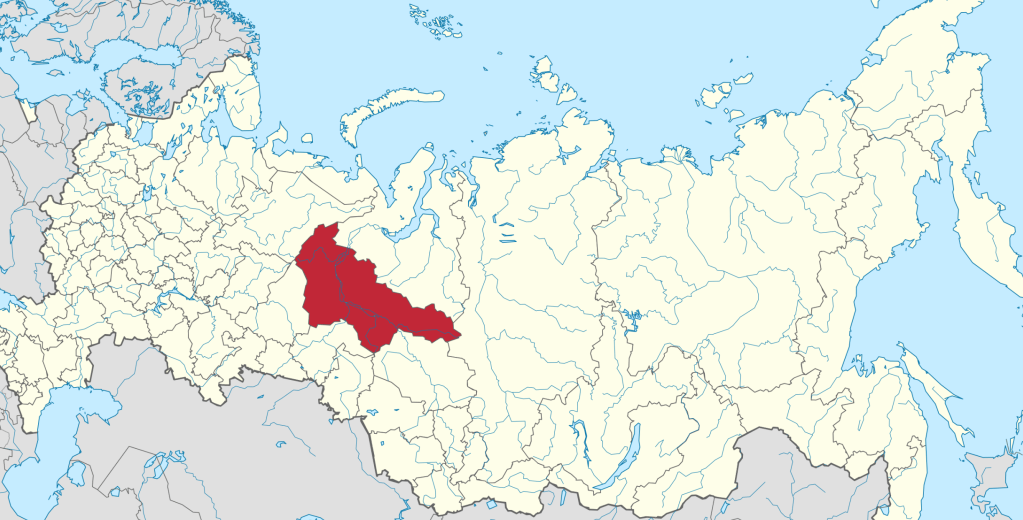
- Resource-rich autonomous areas like the Yamalo-Nenets and Khanty-Mansi regions, which control much of Russia’s gas and oil production, could see elite-driven independence efforts, especially if Moscow loses control of redistributed wealth and security. These are circumstances where some governors also happen to be ‘popular’ oligarchs, and have been willing to use their own money to pay the police and create their own security services. Not so much a popular uprising but a self serving takeover backed by their own money and the support it buys. Its people like this the Kremlin has been keeping an eye on and one of the reasons the oligarchs have been keeping low profiles. As long as they remain loyal while Putin lives little will change, but his death would almost certainly trigger change as allegiances become liquid.


PRIMORSKY KRAI & KHABAROVSK KRAI
Primorksy Krai is a strategically vital Russian asset with its capital at Vladivostock. It has a strong naval background but a checkered history. Ceded to Russia by the Qing Dynasty of China, it is known that the Chinese want it back and consider it their ancestral territory. However their claim is kept in abeyance during their ‘alliance’ with Russia.
Both regions are economically and financially marginalized by Moscow and considered largely under developed backwaters. If it wasn’t for the naval base and supporting facilities in Vladivostock, Moscow’s interest would appear to be minimal. However there have been protests and very recently, being the furthest in the fuel supply chain, the regions of the far east were the first to suffer and continue to suffer disproportionately, due to the lack of refineries that far east. Quite blatant demands for the removal of Putin and the ending of multi-tier taxation on vehicles when that tax was never used in their own region, just some examples of local discontent. Khabarovsk Krai is the neighbouring region which includes the island of Sakhalin and again, considered a largely ignored backwater. The Sakhalin LNG facility benefits few locally because it’s largely automated and the gas intended for export. Many think they would be better off making their own way in the world yet they lack the infrastructure and wealth to make it viable. Nonetheless they were independent for a short time after the 1917 revolution as the Far Eastern Republic – the Bolsheviks reconquered them in 1921.
SUMMARY
The above are the most likely candidates to attempt separation from Moscow. What I cannot show you is that many of the republics attached to them, especially in the Caucasus mountains and along the Kazakh border are just as likely to join them – it will be like a domino effect and larger states could emerge quite quickly. There’s always been some concern over the vast central Asian and Central Siberia regions too, largely because they’re rural and very poor but very difficult to control if they make a break for it.
It would depend on how quickly a new regime took hold in Moscow, how quickly it could persuade the military to side with it and if it could even start to deal with a multitude of revolts, or simply keep Moscow and the Russian core intact as the rest breaks away. Will it then refuse to recognize their independence and attempt to reconquer them?
It will all depend on the ability of the new states to organize, the willingness of the international community to recognize them, and their access to weapons to defend themselves. It may also depend on whether or not they can be successful in accessing control of any military forces on their territory – and of course any physical control over nuclear weapons, a seriously problematic feature of any Russian collapse.
Moscow being in a state of paralysis would give them time to act, the quicker they can and the quicker it makes the situation a fait accompli from which there is no return, the better chance they have of making its stick and Moscow being forced to live with it. The tradition however is that Russia is so centralized that it’s difficult for these republics not to recognize what it says even when it’s really powerless to do anything about it.
Economically the ruble would be worthless. These new states will need their own currency and the rapid lifting of sanctions if they’re to stand any chance of survival. And Moscow, if it is under some new Putin replacement disinclined towards ending years of autocracy, will bully its way into their lives one way or another. The only way that won’t happen is if the core of Russia is so economically bereft of resources, fiscal and otherwise, its simply cannot act. If that’s the case it’s likely to face at least an armed uprising as hundreds of thousands return home, and potentially a civil war.
When a country like Russia is in this much trouble and has nowhere but down to go, the chaos may spread far and wide. There are just too many variables to know where and how it might end.
The Analyst
militaryanalyst.bsky.social

 The Military Analyst
Exceptional summary and well timed for consideration of how the future of collapse of the USSR will proceed. Thanks so much for your work to keep us aware of how ruZZia will break apart.
LikeLiked by 7 people
August 2026 sounds better.
LikeLiked by 6 people
Thank you TA, for an excellent scenario of what may happen when Putin’s immortality finally escapes him. I particularly enjoyed your rather provocative opening line on Bluesky. One has to wonder what the Orange Idiot will do when this kicks off. How will he ever cope with all the lengthy names of the various republics! Europe+ will be very nervous and definitely mustn’t allow Trump’s regime to have much, if any influence on the final outcome. I suspect China on the other hand will quickly act in their own interests, bringing their own surprise actions to a volatile chain of events.
LikeLiked by 5 people
The sooner , the better!
LikeLiked by 1 person
Thank you T/A very thought provoking. How could the central government do anything to prevent mass exodus if it has no funds?
LikeLiked by 3 people
Russia is a house of cards just waiting for the slightest wind and then it will all collapse
LikeLiked by 4 people