
I wanted to address this from my perspective before it was already too outdated- it only happened late last week but was overshadowed by the MSC.
One of the most extraordinary aspects of Russian Central Bank meetings which go on for some time is that nobody ever mentions the massive bull elephant in the room. Not once. There it is looming ever more obviously and not once does anyone mention it or ask why nobody is willing to mention the cause of Russia’s increasingly precipitous economic decline. There’s a British comedy from 1968 called Carry On Up the Kyhber. It’s a very amusing parody of the British in India in the late 1800’s.
The local Governor, Sir Sydney Rough-Diamond holds a full dress dinner while the Indian rebels led by The Khazi of Kahlibar shell the governors residence. The orchestra keeps playing, the diners keep dining, the ceiling is falling down, dust is everywhere, the windows are blown out and the guests – all bar one American who thinks they’re barking mad, carry on as though absolutely nothing is happening. The governors wife, played by the redoubtable Joan Sims, has a large part of the ceiling fall on her head and apparently ad-libed the line while holding a glass of dusty wine, ‘oh dear it seems I’m totally plastered’, a Britshism for being drunk. It’s all the more impressive because as film comedy, it had to be done in one take as they had no budget to do it again.
One cannot help but feel that Russian Central Bank meetings are the very same thing. Let’s all pretend this is normal, there’s nothing going on, War? What war? It’s uncanny how they don’t even reference it.
The first big change was the drop in interest rates – the choice of two bad options – leave them at 16% or reduce them to 15.5% so they chose the later. Official inflation is at 5.6% which absolutely nobody believes – even Duma members are saying that’s got to be nonsense because you don’t need an interest rate almost three times the inflation rate to bring inflation down, in a normal economy it might be about 3.5% but Russia is a long way from normal now.
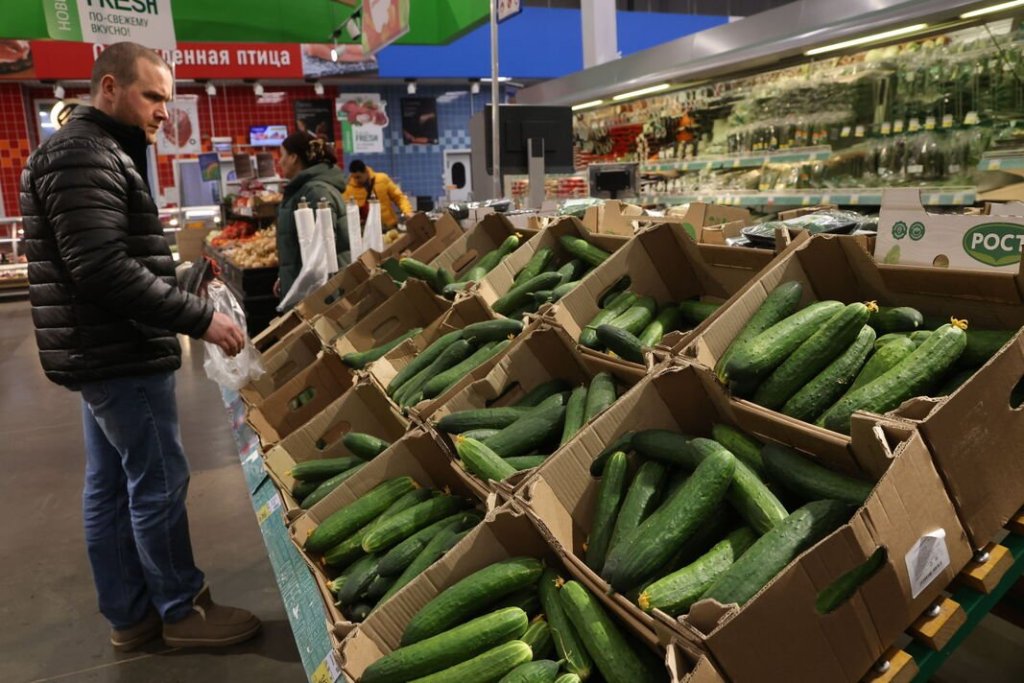
Inflation is a state weapon, designed to be high so that it reduces the value of the debts the country is piling up, but its largely a hollow option with little clout now, too much else has happened. Yet it does have a huge effect on real people – cucumbers are a staple of the Russian diet – at least they were. Now ‘more expensive than meat’ which is always a luxury item, the humble cucumber is now out of most peoples price range.
One of the most fundamental changes to the Russian tax system has come home to bite hard. On January 1st VAT rose from 20% – a rate quite normal in most of Europe including the UK, to 22%. Now in many countries VAT has exceptions, for instance in the UK it doesn’t apply to prescription medicines, books, children’s clothes and most food, excepting ‘luxury’ items like alcohol and chocolates. While it’s charged inter-business, VAT on business expenses is reclaimable. Not apparently in Russia. If you sell it it has VAT on it and the state gets the money.
What has happened this time is not just a VAT increase, it’s who pays it. Businesses that had revenue below 60 million roubles did not have to report VAT. These business are small to barely medium, little shops, plumbers, electricians, you get the gist. Now any company with turnover of more than 10 million roubles has to pay VAT. That means all of their prices have just risen 20% in the one section of the economy that services probably the largest number of people.
There’s also another VAT factor at work. Supermarkets and the big shops who sell food, have been told that to keep inflation in check, they’re not allowed to pass on the cost of the rise in VAT, so they have to take that out of their profit margins, already considered thin. But what that also does is reduce the profits on which the government can claim tax.
The problem for the small businesses that did operate officially is that they cease doing so. That a black economy emerges of cash only transactions for goods or services rendered. Putin himself warned in January this must not be allowed to happen as it’s dangerous for economic stability but it’s already in existence. All that will happen is it gets worse. With police officers spending most of their time telling people off for sayin the wrong thing – apparently 80% of their time is spent on speech violations – who is going to enforce any of this? Local police forces are strained to breaking point with low morale and poor pay, but they put up with the job because they won’t get dragged off to Ukraine.
Another double whammy is the ruble itself. The value of the rouble has continued to increase – now at one point we were watching it almost nose dive as it headed to 120R to $1 and was rapidly worsening. The RCB stepped in on Putins orders and spent a fortune in foreign currency propping it up to get it below the 100R mark. It’s now at around 76-79 to $1. If anyone was buying roubles or wanted to buy anything from Russia in roubles this would matter, but they don’t. Outside of Russia the currency value is meaningless, its a dead currency on the international market and entirely managed by the RCB.
And yet it matters, because Russian tax and currency rules require countries that export anything – including oil, gas, coal, food (exports of which fell 25% YOY), to then have to exchange the currency they were paid in for roubles, paying their tax in roubles and declaring their financial results accordingly.
Of course, if the Russian rouble gains value under the state controlled price manipulation, then the foreign currency buys fewer roubles and the big corporations who sell these products abroad are paying smaller amounts of tax on smaller rouble incomes. The state is by definition, causing itself to reduce its rouble tax income by over valuing its own currency – a policy Putin is apparently wedded to largely out of prestige. Its a mind numbing own goal but nobody is doing anything about it. Once again Napoleon’s old maxim of ‘never interrupt your enemy while he’s making a mistake’ holds true.
Massive cracks are appearing everywhere in Russias economic landscape. Its largest developer of new homes is in such dire straits its asked for a bailout that’s already been denied. Its unsold housing stock is vast and its unable to build more, it hasn’t paid its staff in four months. Its 57 year old owner was found mysteriously dead, which sent ripples through the Moscow stock exchange. Steel magnates are saying that Russia is using 26% less metal – mostly for construction – than last year and they expect that to halve again this year. Everywhere signs of Russia already being in a recession are visible and the damage to the small-medium business economy will be profound – they are usually the drivers of recovery, this time they’ll be the drivers of rapid decline.
And then there’s the oil saga.
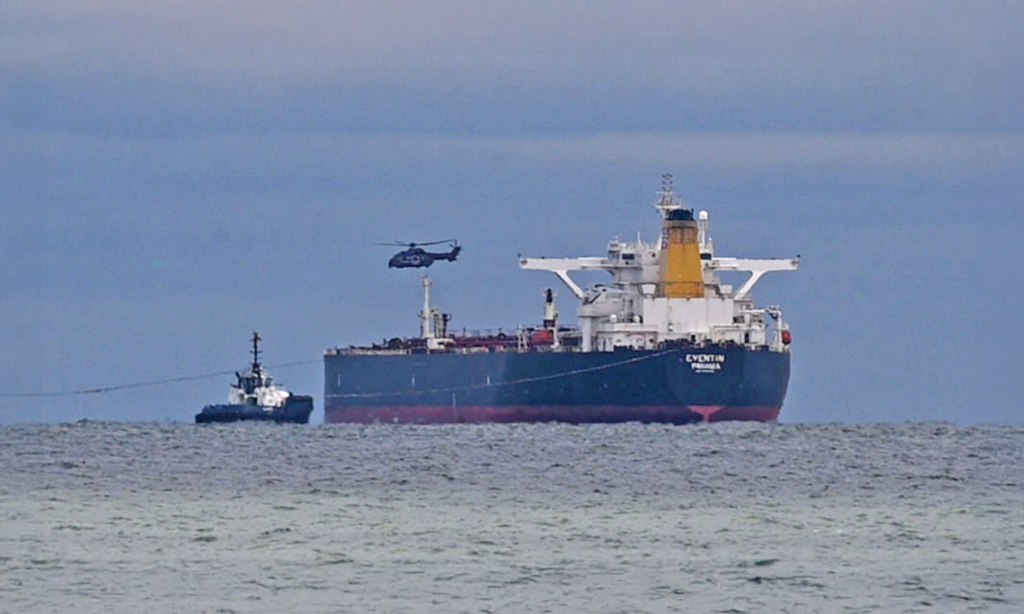
Russian oil production has fallen at source. Partly this will be down to Ukraine’s ‘kinetic sanctions’, restricting the transport by pipeline into storage areas around Russia and the refineries of course, not operating a full tilt. Add to that lack of tankers to pump the crude on to and Russian crude production had to be reduced, probably down to about 7.5-8 million bpd. Remember that when the war started it was at nearly 11.5mbpd.
The price of oil today, based on the benchmark Brent Crude, is $68. Forecasts for a growing oil glut (unless something happens in the Gulf between the US & Iran) put the year average price as low as the $50-55 range, some lower than that.
Russian Urals crude is trading at $55.67. But the discount rate is around 20-23% for India, which is reducing its buy, and overall is running at $19-20 below its ‘official’ price, putting it in the $35pbl range. At that level Russia is not making any money and it’s only about cash flow and keeping the system running. There’s a very high risk for the Russians that if its trade price gets down to match the lows predicted for later this year for Brent, its official price will only be about $40pbl and the discounts still in the $15-20 range which is simply crippling. I cannot see how they can viably ship oil at that price.
The fact is sanctions are biting deep – no matter where they come from. The western navies look increasingly willing to step up tanker confiscations in the North Sea and English Channel – the Royal Navy is said to bursting at the seams to arrest a tanker but the government can’t yet bring itself to give the go ahead. It will come and when it does along with other navies, it’s going to have even more impact. Russia is known to be finding ways around making it harder to arrest the tankers. Armed guards and better paperwork to remove the excuse for action are all playing a part.
Yet it’s now obvious the Russian oil industry is in decline. Russia may have found the factory that produced the FP-2 drones in Ukraine – we all knew something had happened – but we also know a new site or set of sites is already up and running and drone attacks resumed this last weekend. The Flamingo also made itself felt after that factory was also hit, but its up and running again. The strike on a refinery 1,700km from Ukraine that had never been hit on the Oil Refinery Bingo board tells us they’re back.
So from an oil income perspective Russia is clearly going to carry on in decline, and that’s its biggest cash cow.
The other policies the government uses to recycle money – selling debt that it then pushes back into the system, physically printing 15 trillion roubles last year, restricting cash withdrawals, forcing banks to loan money they really don’t have but the government magics out of thin air, to industries that then don’t pay them back, has put the banks in a place that’s almost impossible. None of them are viable, even Russian commentators and Duma deputies are expecting some kind of banking crisis coming out of nowhere that the state can’t just magic away. There’s no way it seems of avoiding it.
The RCB may sit there in their big white leather chairs behind their desks, but Elvira Niabulina is talking increasingly in terms that are best described as technical bullshit. Even while she was asked public questions in a live broadcast she never really answered a single question, burying it in fiscal verbiage.
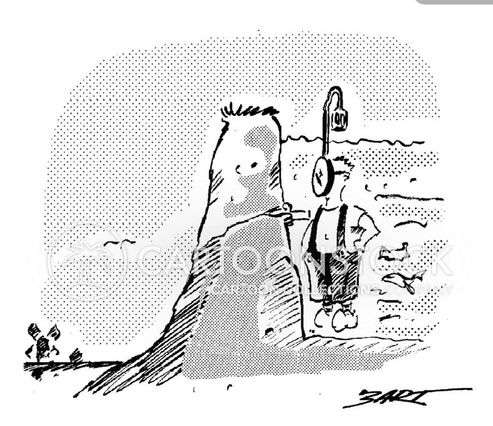
Putins policy for now seems to be to sit it out, cobble together whatever needs to be done. It’s like the old story of the Dutch boy with his finger in the dyke stopping the leak, if he pulls it out, Holland vanishes under the North Sea. He can’t stay there for ever, so disaster is inevitable.
The Analyst
militaryanalyst.bsky.social

 The Military Analyst
Collapse is inevitable and when it comes it will be sudden and catastrophic.
LikeLiked by 5 people
I can’t wait. Let me correct that. Every day I look to see if it has happened.
LikeLiked by 5 people
Many thanks TA, good news all round. As in Germany 1929. Wheelbarrows in demand to carry enough cash to buy a loaf of bread. When the Rouble crashes, the humble wheelbarrow will be the wallet of the “Nouveau Riche” Russian.
LikeLiked by 3 people
Thank you TA for that update. The best news I have had in 4 years.
It appears that deNile flows out of the Vulgar.
Best.
Doug
LikeLiked by 3 people
The RUB has a closed exchange rate. It is used by the RCB to set the price the bank pays for hard currency the RCB can then use. Hard currency now means RMB.
Oil sold is priced in $US, paid in disc RMB equiv; enters Russia via mandatory conversion at inflated RUB conversion. RCB pays less for hard currency. No profit means no tax anyway. Grain sales and any other export income is the same.
Imports are now paid for in RMB. No country will accept RUB.
Real inflation in Russia is much higher than the official rate, but the price of goods is only one measure of an economy. Cash is hard to get, due to restrictions on access to deposits. There’s a civil economy and a military economy, and the civil economy is hemorrhaging. Bankruptcies; loan defaults; unpaid wage and salary bills; supply shortfalls etc stretch all businesses. On top of that, there is the state simply stealing important (to them) businesses when the owners “commit suicide”.
Economies require velocity of money. Stagflation occurs when money changes hands at lower volumes and frequency while prices rise. Lower volumes cause production to fall, while break-even requires constant price rises. It’s a death spiral that interest rates cannot contain.
Economies are balanced by a combination of fiscal policy and monetary policy. Overheating is dampened by raising interest rates (monetary), to reduce borrowing – when loan interest exceeds (deposit interest plus costs), its back-door taxation, putting economic brakes on. To stimulate an economy the government can spend more, or offer tax incentives or tax cuts to pump money back in (fiscal).
Russia is in a massive fiscal deficit; spending far more than it collects, and the gap is rising. It has already applied aggressive monetary action to rein in inflation. The problem is, inflation is an imbalance between demand and supply. Russia has a different version, because the demand remains, but the private capacity to drive demand shrinks as supply also falls. Russia has a massive number of unfilled police jobs. The money to pay bribes – which supplement salaries is leaving. The wage is pitiful. There’s a labour shortage in Russia. Smart people left. Farm workers, firemen, police, tradesmen, and others – especially those suddenly in financial stress – signed up for big sign-on bonuses and wages they could only dream of. Their bodies litter the fields of eastern Ukraine.
Economies also have a balance sheet element that is rarely reported. Infrastructure requires maintenance, and has a service life – which diminishes unless fully maintained. Russia had a massive amount of Soviet era war equipment. a vast network of railways and rolling stock; oil pipelines and refineries; power generation and distribution and military production facilities. The maintenance on these has suffered from funding diversion; workers moving to military production or sign-up; and so on.
The Russian economic assets have been savagely reduced, while the infrastructure deficit (in terms of deferred spending and natural attrition) is loading up the non-current liabilities beyond capability to remedy.
They’re holding it together for now, with gaffer tape and hopium, but if I were Russian, I would not be getting into a building lift anytime soon.
Xi Jinping doesn’t want Russia to fail, because he has Putin right where he wants him now – absolutely dependent on China. But Xi has his own problems, and he can´t quite save Russia. When its economy breaks, China will have few options – or will move to shore up its interests in the far east.
Putin knows in his bone marrow that the end is coming. He knows he will be held accountable. But his conscious mind is as deluded as Hitler’s was towards the end. History doesn’t repeat, but it rhymes. He has Rosgvardia to protect him: “None shall pass¨…
Trump could well become a lame duck president this year. He has awoken Europe, and the US has lost its position of geopolitical strategic dominance of western policy. There’s no going back. They still listen, but Kaja Kallas summed up European sentiment in her eye roll response to Mike Waltz spouting Trump waffle.
No-one knows when this ends, but it will end where it began. In Moscow. Russia may never recover. We can only hope that it isn’t a case of rinse and repeat, because – like the Germans in the interwar period, instead of setting a course of atonement and slow recovery, they deluded themselves that they had nothing to lose.
LikeLiked by 4 people
Many thanks to you, MA for another fascinating insight into the Russian economic downfall (that can’t come soon enough).
@Gordon – your comment is also a welcome addition to the situation and I thank you for taking the time to type it up.
What a quality resource this site is, thanks to MA and all who comment.
LikeLiked by 4 people
Thank you.
LikeLiked by 2 people