
As March 2026 began conversations that had clearly been underway for months became written declarations. President Macron of France said the country had been talking to several key states in Europe, especially Germany, the UK, Sweden, Denmark & Poland about extending the French nuclear umbrella across Europe. I’ll go into the complexities of this a little later.
On March 2nd Denmark & Sweden – let me run that by you again – Denmark & Sweden – the later a country which had been neutral and non-aligned since the Napoleonic Wars (and whose King is descended from Jean Baptiste, Marshal Count Bernadotte, one of Napoleon’s Maréchal Imperiale who was offered the Swedish crown to solve a succession crisis in 1810, when elderly King Karl XIII’s heir died). Bernadotte became King Karl XIV Johan in 1818. The choice had been entirely strategic, aimed at keeping France from invading Sweden. Napoleon was against the idea but went with it. Bernadotte eventually joined the allies against his former Emperor.
You may ask why you need to know this, and my answer would be that there are distant ties and relationships in Europe few ordinarily recall, but governments and people do when it matters. Sweden’s neutrality through every war – including both World Wars came at a price. They were cornered into supplying Germany with iron ore in both – especially when Finland was fighting with Germany and the Germans occupied Norway and Denmark in WW2 – they were surrounded.
Denmark, a founding member of NATO with Norway, like Sweden, are largely seen as level headed, not emotionless but deeply practical. More inclined to accommodation and peace and finding positive solutions than engaging in war and arms building ups. Swedens decades of neutrality in the Cold War – even though it was well known they would not have remained neutral if Russia had invaded the west, was legendary. Their cat and mouse games of hunt the spy sub with the Russians and constantly defending their air space from incursions was well documented.
My point here is that despite everything that happened for 200 years nothing had budged Sweden out of its neutrality, nothing at all. Denmark was never part of the Nuclear sharing arrangement with NATO and US nuclear weapons. Sweden joining NATO is monumental enough, but it actually agreeing to share and help finance a nuclear weapons deterrence program – including the prospect of nuclear armed French aircraft on either of their territories? That’s a massive, if not staggering shift in how they perceive the world now, compared to six years ago. It’s a damning testimony to Putin’s concept of Russian foreign policy and shreds any credibility he had as a ‘master strategist’ that so many gave him credit for.
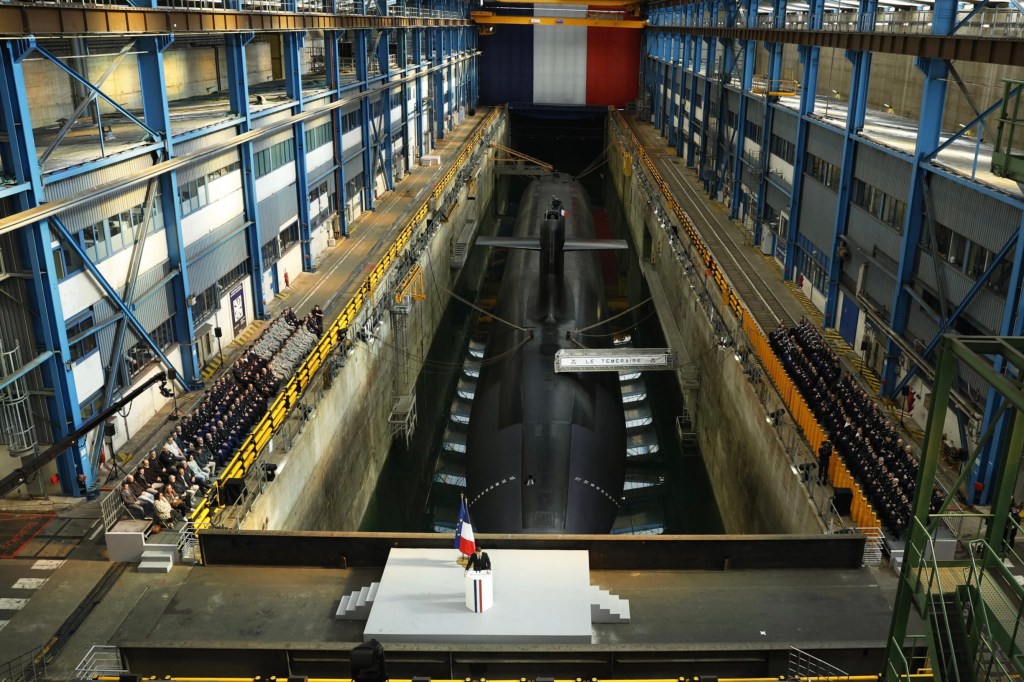
Germany being in the mix is easy enough to understand, France and Germany since WW2 are joined at the hip in so many ways. Poland is no newcomer to nuclear weapons having hosted much of Russias tactical arsenal in the Cold War. They’ve been begging the Americans to let them join in the NATO sharing program but the US has rebuffed that idea. As Prime Minister Donald Tusk said, we have to make it clear to our enemies we will not be pushed around.
The oddity in this is ironically, Britain. As the first of the two nuclear powers it nearly bankrupted itself in the early 1950’s pursuing an atomic bomb and then a hydrogen bomb of its own designs when the Americans cut off all technical aid and access. Having obtained both and planning on delivering them by air to the Soviet Union, that concept rapidly became outdated as SAM systems made the bombers excessively vulnerable.
The chosen delivery mechanism was the American SkyBolt aero-ballistic missile, until President Kennedy, newly elected was advised it was already outdated and cancelled it. The stunned British were stuffed, with a deterrent they could no longer reliably deliver, their own BlueSteel being too short ranged. Cap in hand prime Minister Macmillan trotted off to the US and tried to un-cancel the SkyBolt. Kennedy was having none of it, but they compromised on what remains the effective reality of Britains nuclear deterrent.
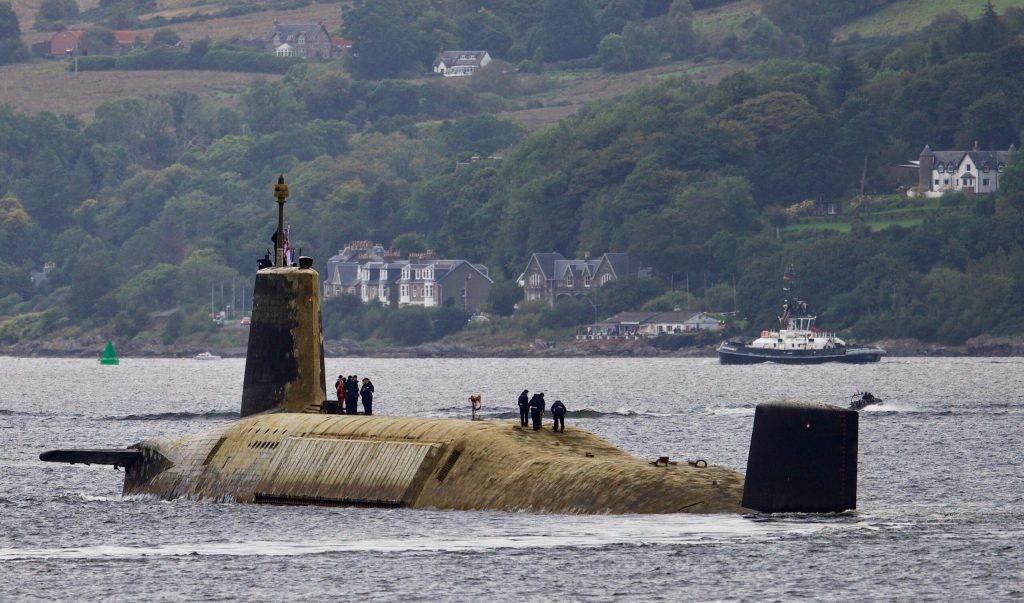
The UK would build its own warheads and its own submarines. The Americans would supply the missiles. Technology moved so quickly in the 1960’s that the missiles moved from Polaris A1 to A3 even as the UK built the Resolution class SSBN’s to carry them. Four out of a planned five were built to carry the missiles, technically guaranteeing what the Navy proudly says is the Continuous At Sea Deterrent, one fully capable SSBN at a time always on patrol 24/7/365. Its remained unbroken since 1969 but its come close to failing in recent years due to the current class of SSBN’s age and technical problelems with reactors.
As Polaris aged in the 1970’s and Russia built the Galosh anti-ballistic missile system around Moscow (which really didn’t work but looked impressive), the UK government carried out in secret and off-budget a £1 billion program (around £5.4 billion in 2026 money) to improve the warheads on Polaris called Chevalaine. It was a vast and complete waste of money but it was deployed.
The renewed impetus in the 1980’s of Soviet aggression around the world and an increasing tension under the Reagan Administration’s rearmament plans, put Britain in need of a Polaris replacement. Again technology had leapt forward, Polaris had been partly replaced by the derivative Poseidon C3 in the US and rapidly that moved to Trident-1 C4. Under Reagan that changed again to the Trident-2 D5 and wisely it was that the UK settled on under the same agreement. Four new SSBN’s of the Vanguard Class slowly replaced the Polaris SSBN’s through to the end of the 1990’s.
Now, here we are again only this time with a life extended missile sitting aboard four new under construction third generation SSBN’s eventually. Meanwhile the Vanguard class, never intended to last this long have to carry on, often with outrageously long patrol times.
The UK allocates the SSBN and missiles to SACEUR – an American held position as NATO commander, but has the right to withdraw them at any time it chooses. The UK dismantled its last tactical nuclear weapons in 1998, the WE-177A free-fall bomb, which had been used by the Navy as well, as an anti-submarine weapon with a variable yield of 0.5 to 10 kilotons. The B version was a 450kt last resort theatre level weapon and the C a large tactical 200kt weapon.
The current British nuclear program is entirely strategic in its capabilities. The missiles are leased from the Americans and those not in submarines or under maintenance in the UK are stored in Kings Bay, Georgia. It’s understood that of the 54 missiles around 8 are on board the CASD with another 8 on or available to a second submarine with 8 likely in the UK storage facility at Faslane. The SSBN’s haven’t carried 16 missiles for years. The new Dreadnoughts have capacity for 12 but it’s unlikely they will carry more than 10, with two launch tubes available for other missions and even potential cruise missiles.
The UK has committed to increase its warhead count, but like France that information is no longer being published. However it’s around 240+.
I wanted to go through this because the British element of any nuclear partnership has been deeply tied to NATO requirements and its important to understand its an entirely strategic system – and was expected and planned to remain that way. A weapon of last resort, where if Russia attacks the UK with nuclear weapons, Moscow, St Petersburg and much else besides is toast. The reality of it being a NATO asset is minimal, it’s more about reminding the Russians that the UK deterrent is already part of NATO’s combined nuclear deterrent. In policy terms, from a UK perspective we’re already part of structured nuclear deterrence strategy. One that is, through historical reality, tied deeply to the United States, and, arguably, losing credibility.
Which is very different to France. France has never allowed its nuclear deterrence forces – at one time 18 IRBM’s in silos on the Plateau d’Albion in the Alpes Hautes-Provence and several Squadrons of Mirage-IV bombers, later backed up by a rolling series of SSBN’s, to be placed under NATO. France never fully operated a CASD system because it had land based missiles and aircraft. However with the withdrawal of the aging Mirage-IV’s and the end of the now highly vulnerable IRBM’s in 1996, France was more reliant on its SSBN force and the nuclear ASMP missile carried on the Mirage-2000N. The first true CASD patrols and France having one SSBN permanently at sea without a gap were not truly viable until 2010.
General de Gaulle set the standard French attitude to trusting American promises of nuclear umbrella coverage with his famous paradigm that, who could believe any US president would sacrifice New York for Paris? It was asked in 1961 of a newly sworn in Kennedy, and he never answered the question. There is no one in their right mind who can possibly think any president let alone Trump, would ever do that. We all know it so why do we believe in any American promise of nuclear deterrence covering us all?
It may have taken us 65 years to finally understand we lived under a mirage of American generosity but it seems that de Gaulle was entirely justified in his argument and the fact is, nobody wanted to hear any other argument than the one America used – it was about convincing Russia that it would use its nuclear weapons to defend Europe regardless of the cost.
Europe and especially the outgoing President Macron have finally realized that the essential ingredient in the American nuclear deterrent is the ability to convince Russia America would use its nuclear weapons to defend Europe. Nobody believes that if push came to proverbial shove, Trump would let that happen. And therefore we must assume our own European capabilities are the only way forward.
For Britain this is a huge change of direction and one that leaves it at the mercy of American largesse. It clearly knows that’s a delicate place to be. It cannot just yank away the Trident-II stock and bring them to the UK. All of the missiles are due to undergo major SLEP to get them to last to at least until 2045-50, and that needs US involvement. The Dreadnought’s launch tubes are the same as those on the US Columbia class and incompatible with the French MSBS M51.3 their submarines carry. It could be 40 years before an Anglo-French system is viable with 4th Gen SSBN’s if they are still needed or viable, given drone technology and Ai.
At a tactical level France has the air-launched ASMP-A (Air-Sol Moyenne Portée Amélioré), a supersonic standoff missile with a yield of around 300kt.
Air Force: Two squadrons of Rafale B/F3-R or F4 fighters (EC 1/4 and EC 2/4 Gascogne) at Saint-Dizier air base carry 50 ASMP-A missiles for dual-capable strike roles.
Navy: Rafale M fighters from the carrier Charles de Gaulle can also deploy ASMP-A, providing sea-based tactical nuclear options.
The next gen ASMP will have a range of more than 1,000km and exceed Mach 5, but is only due to enter service in 2035.
While France has made it clear it intends to expand its warhead number beyond the 290 in service of all types, the whole European deterrence concept is based on deploying some of an increased French nuclear capable tactical strike capability in forward areas – Sweden and Poland for example, making it clear to the Russians they can be uncomfortably close if necessary.
For the British this is another embarrassing ‘stuck to the Americans’ issue. Having decided that 12 of the F-35’s for the carriers on order would be delivered instead as (the much cheaper) land based F-35A versions – entirely to carry American made nuclear weapons under the NATO sharing agreement (which the UK hasn’t even agreed access to), the UK is left without a tactical nuclear weapon of its own and potentially no American ones to carry. That gives them the option of designing, testing and deploying their own – an expensive process – or buying/cooperating with the French if it can be made to fit the F-35 which is unlikely. It’s either that or something new such as the Anglo-French strike missile program both could adapt.
Overall this European Nuclear deterrence concept is essential, that others are willing to fund it just as much if not more so. That they are willing to work with France to make it viable almost extraordinary and unthinkable before 2022.
The role Britain plays will be important and take some serious discussions and major policy changes to the UK’s relationship with its weapons and delivery mechanisms – divorcing them from the US in the very long term.

The only fly in the ointment to a successful outcome is President Macron himself. His time in office ends on May 13th 2027 after ten years and two terms. His replacement may well be a right wing pro-Russian from the worst part of the French fascist element, a cipher of Marine Le Pen, who cannot stand because of her corruption conviction. If Jordan Bardella, a photogenic 30 year old considered not especially bright but very pliant, wins as is forecast, all of this may mean nothing.
The Analyst
militaryanalyst@bsky.social

 The Military Analyst
Thank you TA, another excellent review of an extremely complex situation. As I read through your article it raised so many scenarios and “what if’s” it has made me think that perhaps things are finally going the right way. Trump has clearly demonstrated that General Degaulle was absolutely right to not throw all his eggs into the American basket.
The “Special Relationship” between the UK and US is only on American terms and it probably always has been. Thanks to Putin’s arrogance, Russia is becoming more irrelevant by the day and thanks to the brave Ukrainians with Europe+ support, I envisage the final outcome will be the breakup of the Russian Federation.
So now the time is right for Europe+ to finally get it’s act together with the creation of a new “Alliance”. Reliance on China for day to day technology must be drastically reduced. The nations of Europe+ must adapt and cease making stupid decisions based only on manufacturing costs. We must learn that there can not be any viable future in cheap microchips from China or cheap oil from Russia.
Unfortunately nuclear weapons can not be un-invented. If we don’t have them, others certainly will. So Europe+ will need to be a Nuclear Power.
Utopia? Probably!!
LikeLiked by 3 people
And while Sweden doesn’t have its own nukes now, it used to have a nuclear weapons program until 1972, and still have civilian nuclear power. So the knowledge still exists.
LikeLiked by 4 people
The country which most needs a nuclear deterrent is Ukraine. If I was Ukrainian president I would be working on replacing the nukes they were cheated out of in the 1994 Budapest Memorandum. I think everyone knows that the US is no longer relevant to the defence of Europe and that France is also potentially only one election away from changing sides so I would expect a number of countries will be thinking they need a full range deterrence from tactical to strategic. The UK’s position is untenable with a reliance on the US and all its nuclear eggs in one very vulnerable basket.
LikeLiked by 4 people
Just what we need..a pro Russian France, Farage to gain ground, Orban and Fico digging in… Putin’s dream may come in a day late and a dollar short, but with Frumps help, the Western World as I /We know it may go back to the ants and cockroaches. ” The meek shall inherit the Earth.”
LikeLiked by 2 people