
The war in Ukraine rages on, its connection to the war against Iran now irrefutable and intertwined. Not least the way Putin is clearly using the targeting of American troops to leverage the US from stopping assistance to Ukraine targeting Russia. So far the Americans have ignored it. Ukraine being targeted by Iranian made drones from the outset of one war, has led to Ukraine supplying the defences that stop those drones in the other.
Beyond the direct fighting there have been significant other developments. For one the entire NATO membership has finally exceeded the original 2.0% of GDP on defence expenditure. It’s taken years but they’re finally there. It isn’t all good news.
The British Government has continued to ignore its need to spend more on defence. In fact it directed the MoD to find £500m in cuts to expenses so that the material budget could be met for the financial year, diverting the savings to existing commitment funding. One of the elements they chose to get rid of were two important fleet auxiliaries that had been put in reserve in 2019 to save money. They have now been sold to a public service company that will apparently refurbish them then contract out their use to any ‘friendly’ navy that wants to use them.
The state of the Royal Navy is a continuing to cause angst in many quarters but the government is covering it up and keeping it quiet as best it can. The saga over the Destroyer HMS Dragon – one of just two operational out of six built, being sent to Cyprus to defend British bases did become very public. Four of the class are in deep refurbishments, after it was discovered their engines could not operate in warm water seas. The Dragon and one sister have been re-engined. One of the carriers is in a major overhaul. Only one of six Astute Class SSN’s is working and she’s hosting a mixed UK-Australian-US crew believed to be operating in the Arabian Sea after she went to Australia as part of AUKUS training for the Australians. There’s no operational SSN in European waters until March 2027. The government has done nothing to speed up the refurbishment process for the other submarines.
The UK government will not admit it under any circumstances but there’s no doubt in my mind and those of others who have served on the SSBN’s, that there have been gaps in the CASD – continuous deterrent at sea. There are only really three viable boats, two of them are in various stages of refit, the fourth boat is again in very deep refit and will only just make it to the point where its part of the mix as the new Dreadnought Class take over. Record deployments have tested crews and submarines to breaking point.
The good news is that the new Type-26 ASW Frigate is on schedule and budget and progressing well. The exact same type is being purchased by Norway to the same specification so that Norwegian ships can work seamlessly with British ships. It’s a milestone agreement that will see as many as 8 UK vessels deployed and 5 identical Norwegian. They will operate in unison almost as a joint command in the North and Norwegian Seas and North Atlantic.
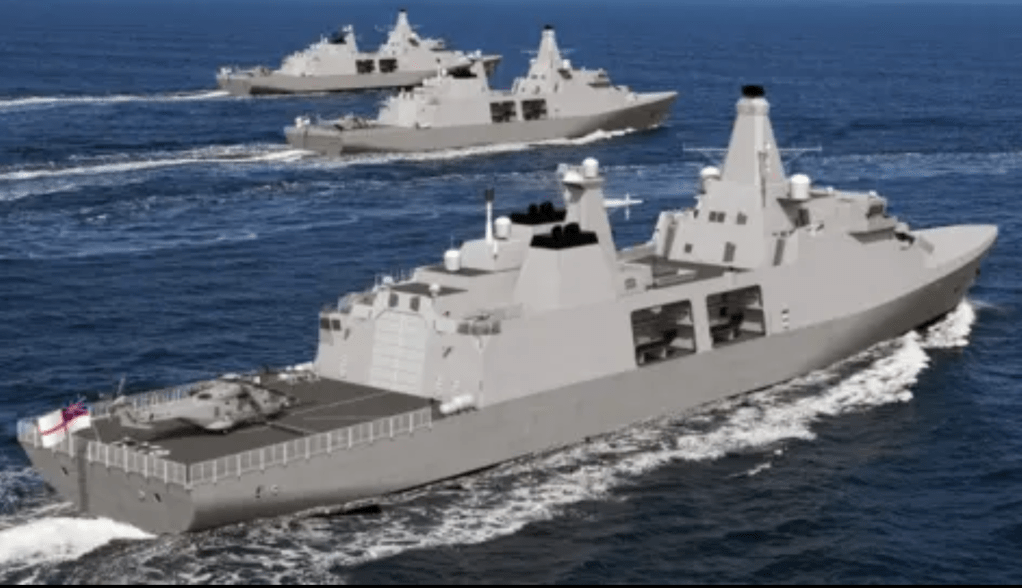
The Type-31 is also being built in the UK based on the Danish Huitfeld Class. These will have a Mk41 VLS system for general combat. The Type-31 will replace the remaining 5 elderly frigates left in the RN, and the first has already been rolled out.
Another interesting component of the British-Norwegian defence deal is that the UK and Norway are combining their drone warfare development programs, resulting in Norway cancelling its own and pushing its efforts into the combined program.
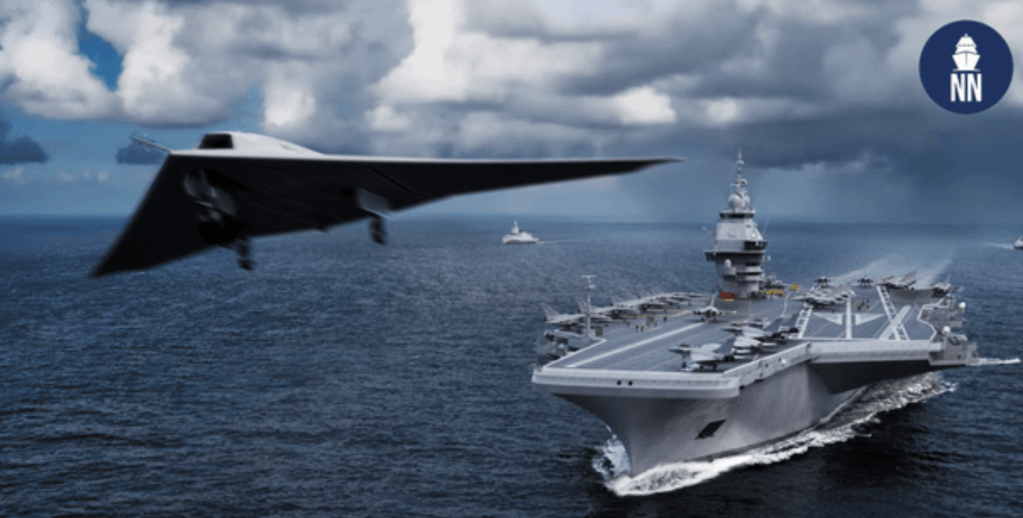
In other naval news the French government has announced they will build a huge new aircraft carrier to be called France Libre the 78,000 ton nuclear powered CATOBAR vessel will begin construction in 2031 for an in-service date of 2038, when the current carrier is to retire. Only having one carrier has been an issue France has lived with. Major refurbishment periods have left them carrier-less for as long as three years, but it’s a risk they are willing to accept. French carriers do carry nuclear weapons if needed.
The carrier is designed to operate sixth gen aircraft, drones and the Rafale-M and will be equipped with E-MALS.
Norway has raised its defence expenditure by $11.8 billion, reaching 3.5% of GDP, citing new developments from Ukraine and lessons learned. Part of this is the cooperation with the UK, another big buy is six new submarines. Oslo stressed that the additional money will be used to accelerate the pace of phasing in new Type 212CD submarines produced by Germany’s ThyssenKrupp Marine Systems (TKMS) and the acquisition of the first two Type 26 Frigates. There will also one an acceleration in getting the new Finnmark Brigade up to full equipment and operating in the north as soon as possible.
However much of the money will be used to buy US weapons systems to work on the F-35’s – including expanding stocks of Advanced Anti-Radiation Guided Missile – Extended Range (AARGM-ER) munitions.
Right across Europe, efforts are being made to expand arms production, it’s a positive trait. But there are still issues over what they’re buying and building and if its fit for purpose given the change in warfare. It seems very difficult to divorce some of those making equipment requests from their old habits and it concerns me, that like the Dreadnought Battleship commanders of the past, they haven’t accepted that their heavy tanks and many types of IFV just are not up to the job anymore. Just as their battleships lost their crown to the aircraft carrier.
The Trump administration is about to put forward a defence budget of a staggering $1.5 trillion – a near 50% increase over this year.
One of the reasons is the massive consumption of ammunition in the war with Iran. Another the loss of several aerial assets. Most of all however there is a vast and complicated problem with naval maintenance right across the entire fleet. The only way the submarine, carrier and surface vessel fleet is ever going to catch up is if new policies, new yards and new people are brought in to do the work.
There are ludicrous problems in the Air Force, not just the loss of some key air assets but deep problems such as the Air Force accepting F-35’s from the factory without radars, putting them in to storage and having to wait as long as three years for the installation and software updates. Almost all of what’s wrong with the American military is down to lack of capital investment that Congress has refused to recognize all to often, and when it has, the projects to correct it have gone on with inconsistent leadership, no responsibility being taken and poorly qualified persons in charge of programs beyond their comprehension. Short term policies, unsurprisingly have failed to create long term solutions, as much a result off deeply divided politics as it is the short nature of the American 2 year election cycle in the House and one third every six years in the senate.
The defence industrial base just doesn’t have the capacity or the investment to deliver what’s being asked of it because everything is so short term, they are unwilling to commit when spending is so unreliably funded.
This may not matter to your average European – except it does affect us very directly – especially Ukraine. The Patriot missile is the obvious example. All current PAC-3 versions are being shipped to the Middle East as they come off the line which is roughly about 1.9 per day. Ukraine is so short Spain has just supplied its last 5 PAC-2 missiles. Virtually the entire European, Middle East and US inventories have been depleted. Even with the current investment plan in will take until 2034 to restock.
In South Korea, which is one of the few countries with its own domestic military aviation industry, the first of a new type of fighter has been rolled out. The KF-21 Boromae.
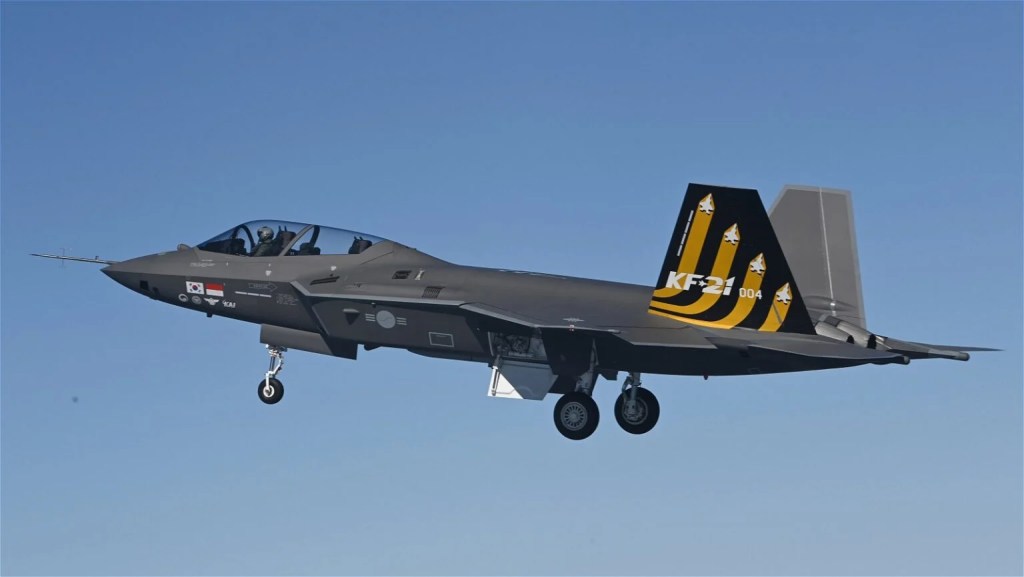
The program is a 4.5 Gen fighter, designed to replace aging F-4 Phantom-2’s that have been in service far too long. 40 of the Block-1 interceptor variant will be built, equipped with MBDA’s Meteor missiles, followed by 80 of the Block-2 variant with improved ground attack characteristics. The Philippines and Indonesia are expected to buy the export version.
I wanted to provide this brief over view because we get lost in the wars themselves. What’s going on behind the scenes in key players makes a difference in the long term. The realities of paying for defence are hitting home in the UK which ‘talks the talk’ but as usual doesn’t ‘walk the walk’ in areas that really matter to an island nation. It’s doing wonders in grasping the anti-drone tech, and military drone tech in terms of manufacturing but it’s not rolling that out to its own military at any real pace. The UK is leading the way in non-US Sixth Gen fighters with Tempest and its partners Japan and Italy.
Failure to produce a key strategic document – the Defence Investment Plan which is almost a year late, has led to the UK not signing the next phase agreement to the annoyance of Italy and Japan. The UK has basically a defence expenditure hole of £38 billion out to 2035 and no idea how to fill it. Tempest is still underway for now. The first test plane is already being built and will fly in 2027, 300 hours of simulator training have been run with pilots. The UK funding is being supported by industrial partners covering what the government hasn’t, but that can’t go on much longer. There’s a huge risk of failure the government simply could not allow though. If the project collapsed it would be a disaster for the UK government, the aviation sector, well paid hi-tech jobs and much else besides. Frankly I doubt Keir Starmer would survive it.
Meanwhile Germany holds out little hope of salvaging the Franco-German-Spanish program. It has until the end of April to get Dassault to agree to terms on work distribution or the project is ‘as good as dead’. France is willing to proceed alone. Even so it’s a good six to ten years behind the Tempest (or GCAP as its supposed to be now).
Yet still what disturbs me most is that many nations are still building systems – tanks, IFV’s and other equipment that has little utility in the next war. The US has just unveiled its new M1-Abrams version. I have little faith in it. Of those supplied by the US, a total of 31 to Ukraine, 27 were destroyed by drones and 2 by guided artillery. I can’t find a loss figure for Australian versions that were/are being used around Pokrovsk, although they are superior to the US ones. Its of note that in 2024 Ukraine withdrew the US versions for major upgrades to their drone resistance, but it didn’t take long for losses to mount again.
Of the Leopard-2, of which 120 were supplied losses are understood to be around 40-50%, and they’re rarely seen these days. Of 14 Challenger-2 supplied by the UK 5 have been confirmed lost. Until this war none had ever been lost in combat in Iraq or anywhere else. I don’t know how much convincing we need that tank based armoured assaults are a thing of the past. In truth I don’t think anyone knows quite where we are, as the battlefield changes and it has many unique qualities as all wars do. It’s evolving as we speak of it. Change is so rapid and constant that we can’t make clear judgements. Yet when the war is over we will have to – and then we must face how we continue to keep ahead in a race for drone firepower thats almost as rapid as the development of Ai. The same applies at sea and in the air. Are we really investing in what we need? When will we know what that is?
We are I think at the moment of Dreadnought in 1905. In one ship the Royal Navy took the huge gamble that it would re-define naval warfare for years to come. They risked massive naval superiority by rendering everything else obsolete in one action. The Germans had a phrase that the old battleships, which were defined as pre-Dreadnoughts, were simply ‘funf minuten schiff’ – they would last just five minutes against such an opponent. Yet it allowed everyone who could build one the chance to start from equality and build their own.
We face such a moment with drones now. Those who know how to build them and use them and have the industrial capability to do so, have a distinct advantage over everyone else. Small nations could develop cheap but effective drone combat capabilities that will humiliate those without solutions to take them down and render them useless. We have rebalanced the scales, potentially we are all equal now. Do we know it? Are we ready? Can we grasp that challenge? Or will we persist with outdated tanks, expensive IFV’s, excessively pricey aircraft and old tactics because it makes us comfortable?
The Analyst
militaryanalyst.bsky.social

 The Military Analyst
Excellent article as always. Would the development of laser defence systems installed on tanks/IFV’s not enable these platforms to remain relevant?
LikeLiked by 1 person
It’s possible but lasers use lots of power and the ships that can power them are in the worst environment for getting them to work – sea salt, water vapour and mist! I suspect that it will be more precise projectile weapons that ultimately get used at sea – a new type of advanced gatling system with smaller rounds. I know they’re testing lasers and they show promise but it’s still a long way off being reliable.
LikeLiked by 1 person
Thank you TA for a very worrying article. Much of this goes way over my head apart from the stupidity and incompetence of the UK and most other governments in the West. Democracies can’t make successful long term plans, that are needed more than ever due to the complexities of highly technical projects such as Carriers Submarines and Generation 6 Fighters. China (for example) on the other hand can, and is the reason they are making such gains in all technologies compared to us in the West. Democracies by their very nature keep changing, in the UK every 5 years, in the US every 4 years. Is it any coincidence that the one democratic country that should be in the West, EU and NATO and is streets ahead of all others for timely technical innovation is Ukraine. Zelensky became Ukraine’s president nearly 7 years ago and will continue until Putin’s Russia is defeated. Why are they succeeding? Longevity of an excellent leadership and they have to be technically superior in a time of war. Might I suggest, as the UK had to be in WW2 with development and building of Spitfires and Hurricanes for example. Why are Russia failing? Incompetence, corruption and a total lack of motivational leadership.
“Needs must when the Devil bites your bottom!!”
LikeLiked by 2 people
I fear large warships will go the way of the Tank on the battlefield. Far too vulnerable to drones. We have seen the effect of surface drones but subsea drones are only just emerging. I think we are better investing in larger numbers of smaller ships which can deploy drones
LikeLiked by 2 people
Maybe the Analyst can comment but I see the submarine, especially the missile class subs that wait for the Armageddon command at depth will also be subjected to the new generation of submarine drones that can use artificial intelligence to detect the magnetic/acoustic signature of the missile sub waiting in the depths for their commands.
LikeLike
It’s been discussed in these pages. I wonder indeed if the SSBN is viable long term.
LikeLiked by 1 person