
Almost a year has passed since our last look at the conflicts in space, the efforts the Europeans were making to build their own satellite constellations and the ever increasing importance of the increasingly crowded space above our planet.
The United States
Generally speaking the Americans are in a class of their own. The civil-military overlap is huge. Space-X is linked as much to the Pentagon and its funding for military satellites as any company could be. Its increasingly way ahead of other launch operators with re-usability on the launcher systems and thousands of Starlink satellites orbit the planet.
With more upgraded GPS satellites planned for launch, an ever expanding Starshield system for military communications piggybacked off of Starlink, few have what the US has. Starshield has become a major issue by itself as the corrupt Trump regime tries to use it to blackmail Ukraine into ending the war on unfavourable conditions. However much to the Americans annoyance the Ukrainians have already found a way around the restrictions the Trump regime placed on the speed of its drones in occupied territory. By increasing the range of its drones using novel techniques such as battery pack jettison to increase range when depleted and multiple jam-resistant wi-fi stepping, range has been maintained and targets are still being hit. Nobody gets one over on Ukraine!
What has become a priority for Space Command is dealing with the increasingly aggressive Chinese and Russian military satellites that show incredible abilities to sit close – sometimes even sitting in front of signal transmitters to harvest encrypted traffic, and making it patently obvious if they wanted to take out said satellite they could. Having a counter weight capability is the only way of deterring their use.
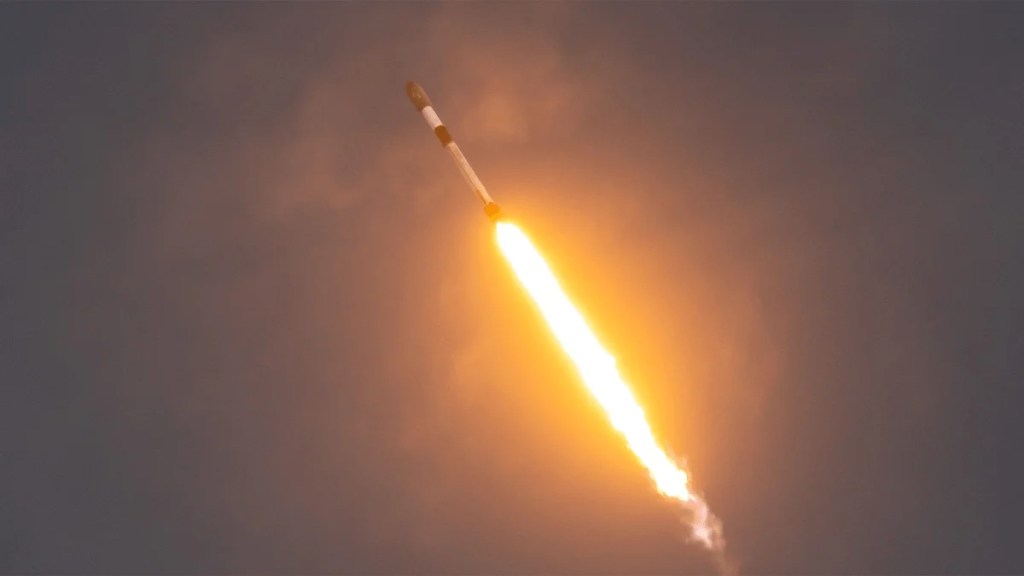
ALL of these programs are due for December 2026-2027 launches which indicates the frenetic pace at which the US is moving in space to meet new generations of threats.
The US has no less than seven missile warning and tracking systems due for launch in 2027.
These include:
- Resilient Missile Warning/Tracking–MEO (MWT-MEO), first nine satellites, a medium Earth orbit missile tracking and warning systems designed to have 30 satellites.
2. Missile Track Custody 1 (USSF-95). Persistent custody/tracking of missile threats, likely including advanced and manoeuvring threats, in medium Earth orbit.
3. NG-OPIR-GEO 1 (USSF-57 / NGG-1) Next-Generation Overhead Persistent Infrared satellite in geostationary orbit for strategic missile warning—detecting missile launches and providing early warning.
4. NG-OPIR-GEO 2 (USSF-50) Second geostationary next-generation missile-warning satellite, extending resilient strategic infrared early-warning coverage.
5. SDA Tranche 2 Tracking Layer — L3Harris satellites. Detect and continuously track ballistic and hypersonic missiles, including dim, fast-moving thermal targets, from low Earth orbit.
6. Fire-control On Orbit-support-to-the-warfighter (F2) satellites. Provide fire-control-quality tracking data to support missile defence engagements; they are part of the SDA’s missile-defence architecture.
7. SDA Tranche 2 Tracking Layer — Lockheed Martin satellites. Additional low-Earth-orbit missile-tracking coverage, contributing to the Proliferated Warfighter Space Architecture (PWSA).
Then there are the three major communications and targeting programs.
- WGS-11 (PTS-P1) Wideband Global SATCOM military communications satellite, providing high-capacity secure communications for US and allied forces.
- Space Data Network Backbone prototype. A prototype military communications network intended to move sensor data rapidly between missile-warning satellites and interceptors or other “shooters”; it is associated with the Golden Dome missile defence effort.
- Space Force communications and targeting satellites: SpaceX has been contracted for 18 launches of communications and targeting satellites by the end of 2027; these support near-real-time joint-force communications and space-based sensing/targeting of airborne objects.
Then there are four National Reconaisance Office and intelligence programs:
- NRO proliferated-architecture satellites. Classified intelligence, surveillance and reconnaissance (ISR) satellites, including electro-optical imaging, radar and data-relay spacecraft; the architecture is designed to be resilient through many smaller satellites rather than a few large ones.
2. NROL-86. Classified NRO reconnaissance payload; publicly described only as supporting national-security intelligence collection from space.
3. Silentbarker 2A/2B/2C (NROL-118). Reported as part of the NRO’s geostationary reconnaissance architecture; the specific collection mission is classified.
4. Space-Based Ground Moving Target Indicator (SB-GMTI). Joint Space Force–NRO constellation to detect and track moving targets on the ground from space, supporting targeting and the wider space-based sensing architecture.
Space operations and servicing
- Victus Sol (TacRS). A tactically responsive space mission: rapidly fielded spacecraft intended to demonstrate the ability to launch and operate a military satellite on short notice.
2. USSF-23 servicing/refuelling demonstration. Spacecraft to demonstrate on-orbit refuelling and satellite servicing in geostationary orbit, extending the operational life and manoeuvrability of US space assets.
3. USSF-75. A Space Force mission currently listed without a public payload description; it is therefore not possible to state a verified purpose. its possible this might be the first combat capable demonstrator.
So as you can see the US is spending billions on space programs to keep up with what it sees as Chinese dominance in the field and Russia as a potential competitor. One thing the US has long been jealous of is China’s ability to ‘see’ much of the Pacific with its radar satellites. Some of these satellites are designed to work with allies – if the Americans have any left by the time Trump leaves office.
EUROPE & NATO
There are national systems being built and pan-European systems too.
POLAND AIMING HIGH
Poland is planning to buy high definition radar imaging satellites along with ultra encrypted military communication ‘birds’. New ground based radars for keeping an eye on what going on above Poland and controlling Polands network of electro-optical telescopes used for space domain awareness. Poland makes no effort to hide that it wants to be Europes biggest satellite power and it hopes to use that leverage to integrate with European systems, sell its services and provide Europe with a vastly more capable system of systems than it has now.
By the end of 2027 Poland will have no less that 12 ISR Synthetic Aperture radars in orbit, observing Kaliningrad, western Russia, Belorus and Ukraine. Poland won’t say it but their assitance to Ukraine is largely taken as read. Anything that helps defeat Russia is a bonus in Polish eyes. They know what Russia is.
ICEYE is supplying satellites under the MikroSAR prpgram to supply recon satellites that allegedly have a resolution of 25cm. These will be deployed in 2027. Poland is also looking for Polar and non-polar geo-synchronous satelites by 2031. Its also looking to invest heavily in the IRIS2 ‘European Starlink’. Poland is not breaking with the US – seeing it as an equal partner and supporter – its not getting hung up on the politics seeing it as a medium-short term issue it can hedge its bets on.
UNITED KINGDOM – confusion and muddle
Skynet 6A was supposed to be built and launched by 2027, but the Government has struggled to decide if Lockheed should build it in the UK in unbuilt factories – or it lest Airbus build it as everyone else seems to think is bets, protecting thousands of skilled jobs. Skynet is a strategic comms system for UK forces around the world – especially the SSBN force.
The Juno program is supposed to be a high fidelity electro optic Earth observation staellite but who knows if if will ever get off the ground. Along with Oberon, a vital military weather satellite for the UK, it may never see daylight. Funding is chaotic, the UK version of the NAO says that the defence budget is underfunded and unrealistic and that there’s a £28 billion black hole in it government cant cover out to 2035. Nobody is taking defence seriously in the UK and its doing damage. Everything is being sacrificed for the SSBN fleet, with everything else hollow promises.
CANADA
Telesat Lightspeed pathfinder satellites: Two pathfinder satellites for Telesat’s low-Earth-orbit communications constellation, intended to provide secure government and defence communications; the full constellation is planned to begin deploying from Q3 2027.
Telesat Lightspeed initial production satellites: Additional LEO communications satellites for government, defence and enterprise connectivity; 15 launches of 15 satellites are planned, beginning in Q3 2027.
RADARSAT+ additional satellite: he Canadian Space Agency is working to add a satellite to the RADARSAT Constellation Mission to preserve SAR surveillance continuity, particularly for maritime domain awareness.
OTHERS
In terms of military satellites many are under construction but there’s few planned for launch in 2027 as a sizeable set were delivered in 2025-26 that were ordered in 2022-3.
CONCLUSION
Europe is well on its way to developing key systems by itself. Of that there is no doubt. A rash of comms and intel satellites are already up there – France and Germany have been cooperating with Ukraine making up for the pathetic behaviour of the Trump regime.
What worries me is the ridiculous lack of seriousness in Government in the UK. It says the words but it doesn’t deliver the goods – it refuses to prioritise defence in real terms. Its barely affording GCAP, the satellite build argument is ludicrous. The fact is that all purchasing is hugely affected by the SSBN program which sucks the budget dry during the four years 27-31 as it takes up a real figure that’s close to 50% of the new equipment fund. Governments know this peak build happens but they don’t make plans to finance it, they just let everything go to fit it in.
Poland on the other hand has a huge defence budget and is deadly serious about defence and its future in the European satellite system is assured as it buys whatever it thinks it needs to defend from Russia. Its an attitude Britain could do with.
The staggering size of the US satellite budget is reflecting a rash of outdated systems need replacing, its well behind on ocean reconaisance, it has to develop systems for the supposed Golden Dome and be ready fro whatever Russia or China might throw at it, let alone the enemies like Iran its made.
So space is vital, expensive and increasingly very high tech. We know weapons exist in space – America has admitted it and Russia and China certainly have capabilities we don’t fully understand or know about at least publicly. But what Russia plans – and German intelligence is adamant its not wrong, then putting a nuclear armed satellite up here is no joke. The only purpose is EMP warfare. That would devastate the satellites in space over an entire hemisphere – and it would seriously damage every microchip in a similar region on the ground. US tests in the early 1960’s demonstrated that almost the entire Pacific basin was affected from one 1 megaton blast well above the Earth – power outages and radio blackouts lasted a day or more in a world free of digital microchips and barely a single satellite existed. Satellite warfare is indeed changing.
The Analyst
militaryanalyst@bsky.social


We live in interesting times…
LikeLiked by 1 person
Many thanks TA. I was well out of my comfort zone when reading such a technically complete report, but have to agree that the UK Government’s approach to such threats is pathetic when compared to Poland and others!!
LikeLiked by 1 person